Yogyakarta digital nomad life sits in a specific category that most remote work destination guides don’t capture well — it’s not Bali’s Canggu, and it’s not trying to be. The infrastructure is cheaper, quieter, and less optimized for the nomad demographic than Bali’s south coast, which is either a limitation or the point depending on what you’re actually looking for.
Yogyakarta digital nomad infrastructure has developed steadily over the past several years, driven partly by the city’s large student population and partly by a growing number of remote workers who’ve arrived via Bali and stayed for the lower costs, the cultural depth, and the slower pace. The result is a city that works reasonably well for remote work without being built around it — coworking spaces exist and are functional, café wifi is generally adequate, accommodation costs are significantly below Bali equivalents, and the city’s size keeps daily life manageable in a way that Jakarta or even Seminyak can’t match. The gaps and limitations are real too, and worth knowing before you plan a month here around a demanding remote work schedule.
The Honest Cost Comparison With Bali
The most commonly cited reason for choosing Yogyakarta as a base over Bali is cost, and the difference is real enough to be meaningful for monthly budgets. A comfortable private room in a guesthouse or small apartment in Prawirotaman or near the Kraton runs IDR 2,500,000 to IDR 5,000,000 per month (approximately USD 155–310) — significantly below comparable quality in Canggu or Seminyak. Monthly rental of a private room with kitchen access in a local boarding house (kost) is cheaper still, from IDR 1,000,000 to IDR 2,500,000 depending on area and facilities.
Food costs at the warung and angkringan tier — covered in detail in the Yogyakarta food guide — make daily eating substantially cheaper than in Bali’s south, where the café culture that most nomads gravitate toward sets a higher price floor. Coworking space day passes and monthly memberships are also lower than Bali equivalents. The cumulative effect is a monthly cost of living that can run 40 to 60 percent below equivalent comfort in Canggu for travelers who engage with the local economy rather than the tourist-facing tier.
Internet and Connectivity: The Honest Picture
Yogyakarta’s internet infrastructure is adequate for most remote work but shows the variability of a mid-sized Indonesian city rather than the optimized nomad infrastructure of Bali’s Canggu. What that means practically:
Coworking spaces have reliable, fast internet designed for working — this is where you go for video calls, large file uploads, and anything requiring consistent connection. Café wifi in the Prawirotaman area and tourist-facing neighborhoods is generally adequate for email and lighter tasks but varies enough that treating it as your primary work connection carries risk. Accommodation wifi ranges from excellent in mid-range guesthouses that have invested in their connection to genuinely poor in older budget properties that haven’t.
Local SIM cards (Telkomsel and XL are the most reliable in Yogyakarta) provide 4G coverage across most of the city and are a useful backup — purchasing a data package and using your phone as a hotspot for important calls is a reasonable contingency that most Yogyakarta digital nomads keep as a fallback. Coverage thins out in the highland areas around Kaliurang and in parts of Gunungkidul, which is worth knowing for anyone planning to work remotely from day-trip destinations.
Coworking Spaces Worth Knowing About
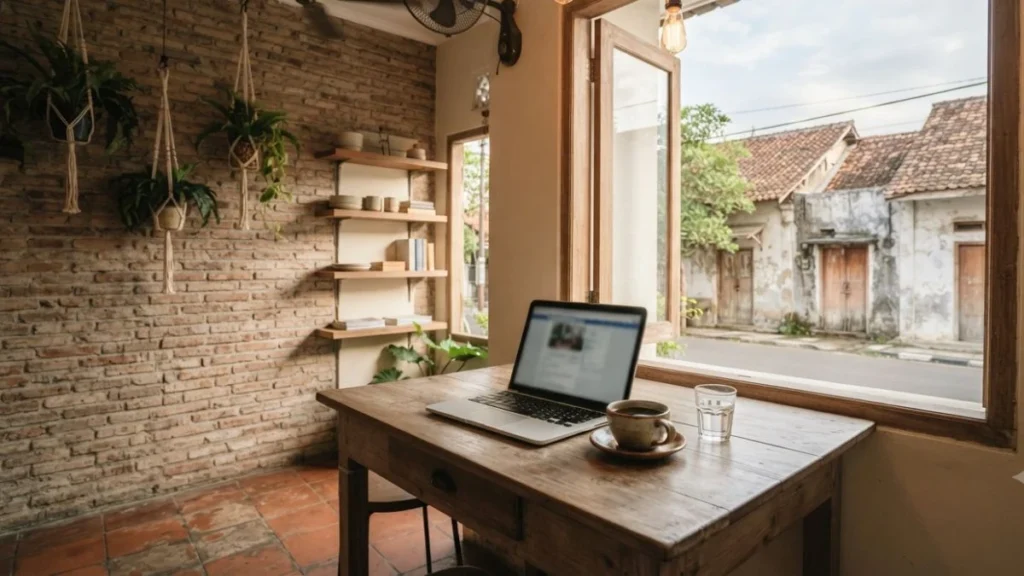
Yogyakarta’s coworking scene is smaller than Bali’s but functional — there are several established spaces in the city center and Prawirotaman area that have been operating long enough to have reliable infrastructure and a consistent member community. The density of the nomad community here is lower than Canggu, which means the coworking social dynamic is quieter and more locally mixed — students, freelancers, small business owners, and a smaller number of international nomads — rather than the self-selecting nomad concentration of Bali’s main hubs.
Day passes are the most flexible entry point for testing a space before committing to a monthly membership. Monthly memberships with dedicated desk access are available at most established spaces and are significantly cheaper than Bali equivalents — worth calculating against the daily pass cost if you’re staying more than two weeks.
Where to Base Yourself as a Digital Nomad
Prawirotaman is the most obvious base for Yogyakarta digital nomads — the neighborhood concentration of guesthouses, cafés, and mid-range accommodation is the closest equivalent to a nomad-friendly hub that Yogyakarta has, and it has the most walkable density of places to eat and work within the immediate area. The trade-off is that Prawirotaman is further from the Kraton and city-center sights than some other options, which matters if you want to integrate cultural exploration into the working week rather than keeping it separate.
The area near the university districts (UGM and UNY areas, to the north of the city center) has a high concentration of affordable kost accommodation and student-facing cafés with adequate wifi — less curated for international visitors but cheaper and with a genuine local student atmosphere that some nomads prefer.
Kotagede offers the most culturally immersive base — quiet, local, and significantly cheaper than Prawirotaman — but with fewer walking-distance café and coworking options, which makes it better suited to nomads who prefer working from accommodation rather than café-hopping.
The full neighborhood comparison for accommodation is in the where to stay in Yogyakarta guide, and the transport logistics between neighborhoods and the city center are covered in the getting around Yogyakarta guide.
Visa Considerations for Long Stays
Indonesia’s visa situation for digital nomads has evolved and continues to evolve — the most accurate current information is from the official Directorate General of Immigration (imigrasi.go.id) or the Indonesian embassy in your home country, since visa rules change more frequently than most travel guides update.
The most relevant visa categories for digital nomads staying longer than 30 days in Yogyakarta have historically included the Social Visa (available through sponsors, traditionally requiring a local contact), the Multiple Entry Business Visa, and the Visitor Visa on Arrival extension options. Indonesia introduced a specific Digital Nomad Visa category (officially the Second Home Visa) that has been discussed and partially implemented — checking the current status of this visa and its requirements directly from official sources before planning a long stay is worth doing rather than relying on blog posts that may be outdated.
The Jakarta to Yogyakarta guide covers the entry points most nomads use arriving in Indonesia; visa planning should happen before arrival rather than after, regardless of which route you take.
What Yogyakarta Offers That Bali Doesn’t
The case for Yogyakarta over Bali as a digital nomad base isn’t only about cost. The city has a different texture as a place to live for an extended period — the cultural depth of the Kraton, the craft economy of Kotagede, the Pasar Beringharjo market as a daily reference point, the highland day trips to Kaliurang — all of this gives a month in Yogyakarta a different quality than a month in Canggu, where the nomad infrastructure is better but the city itself has less to offer beyond the beach and the café scene.
For nomads specifically interested in Javanese culture, craft, or history, Yogyakarta is simply a more interesting place to be based than Bali’s south for an extended stay. For nomads primarily motivated by the social density of the nomad community and the optimized digital infrastructure, Bali remains the stronger choice.
The honest version: Yogyakarta rewards nomads who want to be in a place as much as they want to work from a place. It’s less optimized, costs less, and offers considerably more if you’re willing to engage with it rather than treating it as a backdrop.
Frequently Asked Questions
Is Yogyakarta good for digital nomads?
Yes, with some differences from more established nomad destinations like Bali’s Canggu. Costs are significantly lower, the cultural environment is richer, and the city is manageable in size. The nomad community is smaller and less dense, coworking infrastructure is adequate but not as developed as Bali, and internet reliability varies more across accommodation types.
How much does it cost to live in Yogyakarta as a digital nomad per month?
A comfortable monthly budget covering private accommodation, eating at a mix of warungs and mid-range restaurants, coworking space access, and local transport typically runs IDR 8,000,000 to IDR 15,000,000 (approximately USD 500–940), depending on accommodation quality and lifestyle choices. Budget-focused nomads eating primarily at warungs and staying in kost accommodation can manage on significantly less.
Is the internet good enough in Yogyakarta for remote work?
For most remote work, yes — coworking spaces have reliable fast internet, and a local SIM data package provides a reliable backup. Café wifi varies enough that treating it as your primary work connection carries risk. Accommodation internet quality varies significantly by property and is worth checking before booking for a longer stay.
What visa do digital nomads use for longer stays in Yogyakarta?
Visa options for extended stays in Indonesia change regularly and vary by nationality. The most accurate current information is from Indonesia’s official immigration website (imigrasi.go.id) or your home country’s Indonesian embassy. Checking current visa requirements before planning a long stay is essential rather than relying on travel blog posts that may reflect outdated rules.