Where to stay in Yogyakarta matters more than most guides admit. This isn’t a beach destination where every villa looks the same — the neighborhood you pick shapes whether your trip feels like wandering through a living city or hopping between tourist checkpoints. Here’s the honest breakdown of the three areas worth actually considering.
Most “where to stay in Yogyakarta” guides default to star ratings and pool photos, which misses the more useful question: what kind of trip are you trying to have? Yogyakarta doesn’t have a single obvious tourist strip the way Bali has Seminyak or Canggu. It has three distinct neighborhoods that each shape your daily rhythm differently — and picking the wrong one won’t ruin your trip, but it will quietly limit it.
This guide breaks down where to stay in Yogyakarta based on three real options: Prawirotaman, Kotagede, and the area around Malioboro. Each has a different trade-off, and none of them is universally “best.”
Prawirotaman: The Backpacker Area That Grew Up
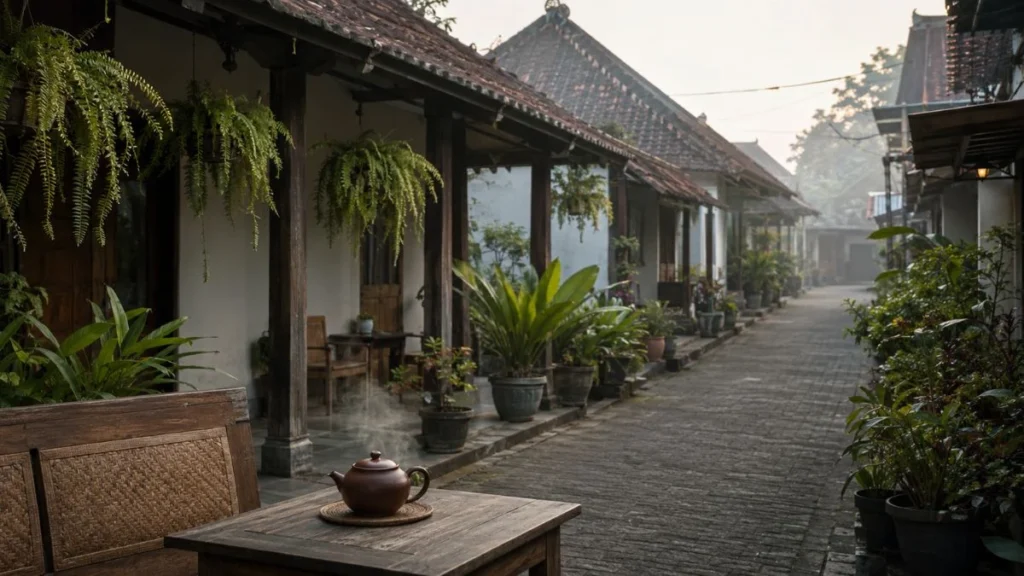
Prawirotaman has been Yogyakarta’s traveler neighborhood since the 1970s, and it still carries some of that identity — guesthouses, small cafes, a walkable layout — but it’s matured considerably since its purely backpacker days. It’s now a reasonable middle ground: not as polished or convenient as Malioboro, not as quiet or local as Kotagede.
What makes Prawirotaman worth considering when deciding where to stay in Yogyakarta is the density of independent guesthouses run by local families, many with the kind of small, specific knowledge (which becak driver is honest, which warung does the best soto) that larger hotels can’t replicate. It’s also genuinely walkable to a handful of decent cafes and restaurants, which matters if you don’t want to rely on ride-hailing for every meal.
The trade-off: it’s a 15–20 minute ride from most of the major sights covered in our guide to things to do in Yogyakarta, and the area itself, while pleasant, doesn’t have much cultural weight of its own — it’s a base, not a destination.
Kotagede: For Travelers Who Want the City, Not the Tourist Version of It
Kotagede is the better choice if you want to stay somewhere that exists independently of tourism. It’s the old silver-working district we cover in more depth in our guide to Kotagede’s silver craft village, and staying here means waking up to an actual neighborhood — narrow lanes, working silversmiths, a market rhythm that has nothing to do with visitors.
A handful of homestays and small guesthouses, often run out of family compounds, have opened up here in the past few years. This is the option for travelers who specifically want immersion over convenience.
The honest trade-off: fewer dining options within walking distance, less English signage, and a longer ride to Malioboro or the Kraton if those are daily destinations for you. Kotagede rewards travelers staying four-plus days who can absorb the longer commute on the days they head into the city center.
Malioboro: The Convenient, Crowded Default
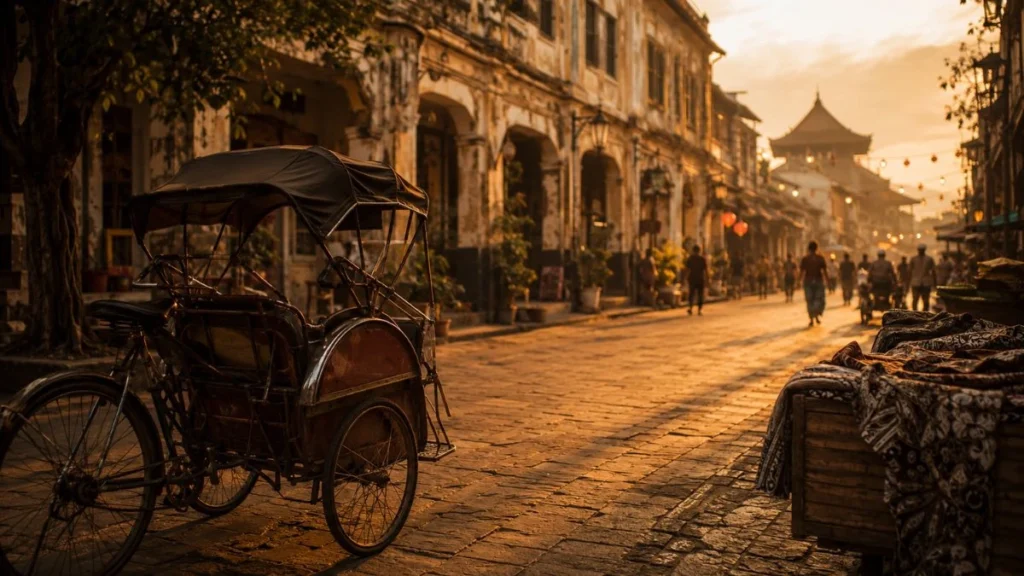
Staying near Malioboro is the path of least resistance — it’s central, well-connected, dense with hotels at every price point, and close to the Kraton and the train station. For a short trip (two to three days) where you mainly want to minimize transit time between sights, this is the practical answer to where to stay in Yogyakarta.
What it isn’t is quiet or particularly local. Malioboro itself is built for tourist foot traffic, and staying directly on or near it means dealing with that energy daily — street vendors, traffic noise, crowds that build through the afternoon and don’t really thin out until late.
It’s worth it for short, sight-focused stays. It’s less worth it if you’re trying to get a feel for how the city actually lives day to day, which is more available in Kotagede or even Prawirotaman.
So, Where Should You Actually Stay in Yogyakarta?
If this is a short trip built around the major sights, Malioboro’s convenience is hard to argue with. If you’re staying four or more days and want a livable, walkable base without losing too much cultural texture, Prawirotaman is the more balanced choice. If immersion matters more to you than convenience — and you don’t mind a longer ride into the center some days — Kotagede is worth the trade-off.
None of these is the “correct” answer. They’re three different versions of what a Yogyakarta trip can feel like, and the right one depends on what you’re actually trying to get out of it.
Frequently Asked Questions
What’s the best area to stay in Yogyakarta for first-time visitors?
Malioboro or Prawirotaman are both reasonable for a first visit, since they’re closer to the major sights and easier to navigate without much local knowledge. Kotagede is better suited to repeat visitors or longer stays.
Is Malioboro a good place to stay in Yogyakarta?
It’s convenient and central, which makes it a practical choice for short trips. It’s also the busiest and least quiet of the three areas, so it’s worth weighing convenience against atmosphere depending on what you want from the trip.
How far is Kotagede from the main Yogyakarta attractions?
Roughly 20–30 minutes by car or ride-hailing app from the Kraton and Malioboro area, depending on traffic. It’s manageable for day trips into the center but not ideal if you want to be within easy walking distance of everything.
Are there homestays or joglo-style stays in Yogyakarta?
Yes, particularly in and around Kotagede and some quieter pockets near the Kraton, where family-run homestays and a small number of traditional joglo-style accommodations have opened in recent years, though they’re far less common than in destinations like Bali.