Yogyakarta food doesn’t get the same attention as Bali’s café scene or Jakarta’s restaurant density, which is part of why it’s worth writing about honestly. The city has a distinct culinary identity — sweeter, more rooted in Javanese court tradition than most visitors expect — and most of it is found in places that don’t show up on the first page of a Google search.
Yogyakarta food culture is one of the more underwritten parts of visiting the city, which is surprising given how distinctly Javanese it is. The food here is sweeter than most Indonesian regional cuisines — a characteristic rooted in the sugar cane abundance of the Kedu Plain and reinforced by centuries of court preference — and more specifically tied to local agricultural and trade patterns than the internationalized food scenes of Bali or Jakarta. This guide covers what’s actually worth eating in Yogyakarta, where to find the real version of it, and what the trade-offs look like between eating well and eating conveniently.
Gudeg: The Dish That Defines Yogyakarta
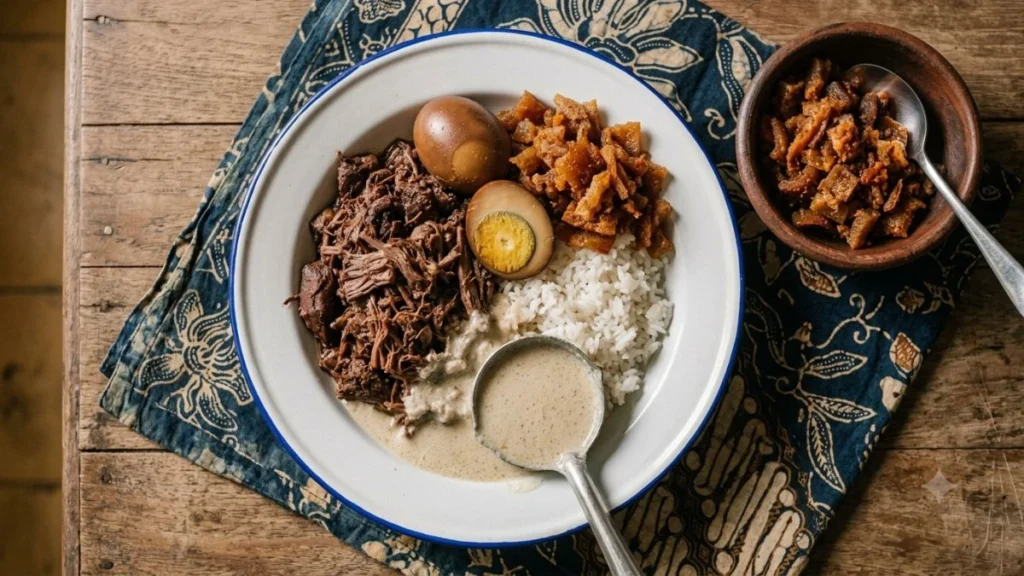
Gudeg is the starting point for any honest Yogyakarta food guide — a slow-cooked jackfruit stew, simmered for hours in coconut milk and palm sugar until the jackfruit absorbs a deep, sweet-savory flavor that has no real equivalent elsewhere in Indonesian cooking. It’s served with white rice, stewed chicken or egg, crispy beef skin (krecek), and a thick coconut gravy (areh), and it’s eaten at almost any hour — Yogyakarta has a strong tradition of gudeg consumed before sunrise, which means the best warung often open at 4am and sell out by mid-morning.
The version most visitors encounter is the dry gudeg (gudeg kering), which has a longer shelf life and is sold in the tourist-facing warungs and packaging lines near Malioboro. The wet version (gudeg basah), served fresh and immediately with more liquid areh, is harder to find and significantly better — it requires going to the right places before they sell out, which is its own small adventure.
The most established gudeg addresses in Yogyakarta are concentrated in two areas: Wijilan, a small lane near the Kraton where a cluster of gudeg warungs has operated for generations, and the area around Barek in the north of the city, which has a different style — darker, more caramelized — that divides locals into strong opinions. Both are worth trying if gudeg interests you seriously rather than as a single obligatory meal.
Bakpia: The Souvenir Food Worth Understanding
Bakpia is the other food most associated with Yogyakarta — a small round pastry with a filling of sweetened mung bean paste (the original version) or, in more recent variations, chocolate, cheese, or durian. It’s primarily sold as a souvenir food rather than eaten on the street, and the bakpia street near Pathuk in the northwest of the city center is the production and retail hub, with dozens of small family factories operating side by side.
The honest assessment: bakpia varies considerably in quality between producers, and the version sold in airport-style packaging near Malioboro is generally not the best version. The more interesting experience is visiting the Pathuk area directly, where several family producers still bake in small batches and the fresh-from-the-oven version is a noticeably different product from the vacuum-sealed souvenir boxes. It’s a short trip from the city center and the production process is often visible from the shop front.
Soto Ayam: The Everyday Bowl
Soto ayam — a clear, turmeric-yellow chicken broth with shredded chicken, rice vermicelli, hard-boiled egg, and a range of condiments — is Yogyakarta’s everyday soup, eaten at breakfast, lunch, and sometimes dinner. Every city in Java has its own soto tradition; the Yogyakarta version tends toward a cleaner, less coconut-heavy broth than some regional variants, with a clarity that lets the individual ingredients read distinctly.
The best soto in Yogyakarta is found in the places that do nothing else — small warungs that open early, serve a single dish all morning, and close when it’s gone. Soto Pak Marto in the Kranggan area and the cluster of soto warungs near Pasar Beringharjo are both worth knowing about. The version served in tourist-facing restaurants is technically the same dish but rarely as good — soto is a dish that rewards the environments built around it rather than the ones that include it alongside pasta and smoothie bowls.
Angkringan: The Most Yogyakarta Way to Eat
An angkringan is a mobile food cart — historically a bamboo pole with baskets at each end, now more commonly a bicycle or small cart with a gas burner — selling small portions of rice, skewered foods, fried items, and kopi joss (black coffee with a piece of glowing charcoal dropped into it, a Yogyakarta specialty). It’s the cheapest and most social way to eat in the city, typically operating from late afternoon into the early hours of the morning.
The angkringan culture in Yogyakarta is genuinely specific — it’s more developed and more embedded in daily city life here than in most other Javanese cities, partly because of the large student population from Yogyakarta’s universities, and partly because the tradition has roots going back to the mid-20th century. Eating at an angkringan near the Kraton at night, with kopi joss, is one of those experiences that costs almost nothing and reads as more authentically Yogyakarta than most things that appear on a recommended restaurant list.
The lane alongside the northern square (alun-alun utara) of the Kraton has a cluster of angkringan operating most evenings. The area around the train station at Tugu is another concentration point, where the carts have operated for decades and the mix of travelers and locals gives the atmosphere something genuinely specific.
Pasar Beringharjo: The Food Floors Worth Going Up For
Most visitors to Pasar Beringharjo Yogyakarta stop at the batik floor and leave without going upstairs. The upper floors contain both the jamu ingredient section and a cluster of warungs serving local food to market workers and vendors — this is among the least tourist-facing eating you’ll find this close to Malioboro Street, and the quality-to-price ratio reflects it. Nasi rames (rice with a selection of cooked dishes), soto, and a rotating cast of daily dishes make it a good lunch stop if you’re already in the market.
Where the Tourist Restaurant Strip Ends and the Real Eating Starts
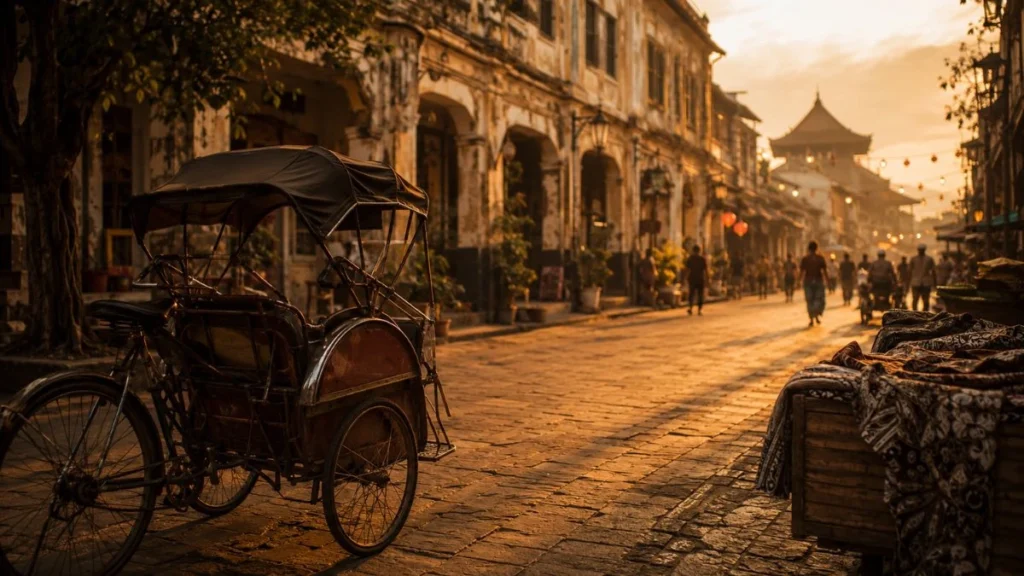
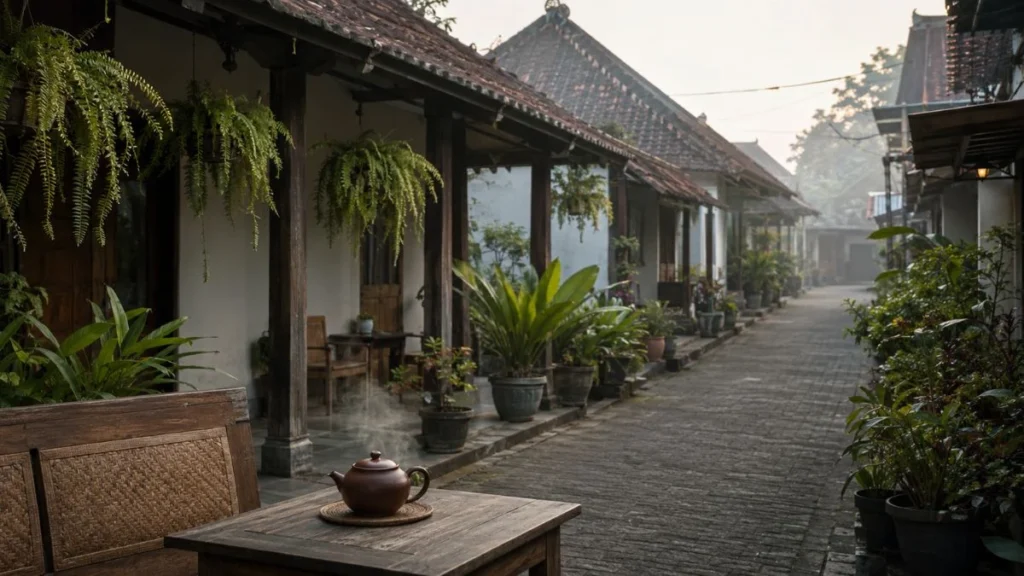
The honest geography of eating well in Yogyakarta: the tourist-facing restaurant concentration is heaviest along Malioboro and in Prawirotaman, where the food is decent, internationally legible, and priced for visitors. The further you move from that corridor — into the kampung behind the Kraton, into the neighborhoods around the university areas, into the market lanes — the more specifically Javanese the food becomes and the less it costs.
This isn’t a reason to avoid Prawirotaman’s restaurants, which do some things well (particularly the cafés and the international food options for travelers who need a break from rice-based meals). It’s a reason to allocate at least a few meals per day to the warung and angkringan tier rather than treating restaurants as the default.
For context on how eating fits into the neighborhood question, the where to stay in Yogyakarta guide covers how neighborhood choice affects daily access to this kind of eating — staying in Kotagede or near the Kraton rather than on the main tourist strip makes the angkringan and warung tier significantly more accessible as part of daily life rather than a deliberate expedition.
Frequently Asked Questions
What is the most famous food in Yogyakarta?
Gudeg — slow-cooked jackfruit stew in coconut milk and palm sugar — is the dish most associated with Yogyakarta and worth eating in the right place rather than from tourist-facing packaging. Bakpia (sweet bean-paste pastry) is the most common souvenir food.
Where should I eat in Yogyakarta for local food?
The Wijilan gudeg lane near the Kraton, the angkringan carts near the northern Kraton square at night, the soto warungs near Pasar Beringharjo, and the food floor inside Pasar Beringharjo itself are all more representative of how Yogyakarta actually eats than the tourist restaurant strip along Malioboro.
What is kopi joss?
Kopi joss is a Yogyakarta-specific coffee preparation — strong black coffee served with a piece of glowing charcoal dropped directly into the cup, which is said to neutralize acidity and add a faint smoky note. It’s served at angkringan carts, particularly in the area near Tugu Station and around the Kraton square at night.
What is the difference between wet and dry gudeg?
Dry gudeg (gudeg kering) has a longer shelf life and is the version most commonly packaged and sold for tourists. Wet gudeg (gudeg basah) is served fresh with more liquid coconut gravy (areh) and is considered by most locals to be the better version — it’s available early in the morning at the right warungs and typically sells out before mid-morning.