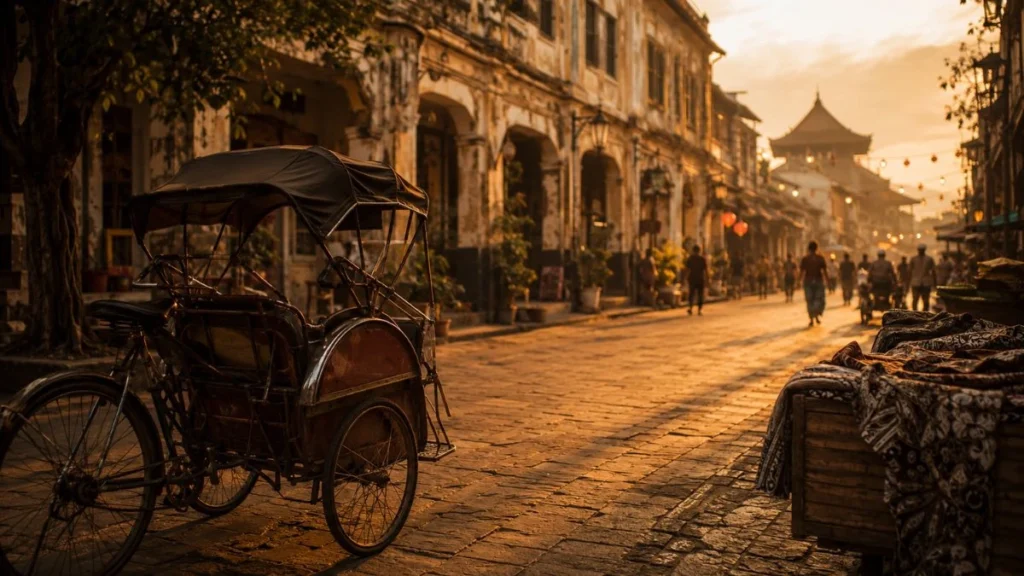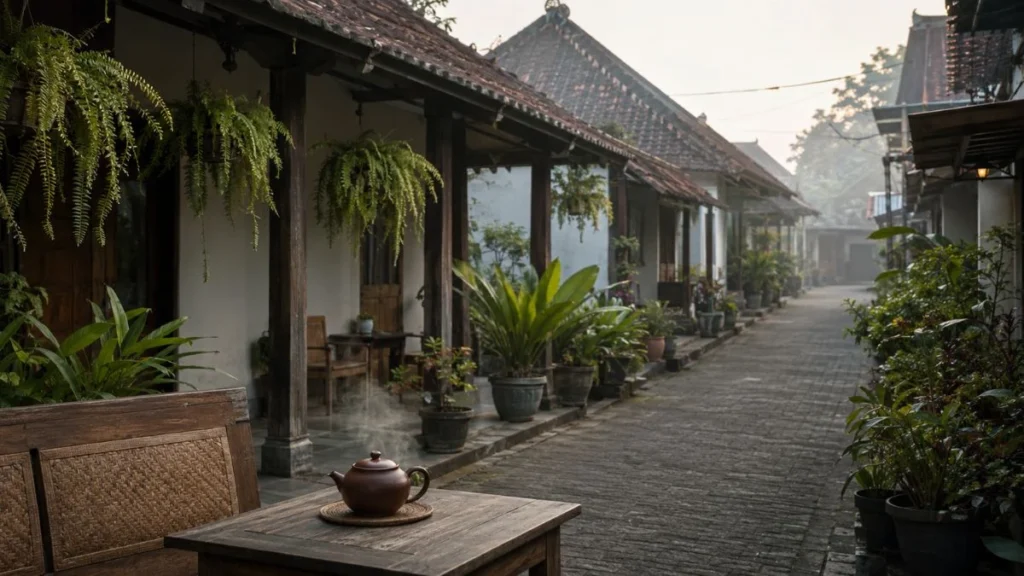
Pasar Beringharjo Yogyakarta has been a working market in the heart of the city since before Malioboro Street existed as a tourist destination. It’s loud, unglamorous, and entirely indifferent to visitors — which is exactly what makes it more representative of the city than anything else within walking distance of the Kraton.
Pasar Beringharjo is one of those places that appears in almost every Yogyakarta itinerary as a line item — “stop by the traditional market” — and almost never gets the explanation it deserves. Most visitors walk through the ground floor batik section, buy something, and leave within twenty minutes. That’s a reasonable way to shop, but it misses most of what the market actually is: a multi-story, multi-category trading hub that has been operating continuously on this site since the early 1700s, and that still functions primarily for Yogyakarta residents rather than for the visitors passing through.
What Pasar Beringharjo Actually Is
Pasar Beringharjo sits at the southern end of Malioboro Street, which makes it easy to tack onto a Malioboro walk without much planning — but the two are different in character in ways that the geography doesn’t immediately suggest. Malioboro is built around tourist foot traffic. Pasar Beringharjo is built around the city’s actual commercial life: wholesale batik, fresh produce, spices, snacks, dried goods, household items, second-hand clothing, and a section of traditional Javanese herbal medicine (jamu) ingredients that occupies its own corner of the upper floors.
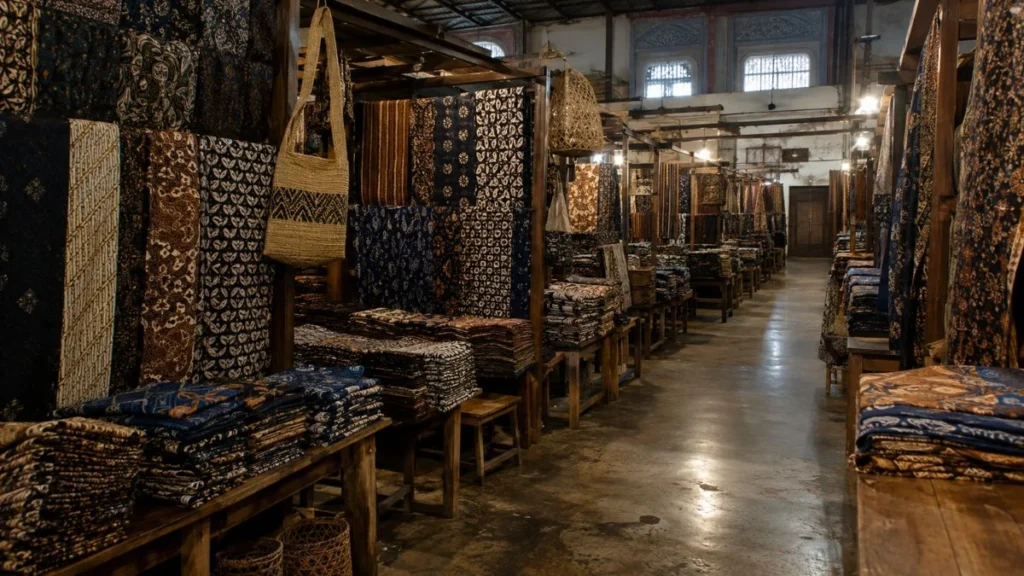
The ground floor handles most of the batik trade, which is what draws most visitors. The upper floors, which most visitors never reach, are where the market’s less photogenic but more representative layers are: the spice sellers, the jamu vendors, the second-hand clothing stalls, the food warungs doing a brisk lunch trade for market workers. This is where the market reads as a working institution rather than a curated shopping experience.
The Batik Section: What to Know Before You Buy
Pasar Beringharjo is one of the better places in Yogyakarta to buy batik, but not for the reasons most guides suggest. The advantage here isn’t that it’s the cheapest (it can be, for certain categories, but prices are negotiable and vary widely) or that it’s the most curated (it isn’t — the selection is enormous and ranges from mass-produced printed fabric to hand-stamped and hand-drawn pieces). The advantage is volume and variety: the ground floor houses dozens of vendors side by side, which makes comparison straightforward in a way that individual boutiques don’t allow.
The honest thing to know before buying: the market sells across the full spectrum of batik production methods, from batik tulis (hand-drawn, the most labor-intensive and expensive) to batik cap (stamp-printed, faster to produce) to batik printing (machine-printed fabric that uses batik patterns but involves no traditional technique at all). The price difference between these is significant, and vendors don’t always volunteer which method a piece uses unless asked directly.
If understanding what you’re buying matters to you — and if you’re spending serious money, it should — it’s worth visiting the Kotagede silver guide for a parallel example of how craft tourism and production shortcuts coexist in Yogyakarta’s craft economy, then applying the same logic here: ask about process, not just price.
The Jamu Section: The Part Most Visitors Walk Past
The jamu section on the upper floors of Pasar Beringharjo is one of the more specific and unusual things to see in Yogyakarta for visitors with any interest in traditional Javanese medicine or local food culture. Jamu — a broad category of traditional herbal drinks and tonics made from roots, bark, spices, and other botanicals — has been part of Javanese daily life for centuries, and the vendors here sell both the prepared drinks and the raw ingredients that go into them.
It’s not a tourist exhibit. The vendors sell primarily to regular customers, many of whom are local jamu makers or households that prepare their own. But it’s accessible to anyone who walks up the stairs, and it offers a completely different sensory experience from the batik floor below — dried turmeric, ginger root, tamarind, temulawak, and a dozen other ingredients in open sacks, with a smell that has nothing to do with the fabric and incense of the ground level.
How Pasar Beringharjo Fits Into a Yogyakarta Visit
Pasar Beringharjo works best as an afternoon stop rather than a morning one — the market is busiest and most alive in the mid-morning, but afternoons are when the light inside gets more interesting and the batik floor becomes less crowded. It pairs naturally with a Malioboro walk, since the two are adjacent, but they’re worth treating as separate stops rather than a single continuous sweep.
In our 3-day Yogyakarta itinerary, Pasar Beringharjo appears as the afternoon stop on Day 1 after the Kraton and Taman Sari — a transition from royal Yogyakarta to working-city Yogyakarta that covers more ground than the geography suggests. For a broader picture of how it fits alongside the rest of the city’s highlights, the things to do in Yogyakarta guide covers the full context.
Frequently Asked Questions
What is Pasar Beringharjo known for?
Pasar Beringharjo is Yogyakarta’s oldest and largest traditional market, best known for its batik section on the ground floor. It also houses a significant jamu (traditional herbal medicine) section on the upper floors, along with fresh produce, spices, second-hand clothing, and food warungs — most of which cater primarily to local residents rather than visitors.
Is Pasar Beringharjo good for buying batik in Yogyakarta?
Yes, particularly for comparison shopping across a wide range of batik types and price points. The market sells hand-drawn (batik tulis), stamp-printed (batik cap), and machine-printed pieces under the same roof — knowing the difference before you shop makes a significant difference to what you end up buying.
When is the best time to visit Pasar Beringharjo?
The market is open from early morning until late afternoon. Mid-morning is the busiest and most lively, which is good for atmosphere but more crowded for shopping. Afternoon visits tend to be quieter on the batik floor and are a good time to explore the upper floors without crowds.
Is Pasar Beringharjo close to Malioboro Street?
Yes — Pasar Beringharjo sits at the southern end of Malioboro Street, within easy walking distance. The two are adjacent but different in character: Malioboro is primarily a tourist shopping street, while Pasar Beringharjo functions as a working market for Yogyakarta residents as much as for visitors.