Getting around Yogyakarta is easier than most Southeast Asian cities its size — but the options aren’t all equal, and the one most visitors default to isn’t always the most useful one for every situation. Here’s what actually works, what doesn’t, and when each option makes sense.
Getting around Yogyakarta as an independent traveler is genuinely manageable, which puts it in a different category from cities where transport is a daily source of frustration. The city is compact enough that most central sights sit within a short ride of each other, ride-hailing apps work reliably in the urban core, and the train station drops you close to where most visitors want to be. The complications appear at the edges — day trips to Borobudur, Jomblang Cave, or the Merapi highlands, where ride-hailing supply thins out and having pre-arranged transport matters considerably more.
Ride-Hailing Apps: Gojek and Grab
Ride-hailing is the default for most independent travelers in Yogyakarta, and within the city center it works well. Both Gojek and Grab operate here, and between them driver supply in the central area — from Malioboro and the Kraton through to Prawirotaman and Kotagede — is generally reliable during daylight hours.
A few practical notes worth knowing: motorbike rides (ojek via GrabBike or GoRide) are faster and significantly cheaper than car rides for shorter city distances, and Yogyakarta’s traffic, while present, rarely reaches the gridlock of Jakarta or Bali’s south. For two or more travelers with luggage, a car is more practical — the price difference is manageable and the convenience significant.
The honest limitation: ride-hailing supply drops noticeably outside the city center. The further north toward Kaliurang, east toward Prambanan, or south toward Gunungkidul you go, the less consistent driver supply becomes — particularly for return trips from a day trip destination where drivers are less likely to be circulating. This is where the app becomes a source of frustration if you haven’t planned an alternative.
Private Car and Driver: When It’s Worth It
Arranging a private car and driver for a full day is the most practical solution for day trips that take you beyond the city — Borobudur from Yogyakarta, Prambanan Temple, Kaliurang and the Merapi highlands, or Jomblang Cave — where the return trip logistics are the main point of vulnerability.
Most accommodations in Yogyakarta can arrange this, and the cost split across two or three travelers is often comparable to or only slightly more than the ride-hailing equivalent once you factor in the convenience of having a driver wait and the elimination of the return-trip coordination problem. For a sunrise Borobudur visit specifically, a pre-arranged driver is almost non-negotiable — ride-hailing at 4am from Yogyakarta to a site 40 kilometers away is an unreliable starting point for the day.
The trade-off: you’re locked into a schedule that suits the driver as much as you, and spontaneous changes to timing or destination require negotiation rather than a new booking. For travelers who like flexibility within the day, this can feel constraining.
Rented Motorbike: The Most Flexible Option, With Caveats
Renting a motorbike in Yogyakarta gives the most day-to-day flexibility — you leave when you want, stop where you want, and the highland roads around Kaliurang in particular are significantly more enjoyable on a motorbike than in a car. Rental is widely available, affordable, and the roads around Yogyakarta are manageable compared to Bali’s more chaotic tourist corridors.
The honest caveats are worth stating clearly: Indonesian traffic follows conventions that take time to read correctly if you haven’t ridden in Southeast Asia before, and the roads between Yogyakarta and destinations like Prambanan or Kaliurang mix local traffic, trucks, and varying road quality. This isn’t an argument against renting, but it is an argument for being realistic about your comfort level rather than renting on impulse because it’s cheap.
For the highland route toward Kaliurang Yogyakarta specifically, a motorbike is the option that most rewards the journey rather than just the destination — the road north through increasingly rural landscape is one of those routes that loses most of its character inside a car with air conditioning.
Becak and Andong: Practical or Atmospheric?
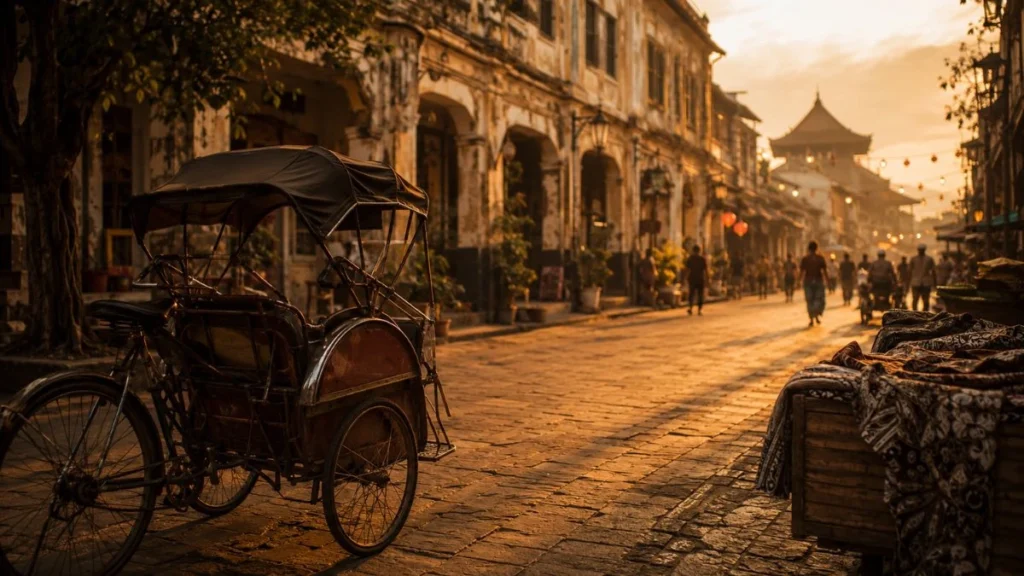
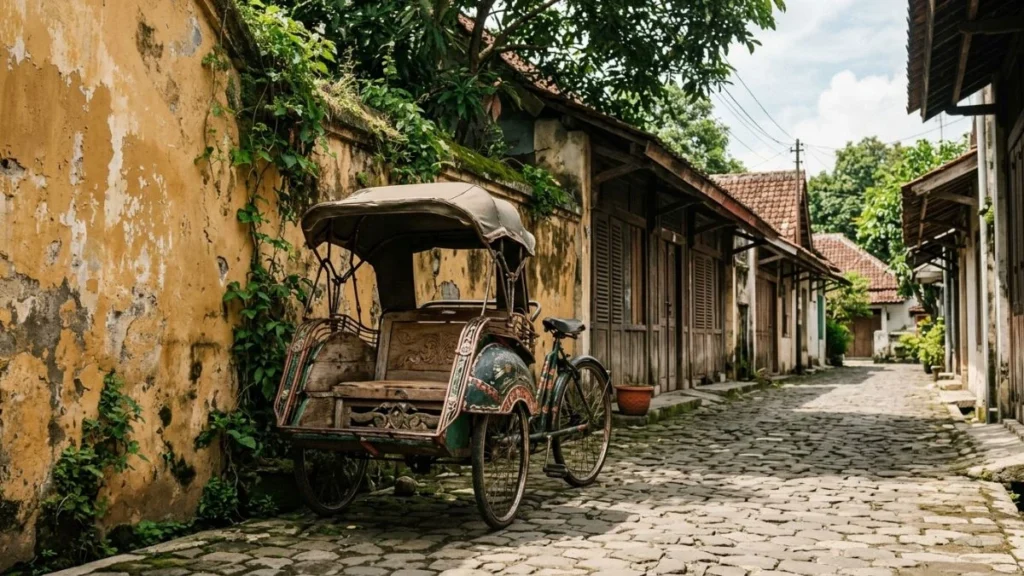
Becak (cycle rickshaws) and andong (horse-drawn carts) are both still operating in Yogyakarta, particularly in the Kraton and Malioboro area. They’re slower than any motorized option and priced for tourists rather than as practical transport — which means they’re worth using once for the experience and the perspective they give at street level, and not particularly useful as daily transport.
The honest version: a becak ride along the quieter lanes near the Kraton is a genuinely pleasant way to move slowly through that part of the city, and the pace reveals things that a car or motorbike passes too quickly. As a way to get from Prawirotaman to Prambanan, they make no practical sense. The distinction is worth making before you negotiate a price.
Trans Jogja Bus: Underused by Visitors, Worth Knowing About
The Trans Jogja bus network is Yogyakarta’s public bus rapid transit system, covering the main corridors of the city and connecting to several outer destinations including the Prambanan area. It’s air-conditioned, inexpensive, and more reliable within its route network than its low profile among visitors suggests.
The practical limitation is coverage — Trans Jogja works well for the Prambanan day trip and for moving between major corridors in the city, but it doesn’t reach Borobudur directly, doesn’t serve Jomblang Cave or Gunungkidul, and the route map requires some reading before it becomes intuitive. For budget travelers willing to spend time understanding the network, it’s a genuinely useful supplement to ride-hailing for city movement and the Prambanan trip.
Getting Around Yogyakarta on Foot
The Kraton area, Taman Sari, and Malioboro are all walkable from each other — this is the core of the city where foot travel makes the most sense and where walking reveals the most. The lanes between the Kraton and Taman Sari in particular are best explored slowly on foot rather than covered by vehicle.
Beyond that core, Yogyakarta’s distances start to exceed comfortable walking range for most visitors, particularly in the midday heat. Prawirotaman to the Kraton is a long walk in the heat; Kotagede to anywhere central is not practically walkable. The city rewards walking within neighborhoods rather than between them.
For a sense of how transport options intersect with where to base yourself, the where to stay in Yogyakarta guide covers how neighborhood choice affects daily mobility — it’s one of the more practical decisions a Yogyakarta trip involves. And for how all of this maps onto an actual itinerary, the 3-day Yogyakarta itinerary builds transport logistics into the daily structure rather than treating them as an afterthought.
Frequently Asked Questions
What is the best way to get around Yogyakarta?
For city-center movement, ride-hailing apps (Gojek and Grab) are the most practical default. For day trips beyond the city — Borobudur, Prambanan, Kaliurang, Jomblang Cave — a pre-arranged private car and driver or rented motorbike is more reliable than depending on ride-hailing at the destination.
Do Grab and Gojek work in Yogyakarta?
Yes, both operate in Yogyakarta and driver supply is reliable within the city center. Coverage thins out noticeably toward outer destinations and day trip sites, particularly for return trips where drivers are less likely to be circulating.
Can I rent a motorbike in Yogyakarta?
Yes, motorbike rental is widely available and affordable. It’s the most flexible option for day trips and particularly well-suited to the highland routes toward Kaliurang. It requires comfort with Southeast Asian traffic conditions, which vary from what most Western visitors are accustomed to.
Is Yogyakarta walkable?
The Kraton, Taman Sari, and Malioboro core area is walkable and rewarding on foot. Beyond that core, distances between neighborhoods exceed comfortable walking range for most visitors, particularly in the midday heat. Yogyakarta rewards walking within neighborhoods rather than between them.