Kaliurang Yogyakarta sits roughly 25 kilometers north of the city center — close enough for a half-day trip, but far enough in character that the drive up already feels like a different version of the same region. Most visitors never make it here. The Kraton, Borobudur, and Prambanan absorb the available days, and the highlands don’t have the kind of single iconic site that makes them easy to justify on a short itinerary. That’s part of what makes them worth knowing about.
Kaliurang and the Merapi highlands sit roughly 25 kilometers north of central Yogyakarta, close enough for a half-day or full-day trip but far enough in character that the drive up already feels like a different version of the same region. Most visitors to Yogyakarta never make it here — the Kraton, Borobudur, and Prambanan absorb the available days, and the highlands don’t have the kind of single iconic site that makes them easy to justify on a short itinerary. That’s part of what makes them worth knowing about.
What the Merapi Highlands Actually Offer
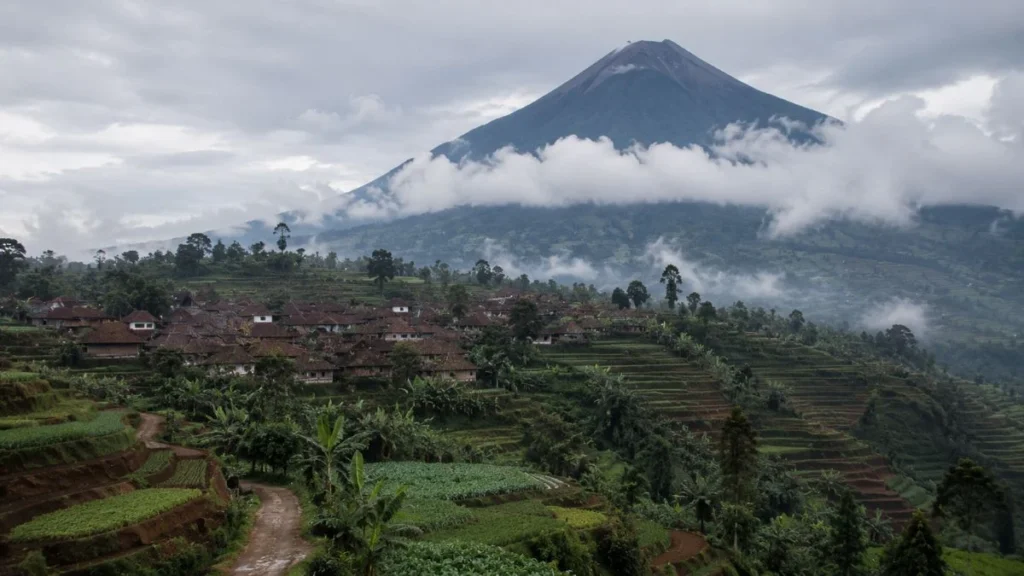
Mount Merapi — one of the most active volcanoes in Indonesia and the dominant geographical feature of this part of Java — shapes everything in the region north of Yogyakarta, from the landscape and the soil to the way local communities relate to the mountain culturally. Merapi is not a dormant backdrop; it has erupted significantly multiple times in living memory, most recently in 2010, and the evidence of those eruptions is still visible across parts of the highland landscape.
Kaliurang, the main highland town on Merapi’s southern slope, was developed during the Dutch colonial period as a hill station retreat — cooler air, cleaner water, a break from the heat of the lower city. It still functions as a weekend escape for Yogyakarta residents, which means its character is shaped more by domestic tourism and local highland life than by international visitor infrastructure. There are guesthouses, warungs, walking trails into the forest on Merapi’s lower slopes, and a museum dedicated to the 2010 eruption — but not the organized tour circuit that covers Borobudur or the Kraton.
The 2010 Eruption Museum: Merapi’s Most Direct History
The Museum Sisa Hartaku — loosely translated as “Museum of My Remaining Belongings” — sits in the village of Petung, in the area most severely affected by the 2010 Merapi eruption. It’s a small, informal museum built inside the remains of a house destroyed by pyroclastic flow, preserving exactly what was left: melted household objects, scorched furniture, the outlines of what daily life looked like before the eruption came through.
It’s not a polished heritage site. There’s minimal formal interpretation, limited English signage, and no visitor center in the conventional sense. What it is, is the most direct and unmediated encounter with what Merapi actually means to the communities that live on its slopes — which is a different kind of historical weight than Borobudur or the Kraton offers, and worth including for travelers with more than a passing interest in the region they’re moving through.
The Lava Tour: Honest Assessment
The Merapi Lava Tour — a jeep excursion across the volcanic landscape north of Kaliurang, visiting hardened lava fields, buried villages, and viewpoints toward the active crater — has become the most packaged and most marketed “experience” in the highlands. It’s a legitimate way to see terrain that isn’t accessible on foot, and the guides who run it are typically locals with direct connection to the 2010 eruption.
The honest trade-off: it’s become a well-worn tourist circuit, and the experience varies significantly depending on which operator you use and how much time you’re given at each stop. The dawn departure — leaving Yogyakarta around 4am to reach the highland viewpoints at sunrise — is the version most commonly sold online, and for good reason; the light and the crater visibility are better early, before cloud cover builds. Midday departures are cheaper but less rewarding.
It’s worth doing if the volcanic landscape and the 2010 history genuinely interest you. It’s not worth doing as a box to tick before breakfast if you’re otherwise ambivalent about it — the early wake-up and the tourist-circuit feel of some stops make it a poor casual addition to an itinerary.
Kaliurang as a Base, Not Just a Day Trip
Most visitors treat Kaliurang as a day trip from Yogyakarta, which is entirely workable. A smaller number stay overnight — there are simple guesthouses, and the cooler temperature and quieter pace make it a genuinely different experience from the city. If your trip is weighted toward city sights and you want one night that feels noticeably different, Kaliurang is the most accessible version of that trade without requiring a full change of base.
For the overall picture of how this fits alongside everything else worth doing in Yogyakarta, the main things to do in Yogyakarta guide covers the full range. In our 3-day Yogyakarta itinerary, the Merapi highlands appear as the alternative Day 3 option to Jomblang Cave — a quieter, less logistically intensive choice that still gets you out of the city center.
Practical Notes for Getting There
The road from Yogyakarta to Kaliurang is straightforward — a single main road running north through increasingly rural landscape. Ride-hailing apps cover the route but tend to be less reliable for the return trip from Kaliurang itself (driver supply thins out the further you get from the city), so a rented motorbike or arranged private car gives more flexibility for a full day up here.
The highland route pairs reasonably with a stop in the villages along the way — particularly around Pakem, where the landscape starts to shift and the roadside warungs get noticeably less touristy. It doesn’t pair well with the major temple sites, which sit in the opposite direction; trying to combine a Merapi day with Prambanan or Borobudur in the same itinerary slot adds unnecessary transit back and forth across the city.
Frequently Asked Questions
Is Kaliurang worth visiting from Yogyakarta?
Yes, particularly for travelers who want a day that feels different from the temple and palace circuit. The highland landscape, cooler temperature, and connection to Merapi’s volcanic history make it worth the 45-minute drive north, especially on a longer trip.
How do I get to Kaliurang from Yogyakarta?
Kaliurang is roughly 25 kilometers north of central Yogyakarta, about 45 minutes to an hour by car or rented motorbike. Ride-hailing apps cover the route but supply can be limited for the return trip from Kaliurang itself, so arranged transport or a rented motorbike is more reliable for a full day.
What is the Merapi Lava Tour and is it worth it?
The Merapi Lava Tour is a jeep excursion across the volcanic landscape north of Kaliurang, visiting hardened lava fields, buried villages, and viewpoints toward the crater. It’s worth doing if Merapi’s volcanic history genuinely interests you; less so as a casual box-tick. The dawn departure gives better visibility and light than midday versions.
Can I visit Kaliurang and Prambanan on the same day?
Not comfortably. They sit in opposite directions from central Yogyakarta — Kaliurang to the north, Prambanan to the east — and combining them adds significant transit time without doing justice to either. They’re better treated as separate days.