Forget the “top 10 must-visit” lists. The best things to do in Yogyakarta aren’t really about checking off landmarks — they’re about understanding why a city built around a still-functioning royal court feels so different from anywhere else in Java. Some of it photographs beautifully. Some of it doesn’t, and that’s exactly the part worth knowing about before you go.
If you’ve searched “things to do in Yogyakarta” more than once, you’ve probably noticed most results read the same way: Borobudur, Prambanan, Malioboro, repeat. None of that is wrong, exactly. It’s just incomplete — the kind of list someone writes after three days in the city, not three years.
Yogyakarta isn’t a destination you “do.” It’s a city with a sultan who still holds court, a craft economy that’s centuries old and not performed for tourists, and a layer of daily life that keeps going whether or not anyone’s watching. The things worth your time in Yogyakarta usually sit a little behind the obvious ones — and that’s what this guide is built around.
Kraton Yogyakarta: The Sultan’s Palace That’s Still in Use
Most visitors treat the Kraton as a forty-minute stop: buy a ticket, look at some pavilions, leave. That’s a shame, because Yogyakarta is one of the only places in Indonesia where you can watch a centuries-old court culture still functioning in real time — not as a recreation, but as an actual institution with an actual sultan.
The honest version: go on a day when there’s a pendopo performance scheduled (gamelan rehearsals happen most mornings), and budget more time than you think you need. The architecture alone won’t tell you much. What will is watching the rhythm of how the place still operates. We’ve written more about what’s actually still alive inside the Kraton if you want the deeper version before you go.
Kotagede: The Silver-Working Village Most Itineraries Skip
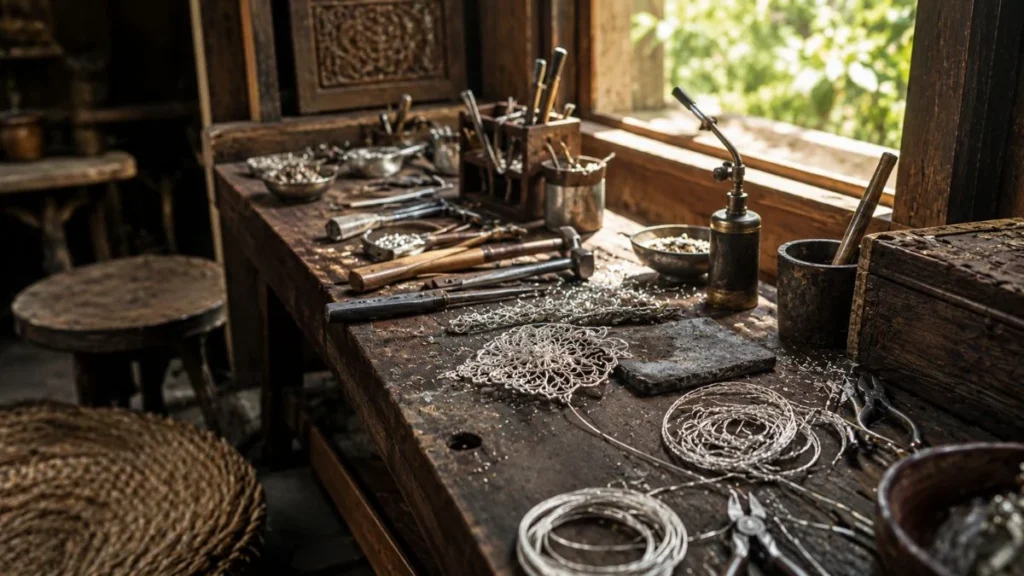
This is where things to do in Yogyakarta quietly separate from a generic Java stopover. Kotagede, the old silver-working district just southeast of the city center, isn’t a souvenir market dressed up for visitors — it’s a neighborhood where silversmithing has been a family trade for generations, and you can still watch the process happen in workshops that aren’t performing for an audience.
The trade-off worth knowing: foot traffic has increased here over the past few years, and some workshops have adapted accordingly — showroom-first, workshop-second. The ones still worth visiting are usually a block or two off the main tourist strip, not on it. We go into which ones in Kotagede Silver: The Village Behind Yogyakarta’s Craft.
Taman Sari Water Castle: Beyond the Photo Op
Taman Sari, the old royal water castle a short walk from the Kraton, is one of the most photographed things to do in Yogyakarta — and also one of the most misunderstood. Most write-ups describe it purely as a photo spot, when its actual function (royal bathing complex, defensive structure, and meditation site rolled into one) is the more interesting story. It’s easy to fit into a half-day, and worth doing slowly rather than rushing through. We unpack what Taman Sari actually is, and isn’t, in more detail separately.
Ratu Boko, a hilltop site near Prambanan, is another temple worth the detour beyond the two famous ones — fewer crowds, more atmosphere, especially toward late afternoon.
Jomblang Cave: One of the More Talked-About Things to Do in Yogyakarta
Goa Jomblang has become one of the more search-heavy entries on any “things to do in Yogyakarta” list in the past few years, largely thanks to the dramatic light beam that hits the cave floor around midday. It’s genuinely worth seeing — but it’s also genuinely become a queue-and-quota operation during peak season, and almost nothing written about it mentions that part.
If you’re going, knowing what you’re trading (time, cost, crowd management) against what you’re getting (a real geological spectacle, not a staged one) will save you some frustration. We break down the actual logistics in Jomblang Cave: Is the Queue Worth It?
Pasar Beringharjo: Where Yogyakarta Actually Shops
Malioboro Street gets all the attention, and it’s fine for a first walk-through — but Pasar Beringharjo, the traditional market just off it, is where you actually see how the city eats, shops, and trades day to day. Batik, spices, snacks, household goods — it’s loud, unglamorous, and far more representative of Yogyakarta than the souvenir stalls a few hundred meters away.
How to Prioritize: A Realistic Starting Point
If you only have a couple of days, don’t try to do all of this. The Kraton and Taman Sari sit close enough together to pair in one slower morning. Kotagede works best as a half-day on its own, ideally not rushed. Jomblang Cave and Ratu Boko both eat up the better part of a day each once you factor in travel time and queues, so pick one rather than both if your schedule is tight. Pasar Beringharjo is the easiest to slot in anywhere — even a 45-minute walk-through is worth it.
For a longer, hour-by-hour breakdown, we’ve put together a separate 3-day Yogyakarta itinerary that maps all of this onto an actual schedule.
Where you stay also shapes how easy this all is to piece together — we’ve broken that down separately in our guide to where to stay in Yogyakarta, since it deserves more than a paragraph here.
Frequently Asked Questions
How many days do you need in Yogyakarta?
Three days is enough to cover the highlights above without rushing — two if you’re tight on time and willing to skip one major site. Anyone staying longer than four days will likely want to use the extra time for a day trip toward the Merapi highlands or Gunungkidul rather than more city sights.
Is Yogyakarta worth visiting?
Yes, and for reasons beyond Borobudur and Prambanan specifically. Yogyakarta is one of the few places in Java where a living royal court, a working craft economy, and an active university culture all overlap in one city — it rewards slower travel more than a quick stopover does.
Yogyakarta or Jogjakarta — what’s the difference?
None, really. Yogyakarta is the formal name, Jogja or Jogjakarta is the everyday spoken version locals use, and both refer to the same city. You’ll see all three used interchangeably in signage, menus, and conversation.
What’s the best time of year for things to do in Yogyakarta?
Dry season, roughly May to September, is the easiest window for road trips into the highlands and around Gunungkidul. The rest of the year still works fine for the city-based sights above — just plan around occasional rain, particularly for anything involving caves or hilltop sites.