Yogyakarta safety is something most visitors don’t think about until something goes wrong—which is exactly when having prepared in advance makes the biggest difference. This guide also explains the healthcare options worth knowing about, the most common health issues travelers encounter, how the Indonesian healthcare system works for visitors, and the safety considerations specific to Yogyakarta that don’t fit neatly into a generic Southeast Asia travel guide.
Healthcare and safety in Yogyakarta is better resourced than many travelers expect from a mid-sized Indonesian city, and less straightforward than what visitors from Australia, the UK, or Germany are accustomed to at home. The city has both public and private hospital facilities, a functioning pharmacy network, and sufficient medical infrastructure for most common travel health issues. The gaps — in specialist care, in English-language communication, in the management of serious trauma or complex medical situations — are real and are the reason that travel insurance covering medical evacuation is worth having rather than optional.
Medical Facilities in Yogyakarta
Private hospitals are the appropriate first point of contact for most visitor medical needs in Yogyakarta. The two most established options for visitors are RS Panti Rapih and RS Bethesda, both centrally located and both with English-speaking staff in the international or emergency departments. Private hospitals in Yogyakarta charge significantly more than public facilities but offer faster service, better English communication, and a more navigable experience for visitors unfamiliar with the Indonesian public health system.
RS Panti Rapih (Jalan Cik Di Tiro) is generally considered the best-equipped private hospital in Yogyakarta for visitor use, with an emergency department, inpatient facilities, and specialist consultations available. It’s the facility most commonly recommended by expatriates and long-term visitors in the city.
RS Bethesda (Jalan Jenderal Sudirman) is the other main private hospital option — slightly closer to the city center, comparable facilities for most non-specialist needs.
Public hospitals (RSUP Dr. Sardjito) are Yogyakarta’s main public referral hospital, associated with Gadjah Mada University. It has more specialist capacity than the private hospitals for complex cases, but is also significantly busier and less immediately navigable for visitors who don’t speak Indonesian. For serious specialist care or trauma management, it may be where you’re eventually directed even if initial contact is through a private facility.
Clinics and general practitioners: Several smaller clinics in the Prawirotaman and city center area handle basic consultations for common travel health issues — stomach problems, minor infections, wound care, mild fever. These are faster and cheaper than hospital emergency departments for non-emergency issues, and the Prawirotaman area has enough expatriate and long-term visitor traffic that English-speaking GPs are available. Asking your accommodation for a current recommendation is more reliable than searching independently, since clinic quality and English availability varies.
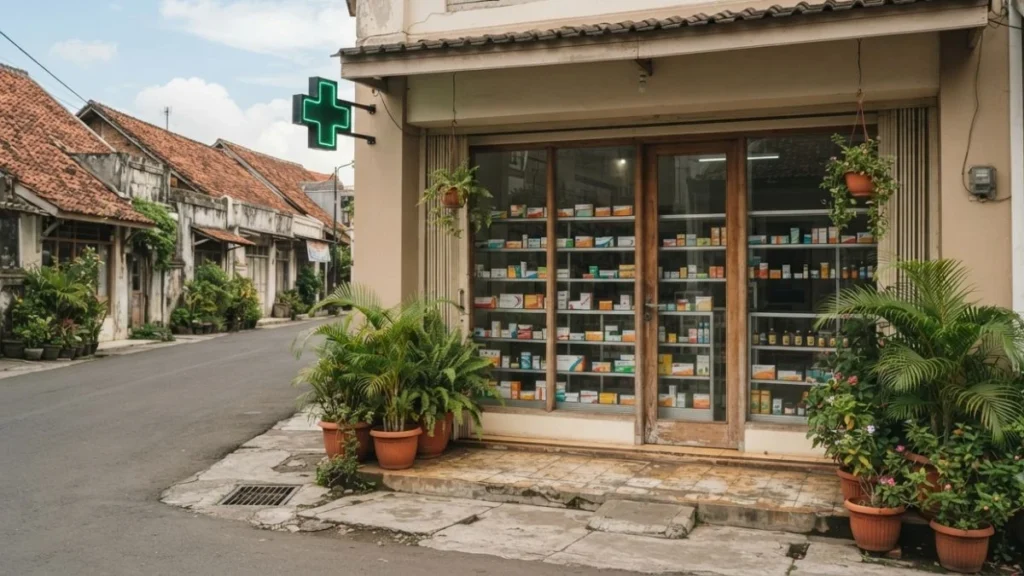
Pharmacies (Apotek): The Apotek network in Yogyakarta is well-distributed and stocks a wide range of medications including many that require a prescription in Western countries. Kimia Farma is the most common pharmacy chain and has multiple branches in the city center and near the main hospitals. For common travel health medications — antidiarrheals, antihistamines, antibiotics for confirmed bacterial infections — a pharmacy consultation is often an appropriate first step for mild issues before escalating to a clinic visit.
Travel Insurance: What You Actually Need
Travel insurance for Yogyakarta is not optional in any meaningful sense — the question is what coverage level is appropriate. The relevant coverage categories for a Yogyakarta trip:
Medical treatment coverage: Should cover private hospital treatment costs, which for serious issues can escalate quickly. A minimum of USD 100,000 medical coverage is the commonly recommended baseline; higher is better for anything involving surgery or extended inpatient care.
Medical evacuation coverage: This is the category most travelers underestimate and most importantly need. If a medical situation requires specialist care beyond what Yogyakarta’s hospitals can provide — serious neurological events, complex orthopedic trauma, conditions requiring care at Australian or Singaporean hospital standards — medical evacuation to Singapore, Bangkok, or Darwin can cost USD 50,000 to USD 100,000 or more without insurance. This coverage is the primary reason travel insurance is worth having.
Trip cancellation and interruption: Relevant but secondary to the medical coverage for most travelers.
Pre-existing conditions require disclosure and specific coverage — standard travel insurance policies exclude pre-existing conditions unless specifically covered, and the Indonesian private hospital system will treat regardless of insurance status but will expect payment.
The Most Common Health Issues in Yogyakarta
Traveler’s diarrhea is the most common health issue for visitors to Yogyakarta, as it is across most of Southeast Asia. The cause is almost always contaminated water or food prepared with it — ice from uncertain sources, raw vegetables washed in tap water, undercooked food from stalls with poor hygiene practices. The risk is higher at lower-tier food vendors and lower (but not zero) at established warungs with high turnover. Management: oral rehydration salts first, antidiarrheal if needed to manage symptoms through activity, and medical attention if symptoms include high fever, blood, or persist beyond 48–72 hours.
Heat exhaustion and dehydration are underestimated risks at Yogyakarta’s equatorial temperatures, particularly on full-day temple visits and highland day trips. Drinking enough water (and the right fluids, not just water — electrolytes matter in high-sweat environments) throughout the day is the prevention. ORS is the treatment for mild dehydration; medical attention is needed for heat stroke symptoms (confusion, cessation of sweating, very high temperature).
Dengue fever is present in Yogyakarta and should be in the awareness framework for any visitor who develops high fever 4–14 days after arriving. There is no specific treatment for dengue, but it requires medical monitoring and management, and severe dengue can be life-threatening without appropriate care. Insect repellent use reduces (not eliminates) mosquito bite risk. If you develop high fever in Yogyakarta, dengue should be one of the possibilities discussed with a doctor.
Motorbike accidents are a meaningful risk category for visitors who rent motorbikes, which is worth stating directly rather than noting obliquely. Indonesian traffic operates on conventions that take time to read, road surfaces vary in quality, and most visitors who rent motorbikes in Yogyakarta have less experience with local traffic dynamics than they realize. Helmet use is legally required and practically essential — wearing a quality helmet (not the flimsy versions sometimes provided with rental bikes) and riding conservatively, particularly on highland roads, reduces but doesn’t eliminate the risk.
Altitude-related symptoms are relevant specifically for the Dieng Plateau day trip, where elevations above 2,000 meters can produce mild altitude sickness symptoms in susceptible individuals — headache, nausea, fatigue. The altitude at Dieng is not extreme enough to produce serious altitude sickness in most healthy adults, but ascending quickly (as most day trips do) can produce mild symptoms that are worth knowing to recognize.
Food and Water Safety
Tap water in Yogyakarta is not safe to drink — this applies universally, not just to street food or market eating. Bottled water is the standard and is available everywhere; a filter bottle (covered in the Yogyakarta packing list) is the sustainable alternative.
Ice in established restaurants and mid-range cafés is generally made from filtered water and is reasonably safe; ice from uncertain sources (small warungs, street vendors) carries higher risk. The judgement call most experienced travelers make: established warung ice at high-turnover places is usually fine, ice at places where turnover is low is higher risk.
Raw vegetables and salads carry more risk than cooked food in most developing-world food safety frameworks — the washing water is the variable. The Yogyakarta food guide covers the food landscape; the general principle is that high-turnover warungs serving cooked food are lower risk than salad-heavy tourist restaurant menus.
General Safety in Yogyakarta
Yogyakarta’s general crime rate is low relative to Jakarta and relative to many international tourist destinations. Petty theft — pickpocketing in crowded markets, bag snatching on motorbikes — is the most relevant category for visitors, not violent crime.
Malioboro and Pasar Beringharjo are the highest-density areas where pickpocketing risk is highest — a front-facing bag or a phone in a back pocket in a crowded market is a straightforward opportunity. Front-of-body bag carry or a secure crossbody bag handles this.
Ride-hailing scams are essentially eliminated by using Gojek or Grab rather than unlicensed transport — the app records the driver, vehicle, and route. The scam risk in Yogyakarta is primarily from informal transport offers near tourist sites, not from the app-based system.
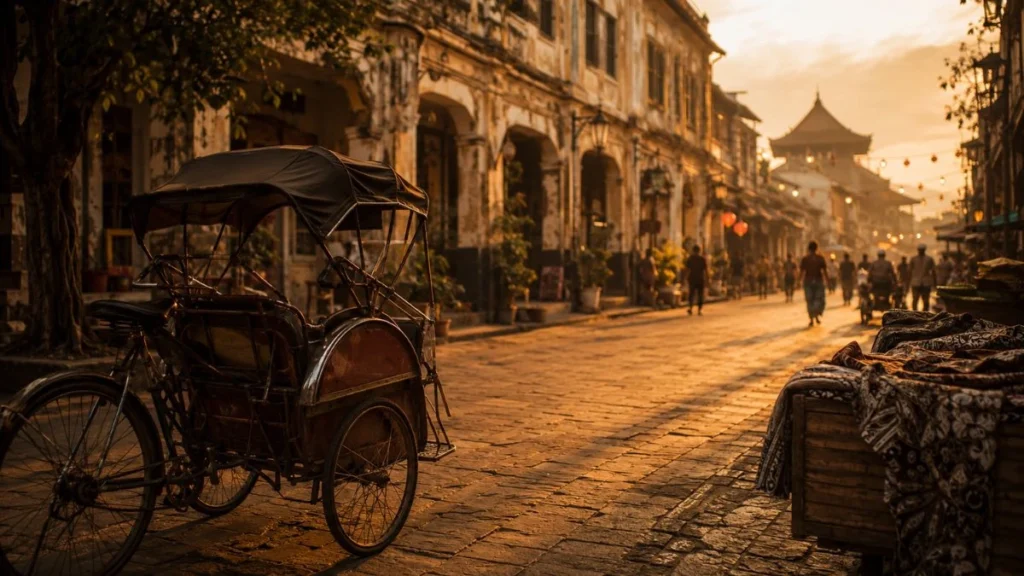
Becak and tour pricing: Overpaying for becak rides or “recommended” tours is the most common financial friction for visitors, rather than anything with a safety dimension. Agreeing on the price before starting a becak ride is the convention; refusing politely and walking away is a complete solution to any pricing pressure.
Natural disaster awareness: Yogyakarta sits in an active volcanic and seismic zone. Mount Merapi eruptions and earthquakes are genuine possibilities on any trip, not hypothetical edge cases — the 2006 earthquake and the 2010 Merapi eruption both caused significant damage and casualties in the region. The Indonesian volcanology authority (PVMBG) monitors Merapi continuously and issues alert levels that affect access to the highland areas — checking current Merapi status before visiting the Kaliurang area is worth doing, and the exclusion zones around an elevated-alert Merapi are to be taken seriously rather than treated as bureaucratic caution.
For how the Merapi risk context affects the Kaliurang day trip specifically, the Kaliurang Yogyakarta guide covers the practical implications.
Frequently Asked Questions
Is it safe to eat street food in Yogyakarta?
Generally yes, with some calibration. High-turnover warungs serving freshly cooked food are low risk. Lower-turnover vendors, raw or undercooked food, and ice from uncertain sources carry more risk. The most common consequence of eating wrong in Yogyakarta is traveler’s diarrhea, which is unpleasant but manageable — carrying oral rehydration salts and knowing where the nearest pharmacy is covers most scenarios.
What should I do if I get sick in Yogyakarta?
For mild issues (stomach upset, minor infection, mild fever), a pharmacy consultation or clinic visit is the appropriate first step. For anything involving high fever, significant pain, difficulty breathing, suspected dengue, or any head injury or trauma — go directly to RS Panti Rapih or RS Bethesda emergency departments and contact your travel insurance provider as soon as possible.
Do I need vaccinations for Yogyakarta?
Standard travel vaccinations for Indonesia typically include hepatitis A, hepatitis B, typhoid, and tetanus — check with a travel medicine clinic in your home country before departure, as recommendations vary by individual health history and current conditions. Rabies pre-exposure vaccination is recommended for travelers planning extended stays or activities involving significant animal contact. Malaria prophylaxis is generally not recommended for Yogyakarta city and surrounding areas, though the risk profile is different for remote rural areas.
Is the water safe to drink in Yogyakarta?
No. Tap water in Yogyakarta is not safe to drink. Bottled water is available everywhere and inexpensive; a filter bottle is the sustainable alternative covered in the packing list guide.