Ramayana Ballet Yogyakarta is one of those experiences that sounds straightforward until you start looking into the details — which venue, which version, which dates, what the performance actually involves, and whether the outdoor or indoor version suits your trip. Here’s the honest breakdown before you commit to an evening around it.
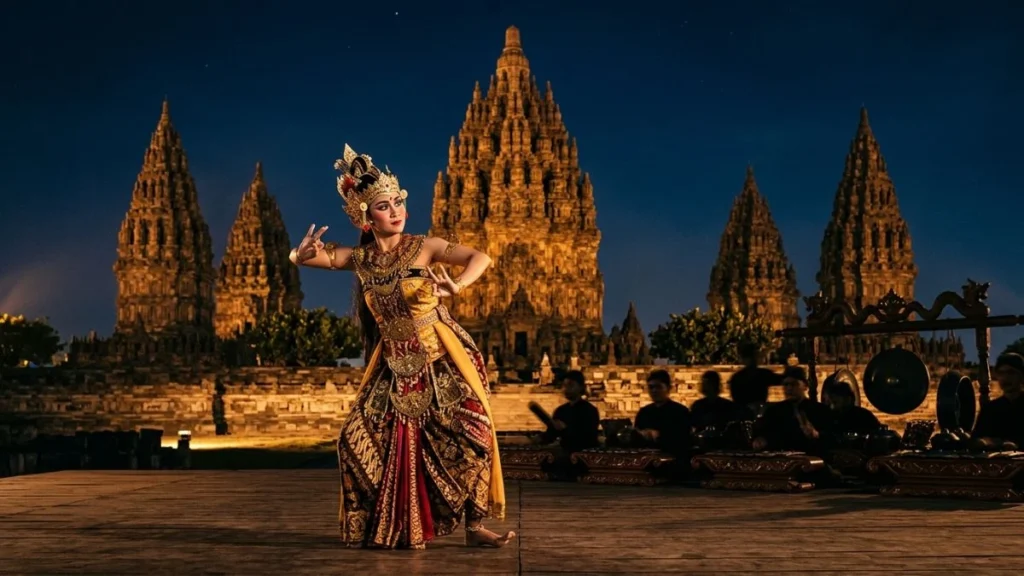
Ramayana Ballet Yogyakarta appears on most recommended experience lists for the city, usually with a photo of fire dancers silhouetted against the illuminated Prambanan temple compound. That image is real, and it’s one of the reasons the outdoor performance at Prambanan has become the version most visitors book. But the Ramayana Ballet isn’t a single fixed event — it runs across multiple venues in Yogyakarta, in different formats, on different schedules, and the experience varies enough between them that choosing without understanding the differences produces genuinely different evenings.
What the Ramayana Ballet Actually Is
The Ramayana Ballet is a traditional Javanese dance-drama performance telling the story of the Ramayana — the ancient Hindu epic in which Prince Rama, aided by the monkey general Hanuman and an army of allies, rescues his wife Sita from the demon king Ravana. The Yogyakarta version is performed in the classical Javanese court dance style (sendratari), which uses highly formalized movement vocabulary, elaborate costuming, and live gamelan accompaniment rather than spoken dialogue — the story is communicated entirely through movement, gesture, and musical cue.
The connection to Prambanan is specific and worth understanding: the relief panels on the Shiva and Brahma temples at Prambanan tell exactly this story in carved stone, which means watching the ballet performed in front of those same temples closes a loop between the 9th-century narrative and its living performance tradition in a way that’s genuinely meaningful rather than incidental. This is the strongest argument for the outdoor Prambanan venue over the indoor alternatives.
The Outdoor Performance at Prambanan: The Full Picture
The outdoor Ramayana Ballet at Prambanan is staged on an open-air theatre built adjacent to the temple compound, with the illuminated main spires of Prambanan forming the backdrop. It runs on full-moon evenings during the dry season — roughly May through October — when the weather is reliable enough for an outdoor performance and the full moon adds to the atmosphere.
The full performance covers the entire Ramayana story across four episodes, typically staged across multiple evenings. Most visitors attend a single episode rather than the full cycle, which means you’ll see one substantial portion of the narrative rather than the complete arc — worth knowing before you arrive expecting a self-contained story with a beginning and end.
What the photos don’t show: the open-air venue means you’re sitting outside for two to three hours, and even dry-season Yogyakarta evenings can be cool enough to warrant a light layer. The seats vary in quality and view depending on which ticket tier you book, and the closer sections are noticeably better for following the detail of the movement. The fire dancing sequences, which appear in the climactic battle scenes, are genuinely spectacular and worth positioning yourself well for.
The honest limitation: the outdoor venue at Prambanan runs only during the dry season on full-moon dates, which requires planning your trip around a specific calendar rather than treating the ballet as a flexible evening option.
The Indoor Alternatives: More Flexible, Different in Character
For visitors whose travel dates don’t align with full-moon dry-season evenings at Prambanan, Yogyakarta has two indoor venues running Ramayana Ballet performances on a more regular schedule.
The Purawisata venue in central Yogyakarta runs performances most evenings, making it the most accessible option for visitors who want to see the ballet without scheduling around Prambanan’s calendar. The production values are solid and the performance is genuine classical Javanese dance — but the absence of Prambanan as a backdrop changes the atmosphere significantly, and the indoor setting, while comfortable, doesn’t carry the same weight as the outdoor version.
The Kraton’s own performance spaces occasionally host dance performances connected to the court’s cultural calendar, though these are less consistently available to general visitors than the two commercial venues. The Kraton Yogyakarta guide covers the Kraton’s performance tradition in more detail, including the morning gamelan rehearsals that happen regardless of the tourist calendar.
How to Actually Book
The outdoor Prambanan performances sell out during peak season — June through August — and booking in advance through the official Prambanan ticket channels or through a reputable local agent is necessary rather than optional during that window. Showing up on the day hoping for availability is a reasonable gamble in the shoulder season but not during the peak months when international visitor numbers are highest.
The Purawisata indoor venue is more forgiving on advance booking for most of the year, though the better seat sections still benefit from booking a day or two ahead rather than on arrival.
For how the Ramayana Ballet fits into a broader Yogyakarta trip — including when to fit it into a 3-day Yogyakarta itinerary without it dominating an evening that could serve other purposes — the timing considerations are worth thinking through before you commit. A ballet that ends at 9:30pm or later, combined with a sunrise Borobudur departure at 4am the following morning, is an ambitious combination that works better on paper than in practice.
Is It Worth It?
For travelers with a genuine interest in Javanese cultural performance — or for anyone visiting Prambanan Temple Yogyakarta and wanting a way to extend the connection with what the temple’s relief panels depict — the outdoor Prambanan version on a clear full-moon evening is one of the more memorable things you can do in the Yogyakarta region. The combination of setting, live gamelan, and the visual vocabulary of classical Javanese dance is specific to this place in a way that few ticketed tourist experiences genuinely are.
For travelers who are primarily curious rather than specifically interested in traditional performance, the indoor Purawisata version provides a more convenient introduction to the same tradition without requiring schedule planning around the moon calendar — a reasonable trade-off if the Prambanan connection matters less to you than simply seeing the performance.
For the full picture of what’s worth doing in Yogyakarta across all categories, the things to do in Yogyakarta guide covers where the Ramayana Ballet sits alongside the city’s other experiences.
Frequently Asked Questions
When is the Ramayana Ballet performed at Prambanan?
The outdoor Ramayana Ballet at Prambanan runs on full-moon evenings during the dry season, roughly May through October. Exact dates follow the lunar calendar and shift annually. Indoor performances at venues like Purawisata in central Yogyakarta run more regularly, most evenings throughout the year.
How long is the Ramayana Ballet Yogyakarta?
A single episode of the Ramayana Ballet runs approximately two to two and a half hours. The complete Ramayana story is divided across four episodes staged on separate evenings — most visitors attend one episode rather than the full cycle.
Do I need to book Ramayana Ballet tickets in advance?
For the outdoor Prambanan performance during peak season (June through August), yes — advance booking is necessary as performances sell out. For the indoor Purawisata venue, booking a day or two ahead is advisable for better seat sections but not always essential outside peak season.
What is the difference between the Prambanan and Purawisata Ramayana Ballet?
The outdoor Prambanan performance uses the illuminated temple compound as its backdrop and runs only on full-moon dry-season evenings, making it more atmospheric but less flexible. Purawisata is an indoor venue in central Yogyakarta running most evenings, more accessible in scheduling but without the Prambanan setting.