Last updated: 7 August 2026
Order gudeg once and you’ll understand why locals half-joke that Yogyakarta should just be renamed Kota Gudeg — the city has built an entire culinary identity around a stew of young jackfruit simmered for hours until it turns sweet, dark, and impossibly tender.
Quick Facts
- What it is: Young jackfruit slow-cooked in coconut milk, palm sugar, and spices until sweet and tender
- Price range: Roughly Rp 6,000–45,000 for a plate; take-home packages run higher
- Where to try it: Jalan Wijilan near Kraton, plus warung across the city — some open 24 hours
- Cooking time: Traditionally 4–12 hours over slow heat
- Pairs with: Krecek (spicy beef-skin crackers), opor chicken, and telur pindang (spiced eggs)
Gudeg is the dish most closely tied to Yogyakarta’s identity — so much so that the city is commonly nicknamed “Kota Gudeg” (Gudeg City). It’s built from young, unripe jackfruit (locally called gori), simmered for hours in coconut milk, palm sugar, and a spice blend that typically includes shallots, garlic, coriander, and galangal. The result is a stew that’s deeply sweet, slightly savory, and soft enough to fall apart with a spoon.
Where Gudeg Comes From
Gudeg’s history is generally traced back to the founding of the Islamic Mataram Kingdom in the Mentaok forest — the area that would later become Yogyakarta — during the 16th century. According to Indonesia’s Ministry of Tourism, workers building the kingdom struggled to find food and turned to what was abundant around them: young jackfruit, melinjo leaves, and coconut, which they cooked in large cauldrons until the mixture thickened. The dish’s name is widely believed to come from the Javanese word for stirring — a nod to the long, hands-on process needed to get the texture right.
There’s a philosophical layer to the dish too. The hours-long cooking process is often read as a symbol of patience, echoing the Javanese saying alon-alon asal kelakon — roughly, “slowly but surely, the goal is achieved” — while the dish’s dominant sweetness is associated with the gentleness and hospitality Yogyakarta people take pride in. Whether or not every visitor picks up on that symbolism, it’s a detail locals will often mention unprompted if you ask why gudeg takes so long to make.
How It’s Actually Made
The color is one of gudeg’s most recognizable traits — a deep reddish-brown that comes specifically from teak leaves (daun jati) thrown into the pot during cooking, which release a natural dye as the jackfruit simmers. The coconut milk gradually reduces over low heat, often overnight, until the spices are fully absorbed and the jackfruit turns tender enough to shred with a fork.
There isn’t just one version of gudeg. The two main styles are gudeg kering (dry), where the coconut milk has cooked down almost completely, making it denser and better suited for take-home packages, and gudeg basah (wet), which still has a pool of thick coconut sauce (areh) and is usually eaten fresh at a warung rather than packed for later. A less common regional variant, gudeg manggar, swaps the jackfruit for young coconut flower and has a crunchier bite — it’s more associated with the Bantul area south of the city than with central Yogyakarta.
What Comes on the Plate
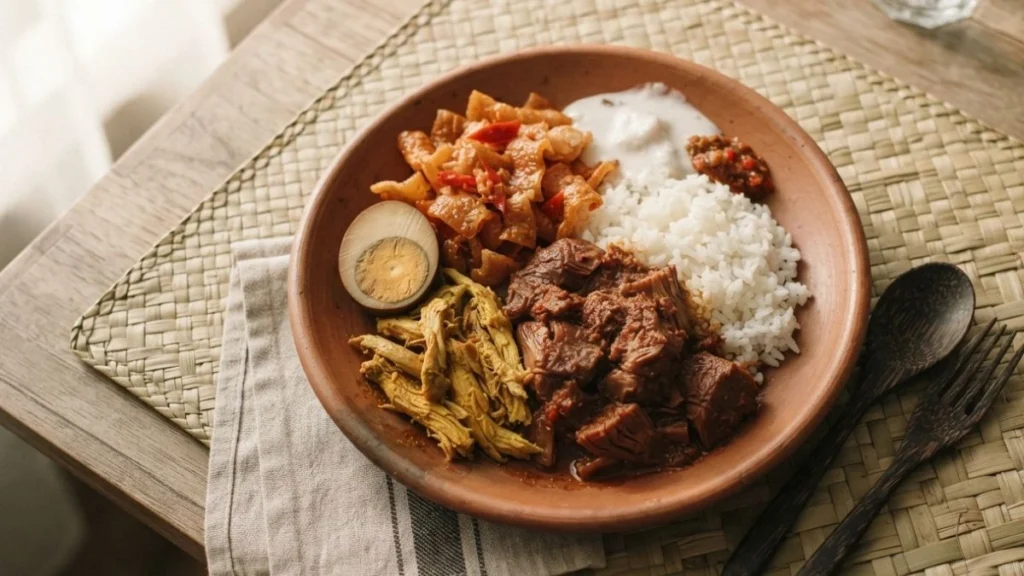
Gudeg is rarely served alone. A full plate — often called nasi gudeg komplit — typically includes rice, the jackfruit stew itself, krecek (beef-skin crackers cooked in a spicy coconut-chili sauce), a piece of chicken (either opor-style in yellow coconut broth or shredded), and telur pindang — eggs boiled slowly with spices and onion skin until the shell stains them a deep brown. Areh, the thick coconut sauce, gets ladled over the top to tie the sweet, spicy, and savory elements together.
Where to Actually Try It
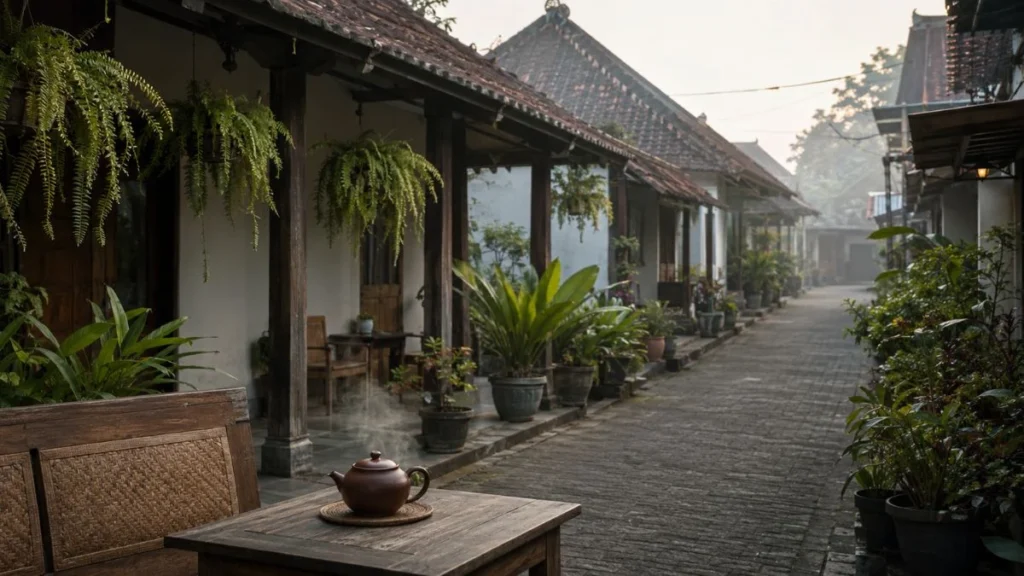
The area around Jalan Wijilan, close to the Kraton, is the most concentrated gudeg district in the city and a natural stop if you’re already exploring the kraton yogyakarta complex. Gudeg Yu Djum is the name most visitors will hear first — a multi-generational family operation with several branches around the city.
Prices at Yu Djum’s outlets run from roughly Rp 6,000 for a simple portion up to about Rp 45,000 for a complete plate with chicken, egg, and krecek, based on menu pricing from Yogyakarta’s official tourism portal. Take-home packages, sold in traditional besek baskets or kendil pottery for gifting, cost more — up to around Rp 180,000 for a complete set — and are designed to keep for a couple of days without refrigeration, longer if chilled.
Beyond Yu Djum, gudeg is genuinely everywhere in Yogyakarta — some warung specialize in it around the clock, including a handful of late-night stalls that cater to the same crowd who’d otherwise be sipping kopi joss at an angkringan. It’s also a natural stop if you’re working through the wider yogyakarta food guide or shopping for edible souvenirs near pasar beringharjo, where packaged gudeg is a common find among the stalls.
What It Actually Tastes Like
Expect sweetness first — Yogyakarta-style gudeg leans noticeably sweeter than versions found in nearby Central Java, where the flavor tends toward savory instead. The krecek adds a spicy, chewy contrast that keeps the dish from feeling one-note, and the coconut milk gives everything a rich, slightly fatty finish. It’s a heavier meal than most visitors expect from a stew built on jackfruit, and it’s just as commonly eaten for breakfast in Yogyakarta as it is for lunch or dinner.
Is It Worth Trying?
Yes — gudeg is less a niche specialty and more a required stop if you want to understand what Yogyakarta actually eats. It’s inexpensive, widely available, and distinct enough from other Indonesian dishes that skipping it means missing a real piece of the city’s identity, not just another item on a food checklist.
What does gudeg taste like?
Predominantly sweet, with a savory, slightly spicy contrast from the krecek and a rich coconut-milk finish — Yogyakarta’s version is noticeably sweeter than gudeg made elsewhere in Central Java.
Is gudeg spicy?
The stew itself isn’t spicy — the heat comes from the krecek and any sambal served alongside it, so you can ask for less if you’re sensitive to spice.
How much does a plate of gudeg cost?
A simple plate can cost as little as Rp 6,000–8,000 at everyday warung, while a complete set with chicken, egg, and krecek at a well-known spot like Gudeg Yu Djum runs closer to Rp 25,000–45,000.
Can I bring gudeg home as a souvenir?
Yes — dry gudeg (gudeg kering) is specifically made for travel, sold in besek baskets or kendil pottery, and can keep for a couple of days unrefrigerated or longer in a fridge.
Where is the best place to try gudeg in Yogyakarta?
Jalan Wijilan near the Kraton is the most famous gudeg district, but the dish is sold across the city at warung and stalls, some open late into the night.
Sumber Resmi
- Kementerian Pariwisata RI — Indonesia.travel: Gudeg (diverifikasi aktif via fetch, diakses 7 Agustus 2026) — sumber resmi Kementerian Pariwisata untuk sejarah dan filosofi gudeg
- Yogyakarta Tourism Portal — Gudeg Yu Djum (diverifikasi aktif via fetch, diakses 7 Agustus 2026) — sumber resmi Dinas Pariwisata DIY untuk harga dan lokasi Gudeg Yu Djum