Last updated: 4 August 2026
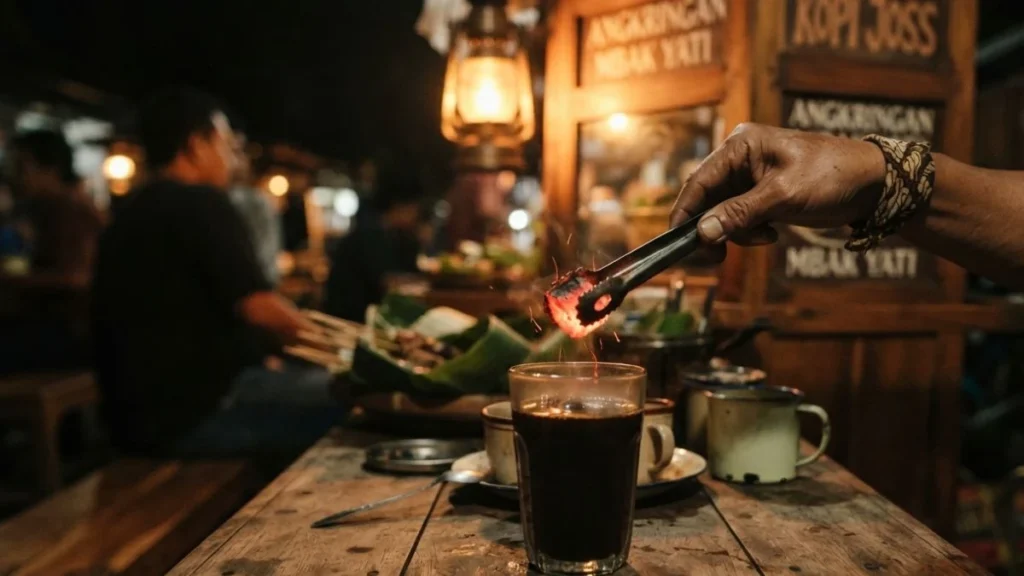
Kopi Joss is the drink that convinces most first-time visitors Yogyakarta’s night culture is a little different — hot coffee with a lump of red-hot charcoal dropped straight into the glass.
Quick Facts
- What it is: Black coffee with a piece of burning charcoal dropped in
- Where it started: Angkringan Lik Man, near Tugu Station
- Price: A few thousand rupiah per glass
- Best time to go: Evening, from around 5–6 PM into the night
- Pairs with: Nasi kucing and grilled skewers
Kopi Joss is a Yogyakarta specialty served at angkringan — simple roadside food stalls built around pushcarts, low stools, and cheap, comforting food eaten late into the evening. The drink itself is straightforward: black coffee, sugar, and hot water, finished with a piece of burning charcoal dropped directly into the glass. The name comes from the sound the charcoal makes on contact — a sharp “joss” as it hits the hot liquid.
Where It Started
According to the Yogyakarta Tourism Portal, Kopi Joss is widely credited to Angkringan Lik Man, one of the earliest angkringan stalls set up near Tugu Station. The story goes that a customer once ordered kopi klothok — a East Javanese-style boiled coffee — that Lik Man wasn’t familiar with making. Improvising, he dropped hot charcoal into a regular glass of coffee, and the result became popular enough on its own that it turned into a permanent menu item, eventually spreading to angkringan stalls across the city. Exact dates vary between sources, but Angkringan Lik Man’s location near Tugu Station has stayed tied to the drink’s origin story for decades.
What Angkringan Culture Actually Is
Angkringan predates Kopi Joss by a long stretch — the format traces back to simple mobile food carts that let workers and students grab an affordable meal late into the evening. A typical setup includes nasi kucing (small portions of rice with a simple side, named for their cat-food-sized portions), an assortment of skewered snacks (sate), fried items (gorengan), and a rotating selection of drinks. Prices are famously low, often just a few thousand rupiah per item, which is part of why angkringan has remained a fixture of Yogyakarta’s evening routine even as modern cafes have multiplied around the city.
Where to Try It
Kopi Joss is closely associated with the cluster of angkringan stalls near tugu jogja and Tugu Station — Angkringan Lik Man remains the most referenced name, though several other well-known stalls in the same area, along Jalan Mangkubumi and around malioboro street yogyakarta, serve their own versions. Since these are informal roadside setups rather than sit-down restaurants, expect low stools, shared tables, and an atmosphere built more around lingering conversation than quick service.
What It Actually Tastes Like
The coffee itself is simple and slightly sweet, closer to traditional Indonesian kopi tubruk than a specialty brew. The charcoal doesn’t add flavor in any dramatic way — most people describe a faint smoky or subtly caramelized note rather than an overwhelming change to the coffee’s taste. Some locals attribute mild health benefits to the charcoal, similar to activated charcoal’s reputation elsewhere, though this is folk belief rather than established medical fact.
Practical Tips
- Go in the evening. Angkringan culture is fundamentally a nighttime experience — most stalls set up as the sun goes down and stay busy well past midnight.
- Bring small cash. Prices are low, and stalls typically aren’t set up for cards.
- Pair it with the food. Nasi kucing and grilled skewers are the natural companions to Kopi Joss, and part of the appeal is the full spread rather than the coffee alone, similar to the broader spread covered in the yogyakarta food guide.
- Don’t expect a quiet cafe. Angkringan seating is close, casual, and often shared with strangers — part of what gives it its social character.
Is It Worth Trying?
For a taste of Yogyakarta’s actual evening rhythm rather than a curated tourist experience, yes — Kopi Joss and the angkringan culture around it offer something genuinely local, low-cost, and distinct from anywhere else in Indonesia. Even visitors who don’t end up loving the charcoal gimmick usually find the broader angkringan experience worth the stop.
Is it safe to drink coffee with charcoal in it?
Yes, it’s a long-standing local tradition served daily to both residents and visitors; the charcoal itself is typically food-grade wood charcoal rather than anything hazardous.
Does the charcoal change how the coffee tastes?
Subtly — most people notice a faint smoky or caramelized note rather than a dramatic flavor shift.
What is nasi kucing?
A small angkringan rice portion, named for its cat-food-sized serving, typically paired with a simple side like sambal or shredded meat and served alongside skewers and other snacks.
What time do angkringan stalls open?
Most set up in the evening, typically from around 5–6 PM, and stay open well into the night.
Is Kopi Joss only sold at Angkringan Lik Man?
No, while Lik Man is the most referenced origin point, most angkringan stalls across Yogyakarta now serve their own version of Kopi Joss.
Sumber Resmi
- Yogyakarta Tourism Portal — Angkringan Lik Man (diverifikasi aktif via fetch, diakses 4 Agustus 2026) — sumber resmi Dinas Pariwisata DIY untuk asal-usul Kopi Joss