Malioboro Street Yogyakarta is the most visited stretch of road in the city and the one most likely to produce a polarized reaction — visitors either love the energy or find the commercial intensity exhausting within thirty minutes. Knowing what it actually is before you arrive makes it useful rather than overwhelming, and knowing what it isn’t saves you from expecting something it was never going to be.
Malioboro Street Yogyakarta runs for roughly one kilometer through the heart of the city, connecting the northern square of the Kraton complex to the main commercial area near Pasar Beringharjo. It’s the oldest commercial street in Yogyakarta, a cultural landmark, and simultaneously one of the most vendor-dense tourist corridors in Indonesia. These things coexist without contradiction, and the experience of Malioboro depends almost entirely on whether you arrive understanding what kind of place it is rather than expecting something quieter, more curated, or more authentically local than a famous shopping street in a major tourist city ever is.
What Malioboro Street Actually Is
The street takes its name from the Duke of Marlborough — a relic of the British colonial period in Java — though the Javanese interpretation connects it to the Sanskrit word for “garland of flowers,” which suits the mythology better if not the etymology. The street has been a center of Yogyakarta’s commercial life since the early development of the city under Sultan Hamengkubuwono I, and it retains a symbolic significance in Javanese culture that its current souvenir-shop-lined reality doesn’t entirely communicate.
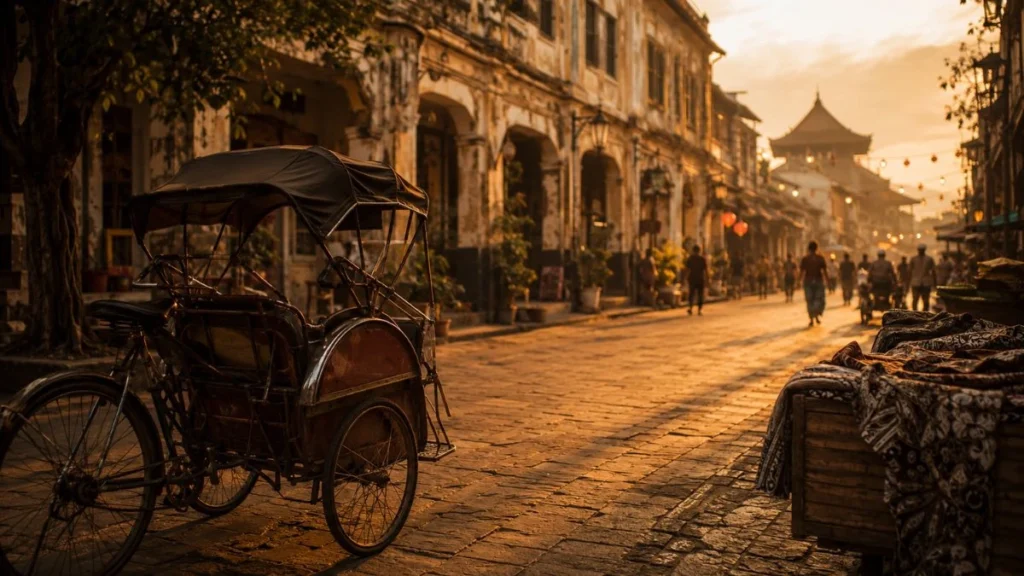
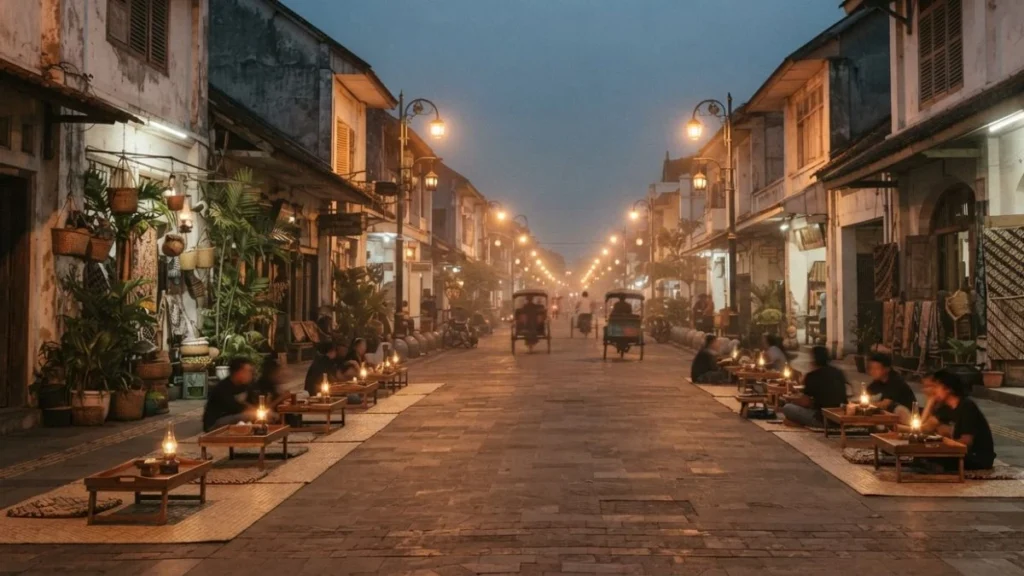
What Malioboro is today: a long pedestrianized street (vehicle access is now restricted along the main stretch) lined on both sides with batik shops, souvenir stalls, warung, becak, and street vendors selling everything from mass-produced batik to silver jewelry to snacks to clothing. It’s loud, crowded during peak hours, aggressively commercial in places, and genuinely alive in a way that photographically sanitized tourist areas rarely are. The evening version, when the street lights come on and the food stalls expand onto the sidewalk, has a different character from the midday version — louder in some ways, more atmospheric in others.
What’s Actually Worth Doing on Malioboro
Walking it end to end once is worth doing for orientation and atmosphere — starting from the northern end near Tugu Monument and walking south toward Pasar Beringharjo gives you the full length and the sense of how the street changes character as you move from the monument area into the denser commercial middle section and then toward the market end. This takes 20 to 30 minutes at a relaxed pace without stopping.
Pasar Beringharjo at the southern end is the most worthwhile destination the street connects you to — covered in full in the Pasar Beringharjo Yogyakarta guide, the market is the real commercial institution that predates Malioboro’s tourist identity by centuries and offers a more genuinely Yogyakarta experience than the street itself.
Eating on Malioboro in the evening is worth considering specifically for the lesehan dining tradition — sitting on mats on the sidewalk at low tables eating grilled fish, nasi goreng, and similar dishes while watching the street traffic. This is specific to Malioboro and its immediate surroundings and has been part of the street’s evening character for decades, even as the daytime souvenir economy has expanded around it.
Shopping for batik on Malioboro is possible and some visitors do it successfully, but knowing what you’re buying matters — the batik Yogyakarta guide covers the difference between hand-drawn, stamp-printed, and machine-printed batik, and the Malioboro stalls sell across the full spectrum without always being transparent about which is which. Pasar Beringharjo, a few minutes’ walk from Malioboro’s southern end, offers better comparison shopping for batik across a wider range at generally lower prices.
What to Skip or Calibrate Expectations For
Shopping for silver or craft items on Malioboro is where expectation and reality diverge most clearly — the silver pieces sold on the main street are almost entirely mass-produced imports or low-grade local work, not the hand-filigreed silver from family workshops that Kotagede is known for. The Kotagede silver guide covers the difference explicitly; buying silver on Malioboro because you heard Yogyakarta has good silver produces a different result from going to Kotagede.
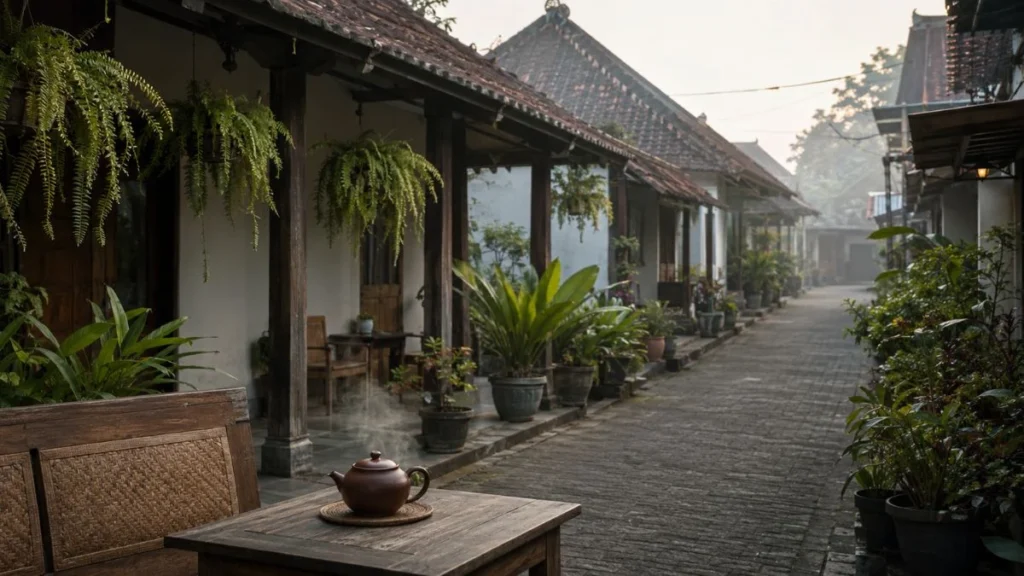
Expecting a quiet, local experience from Malioboro is the fastest route to disappointment. The street is famous and busy because it’s famous and busy — this is not a hidden corner of the city where the tourist crowds haven’t arrived yet. The local life of Yogyakarta exists in the kampung behind the Kraton, in Kotagede’s lanes, at Pasar Beringharjo’s upper floors, and at the angkringan carts near the Kraton at night — not primarily on Malioboro.
Daytime midday visits during peak season (June through August) produce the most crowded, hottest version of the street — worth knowing before committing your main Malioboro visit to that slot. Early morning and evening give noticeably different experiences.
How Malioboro Connects to the Rest of the City
Malioboro’s position as a central corridor makes it a useful navigation reference rather than a destination in itself for many experienced travelers. The Kraton is a short walk south from the southern end of Malioboro. Pasar Beringharjo sits at the same southern end. The area around Malioboro has the highest concentration of mid-range accommodation in Yogyakarta, which is covered in the context of neighborhood choice in the where to stay in Yogyakarta guide.
The broader picture of how Malioboro fits alongside what’s actually worth doing in Yogyakarta is in the things to do in Yogyakarta guide, which positions it honestly relative to the Kraton, the craft villages, the temple day trips, and everything else the city has to offer.
The Becak and Street Food Dimension
Becak drivers on Malioboro operate at tourist prices and with varying degrees of persistence — the interaction dynamic is part of the Malioboro experience rather than something that can be avoided entirely. Treating a becak ride on or around Malioboro as a deliberately chosen slow-travel experience (rather than practical transport) reframes it usefully — a 20-minute becak ride through the lanes between Malioboro and the Kraton in the late afternoon is one of the more pleasant ways to transition between the two, at a price that reflects the tourist context rather than what a becak costs elsewhere in the city.
Street food on and immediately around Malioboro ranges from excellent to indifferent — the angkringan carts that set up in the evening are generally better value and more representative of Yogyakarta’s actual street food culture than the sit-down stalls aimed primarily at tourist traffic. The Yogyakarta food guide covers the broader eating landscape with more specificity than any single street can offer.
Frequently Asked Questions
Is Malioboro Street worth visiting in Yogyakarta?
Yes, but with calibrated expectations. Walking the street is a genuine Yogyakarta experience and the evening atmosphere is worth seeing. It’s not the best place to shop for the city’s most interesting crafts, and it’s not a quiet or local experience by any measure. Treating it as an orientation walk and a gateway to Pasar Beringharjo rather than the main event produces a more satisfying visit.
When is the best time to visit Malioboro Street?
Early morning before the stalls fully open gives the cleanest sense of the street’s architecture and length. Evening from around 5pm onward is the most atmospheric version, when the lights come on and the lesehan dining tradition takes over sections of the sidewalk. Midday during peak season is the most crowded and least pleasant timing.
Is Malioboro Street safe?
Yes. Standard urban awareness applies — keep valuables secure and be alert to the pickpocketing risk that exists at any crowded tourist street in any city. The vendor interaction can feel persistent but is generally good-natured rather than threatening.
Can I buy good batik on Malioboro Street?
You can find batik on Malioboro across all production categories — hand-drawn, stamp-printed, and machine-printed — but knowing which is which requires asking directly. For serious batik shopping with better comparison options and generally lower prices, Pasar Beringharjo a few minutes’ walk away is the better destination. The full breakdown of what to look for is in the batik Yogyakarta guide.