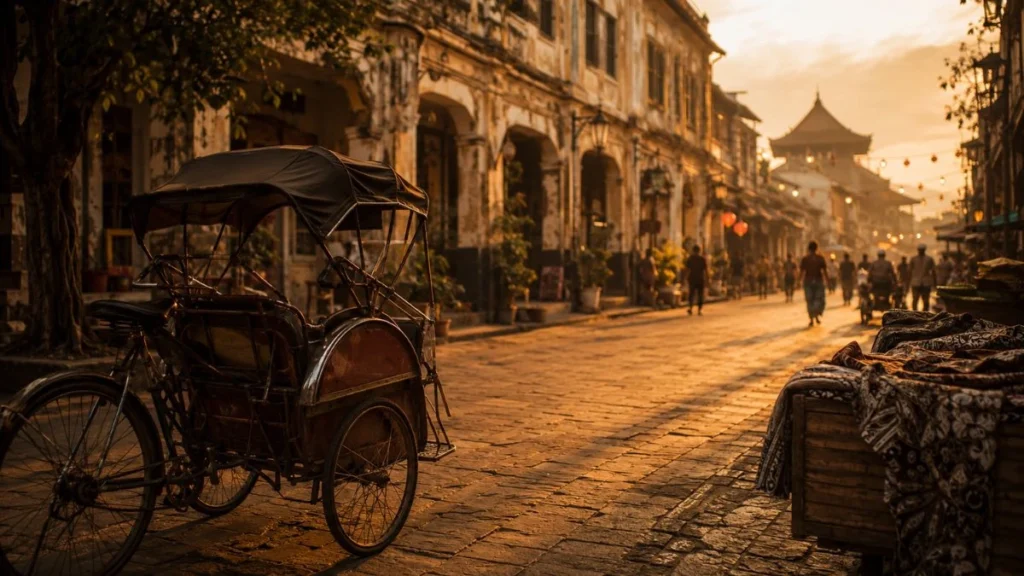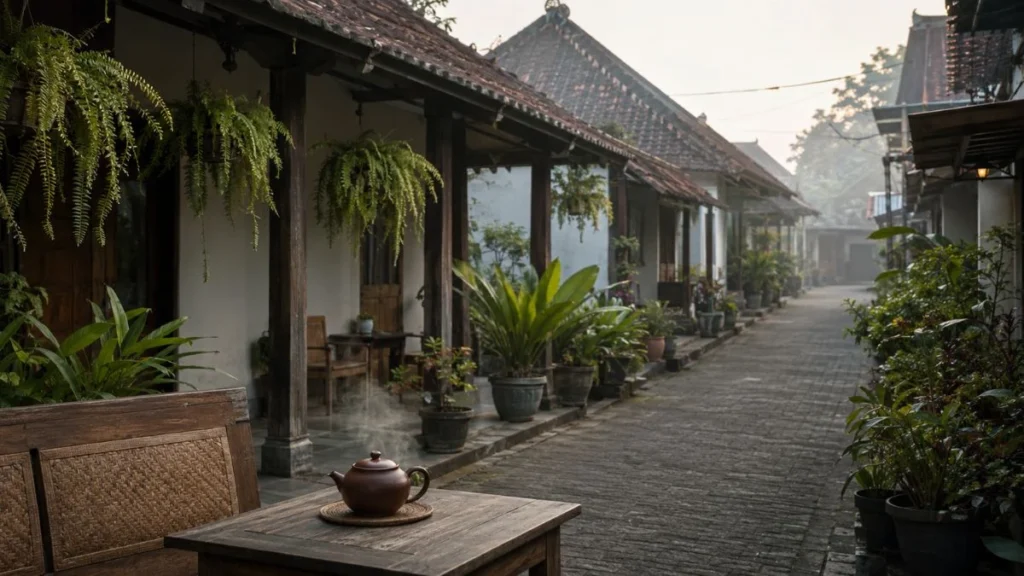
Yogyakarta nightlife is not what visitors coming from Bali’s south coast expect, and that’s worth stating directly before you arrive looking for the equivalent of Seminyak’s bar strip. What Yogyakarta has after dark is specific, genuinely local in character, and in some ways more interesting than a conventional nightlife scene — it just requires knowing where to look and what you’re actually looking for.
Yogyakarta nightlife operates on a different logic from Bali’s Legian Street or Jakarta’s club district. The city has a large student population, a conservative Islamic social context that makes the loud-bar-and-club model less prevalent than in Bali, and a set of genuinely local evening traditions — particularly the angkringan culture and the performing arts calendar — that constitute its own version of night life without mapping onto the Western tourist template. This guide covers what’s actually available in Yogyakarta after sunset across different categories, without inflating what isn’t there.
The Angkringan Scene: The Most Yogyakarta Way to Spend an Evening
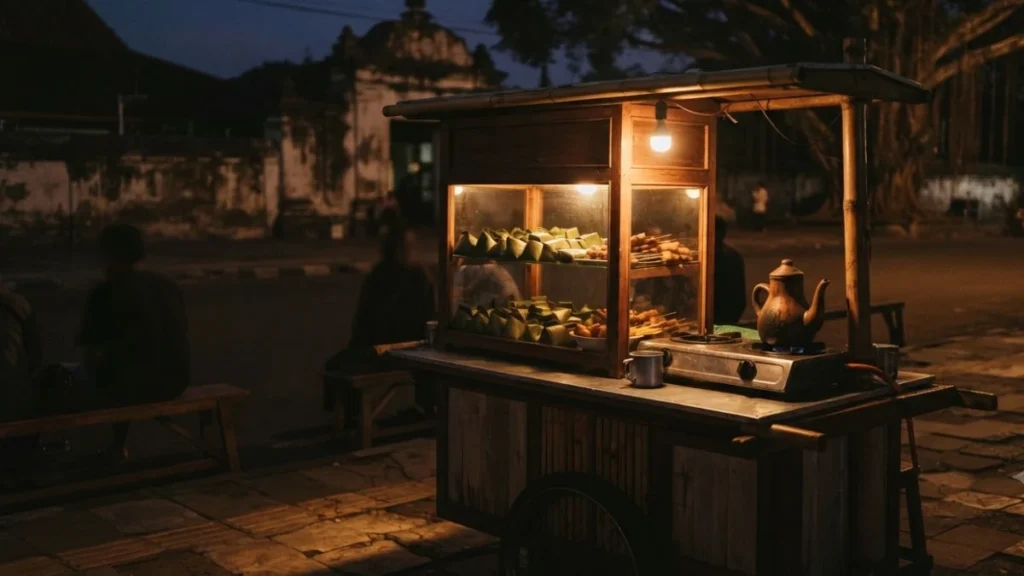
The angkringan carts covered in the Yogyakarta food guide are in many ways the most authentic Yogyakarta nightlife experience available — and they happen to be cheap, social, and open until the early hours of the morning. The carts that set up along the lane beside the northern Kraton square (alun-alun utara) and around the Tugu train station area operate from late afternoon into the early morning, serving small rice parcels, skewered snacks, and kopi joss (the Yogyakarta specialty of black coffee with a glowing charcoal piece dropped in) to a mix of students, workers finishing late shifts, and travelers who’ve found their way there.
The social dynamic at a good angkringan cart is worth understanding before you arrive expecting to sit alone with your coffee. Angkringan seating is communal — the low benches and shared tables mean you’re sitting alongside whoever else is there, and conversation happens naturally rather than by deliberate effort. For solo travelers especially, a few Javanese or Indonesian phrases from the Javanese language basics guide go an unusually long way in this context — the social return on a “monggo” and a genuine interest in what you’re eating is disproportionately high at an angkringan cart at midnight compared to almost any other context in the city.
Performing Arts: The Evening Calendar Worth Checking
Yogyakarta’s performing arts calendar is one of the more substantive dimensions of its evening life, and the options available on any given night can range from nothing to exceptional depending on timing.
The Sono-Budoyo Museum runs regular wayang kulit performances on most evenings — the full details and what to expect are in the wayang kulit Yogyakarta guide. These typically start around 8pm and run for one to two hours in the tourist-accessible format, making them one of the more reliably schedulable evening activities in the city.
The Kraton’s own performance calendar includes gamelan rehearsals visible to visitors during morning hours and occasional evening performances for ceremonial occasions — worth checking when the visit aligns with the court calendar. The Kraton guide covers how to find out what’s on.
The Ramayana Ballet at Prambanan runs on full-moon evenings during dry season — spectacular but requiring planning around the specific lunar calendar. The Ramayana Ballet guide covers the scheduling and what to expect.
Community wayang kulit performances — at neighborhood celebrations, weddings, and village events — are the most authentic version of Yogyakarta’s evening performing arts life and happen throughout the year in locations that require local knowledge to find. Asking your guesthouse or accommodation whether anything is happening in the surrounding area during your stay is genuinely worth doing rather than assuming nothing is.
The Student Café and Live Music Scene
Yogyakarta’s university population supports a café and live music scene that’s more developed than the city’s conservative reputation sometimes suggests to visitors — concentrated in the areas around UGM (Universitas Gadjah Mada) in the north of the city and in the Prawirotaman corridor that serves the backpacker and independent traveler demographic.
The live music in Yogyakarta’s café circuit tends toward acoustic, folk, and indie styles rather than the louder club formats of Bali’s south — a reflection of both the student culture and the social context. A number of cafés in the Prawirotaman area and around the student districts host regular live acts on weekend evenings, and the atmosphere at the better ones is genuinely good rather than performatively “local.” The quality varies enough that asking at your accommodation for a current recommendation is more reliable than using an outdated online list.
What this café-and-live-music scene is not: a party scene in the Bali sense. The closing hours are earlier, the vibe is lower-energy, and the orientation is more toward the student and young professional demographic than toward international visitors looking for a big night out. For travelers whose evening satisfaction depends on that template, Yogyakarta will disappoint. For travelers who want a genuinely local evening in a café with reasonable music and good coffee, it delivers.
Bars and Alcohol in Yogyakarta
Alcohol is available in Yogyakarta — it’s not a dry city — but the bar scene is smaller and more scattered than in Bali’s tourist centers. A handful of bars in the Prawirotaman area and near Malioboro cater primarily to Western visitors and serve beer and basic cocktails. The atmosphere at most is quiet rather than lively by international standards, and the selection is considerably more limited than Bali equivalents.
The honest assessment: visitors coming to Yogyakarta specifically for a drinking nightlife will find the options thin. Visitors who want an occasional beer in a low-key setting before moving on to an angkringan or a wayang performance will find sufficient options without difficulty. The two contexts — Bali’s south coast drinking culture and Yogyakarta’s evening life — are simply different enough that expecting one to replicate the other produces unnecessary frustration.
Malioboro at Night
Malioboro Street in the evening is a noticeably different experience from Malioboro at midday — the vendor character changes, the lesehan dining tradition takes over sections of the sidewalk, the lighting is warmer and the pace slower, and the commercial intensity of the daytime drops to something more atmospheric. The street is worth a walk after dinner specifically for this shift rather than as a daytime activity revisited at a different time.
The lesehan stalls — mat-based outdoor dining set up along the sidewalk — serve grilled fish, nasi goreng, soto, and similar dishes in the informal seated-on-the-floor format that’s specific to Malioboro and its surroundings. It’s the most accessible version of a genuinely local evening eating experience within easy reach of most accommodation in the city center. The Malioboro Street guide covers the daytime and evening versions of the street in more detail.
The Alun-Alun: The City’s Living Room After Dark
The two main squares of Yogyakarta — alun-alun utara (northern square, in front of the Kraton) and alun-alun selatan (southern square, behind it) — function as the city’s communal outdoor space at night, particularly on weekends. The southern square hosts a tradition of attempting to walk between two banyan trees blindfolded (a Javanese folk challenge believed to test the clarity of one’s inner self), which draws local families and young people on weekend evenings in a way that has nothing to do with tourism and everything to do with the square’s role as community space.
The northern square’s angkringan cluster and the broader street-food activity around the Kraton’s northern face make the alun-alun utara area one of the more naturally social evening spaces in the city — not designed for visitors but entirely accessible to them, and offering the kind of evening that Yogyakarta actually provides rather than the one some visitors expect to find.
What to Do If You Have One Evening in Yogyakarta
If you have one free evening in Yogyakarta and want to use it well: check whether there’s a wayang kulit performance at the Sono-Budoyo Museum or a community event nearby. If yes, go to that. If not, walk Malioboro after 6pm, eat lesehan if the setup is out, walk to the alun-alun area, and finish at an angkringan cart near the northern Kraton square with kopi joss and whatever is on the skewer tray. That evening costs almost nothing, is entirely genuine, and is the version of Yogyakarta that most visitors don’t find because they’re looking for something else.
For the broader picture of what Yogyakarta offers across all hours and all days, the things to do in Yogyakarta guide covers the full range. The 3-day Yogyakarta itinerary builds evening activities into the daily structure explicitly.
Frequently Asked Questions
Does Yogyakarta have a nightlife scene?
Yes, but a different one from Bali’s south coast. Yogyakarta’s evening life centers on angkringan street culture, performing arts (wayang kulit, Ramayana Ballet, gamelan), student cafés with live music, and the communal square spaces around the Kraton. It’s low-key, local, and genuinely good on its own terms — it’s not a party destination.
Are there bars in Yogyakarta?
Yes, a small number mainly in the Prawirotaman area and near Malioboro. The selection is considerably more limited than Bali equivalents, and the atmosphere is quiet rather than lively. Alcohol is available but Yogyakarta is not oriented around bar culture the way some Indonesian tourist destinations are.
What time do things close in Yogyakarta at night?
Cafés and restaurants typically close between 10pm and midnight. Angkringan carts run later — some until 2am or beyond. Bars in the tourist areas tend to close around midnight on weekdays, later on weekends. The wayang kulit performances at Sono-Budoyo Museum typically finish around 10pm in the tourist format; community performances run until dawn.
Is it safe to walk around Yogyakarta at night?
The central areas of Yogyakarta — around Malioboro, the Kraton, Prawirotaman, and the main squares — are safe for evening walking by normal urban standards. Standard awareness of your surroundings and valuables applies. Ride-hailing apps are available and reliable for returning to accommodation from anywhere in the city after an evening out.