Goa Pindul Yogyakarta is the cave tubing experience most visitors to the Gunungkidul area hear about first — and the one most likely to produce mixed feelings depending on what they expected going in. The cave itself is genuinely beautiful. The way it’s operated has changed significantly since it first drew attention. Here’s what it actually involves in 2026.
Goa Pindul Yogyakarta sits in the Bejiharjo village area of Gunungkidul, roughly 1.5 hours southeast of central Yogyakarta, and it offers something genuinely unusual: a cave river system you float through on an inner tube, moving from the cave entrance through a sequence of chambers with stalactites, hanging roots, bats, and filtered light before emerging at the other end. The experience takes roughly 45 minutes to an hour inside the cave and is accessible to visitors without any caving experience or physical fitness threshold — you sit in a tube and let the current move you through.
What Cave Tubing at Goa Pindul Actually Involves
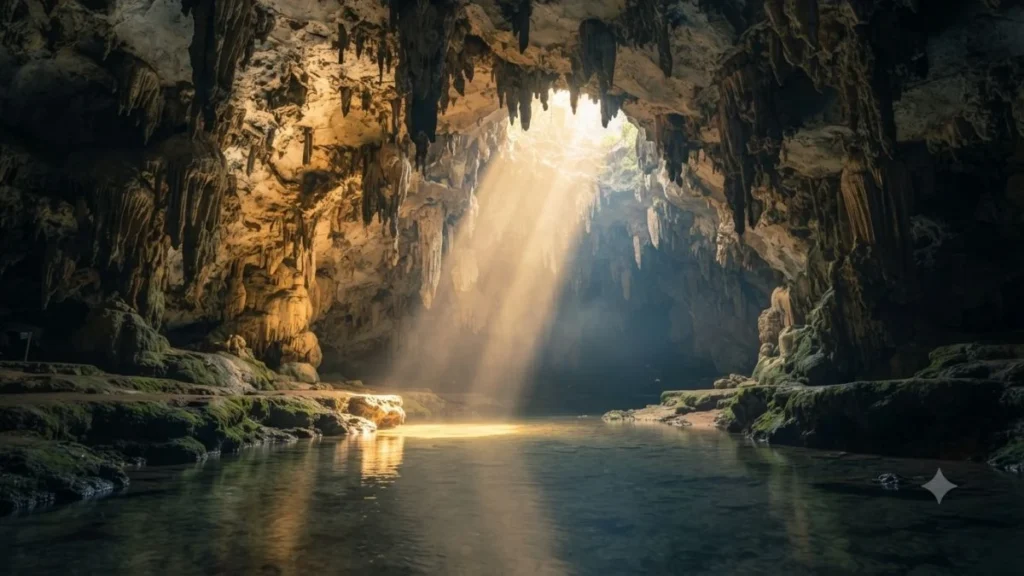
The cave entrance is a small opening in the limestone karst landscape, reached by a short walk from the staging area where operators provide life jackets, helmets, and tubes. Inside, the river narrows and widens across three distinct chambers — local guides refer to these as the dark zone, the twilight zone, and the light zone, based on how much natural light penetrates. The middle section, where sunlight enters through a hole in the cave ceiling, produces the distinctive shaft of light that photographs well and is the visual highlight of the experience for most visitors.
The river current does most of the work — you’re floating rather than paddling for the majority of the passage. Guides accompany each group, narrating the geology and the cave ecosystem as you move through. The bat colony in the upper sections of the cave is visible throughout; the stalactite formations vary in scale and density across the different chambers.
The Honest Assessment of the Current Visitor Experience
Goa Pindul has been a commercial cave tubing destination since around 2010 and has processed a very large number of visitors over that period, which shows. The site is well-organized and competently run, the operators are experienced, and the safety standards are reasonable — but the experience is now firmly in the managed-attraction category rather than the undiscovered-adventure category that earlier write-ups sometimes implied.
The practical implication for visitors: groups move through the cave in close succession during peak hours and peak season, which means you are unlikely to experience the cave in silence or with the sense of being somewhere few people go. The guides are professional but the patter has been delivered many thousands of times, and the experience reflects that. Weekend visits, particularly during school holiday season (June through August and around Indonesian public holidays), are the most crowded.
The comparison with Jomblang Cave is worth making explicitly because many visitors to Gunungkidul consider both: Jomblang is more dramatic, more demanding, significantly more expensive, and produces a more exclusive experience because the quota system limits visitor numbers. Goa Pindul is more accessible, cheaper, faster, and considerably more crowded. They’re different experiences serving different priorities rather than alternatives where one is simply better.
Timing and Practical Notes
Morning visits — arriving at the operator before 9am on a weekday — give the least crowded version of the experience. The cave itself stays at a consistent temperature regardless of outside conditions, which makes it a reasonable activity even in the wet season, though getting to and from Gunungkidul in heavy rain adds logistical complication.
Most operators bundle Goa Pindul with a second activity — either a second cave (Goa Sriti or Goa Gelatik nearby) or a short river tubing stretch outside the cave system. The bundled packages are standard and generally priced reasonably; doing Goa Pindul as a standalone single activity requires specifically requesting it rather than accepting the default package, and some operators push back on this.
The staging area has basic facilities including changing rooms and lockers. You will get wet — this is unavoidable — so treating clothing accordingly before departure rather than discovering this on arrival matters practically.
How Goa Pindul Fits Into a Gunungkidul Day
Goa Pindul and the Gunungkidul beaches sit in the same broad area and combine well into a full day from Yogyakarta — cave tubing in the morning when the cave is coolest and least crowded, then beach in the afternoon at one of the calmer bays like Wediombo. The two activities are different enough in character that combining them doesn’t feel repetitive, and the full day justifies the drive time from the city.
Combining Goa Pindul with Jomblang Cave on the same day is not realistic — Jomblang’s quota system and descent timing already occupies the better part of a day, and adding Goa Pindul would require rushing both. They’re better treated as separate days.
For a broader picture of how cave visits fit into a Yogyakarta trip overall, the things to do in Yogyakarta guide covers the full range of day trip options and how to prioritize between them.
Getting There From Yogyakarta
Goa Pindul is not served by public transport from Yogyakarta in any practical sense. A rented motorbike or private car are the two realistic options — the journey takes roughly 1.5 hours from central Yogyakarta. The road to the Bejiharjo area passes through increasingly rural Gunungkidul landscape and is generally good quality on the main routes, with the final approach to the cave operators clearly signposted.
Most visitors combine the trip with at least one Gunungkidul beach, which makes the drive more worthwhile than a dedicated Goa Pindul-only trip from the city. The getting around Yogyakarta guide covers the motorbike rental and private car options for out-of-city day trips like this.
Frequently Asked Questions
Is Goa Pindul worth visiting from Yogyakarta?
Yes, with calibrated expectations. The cave itself is genuinely beautiful and the cave tubing experience is accessible and enjoyable. The experience is more organized and more crowded than earlier write-ups suggest — a morning weekday visit gives the best version of it. If choosing between Goa Pindul and Jomblang Cave, the decision comes down to budget, time, and preference for accessibility versus exclusivity.
How long does cave tubing at Goa Pindul take?
The passage through the cave itself takes roughly 45 minutes to one hour. Including the staging area, preparation, and post-cave time, budget around two hours total at the site.
Is Goa Pindul safe for non-swimmers?
Yes — the cave tubing experience uses life jackets throughout and the river current is gentle enough that swimming ability isn’t required. The caves are not suitable for visitors with severe claustrophobia, as some sections narrow considerably.
What is the difference between Goa Pindul and Jomblang Cave?
Goa Pindul is a horizontal river cave floated through on inner tubes — accessible, affordable, and moderately crowded. Jomblang is a vertical sinkhole cave requiring a rope descent of roughly 60 meters — more dramatic, more expensive, quota-limited, and less crowded. They offer genuinely different experiences rather than being direct alternatives.