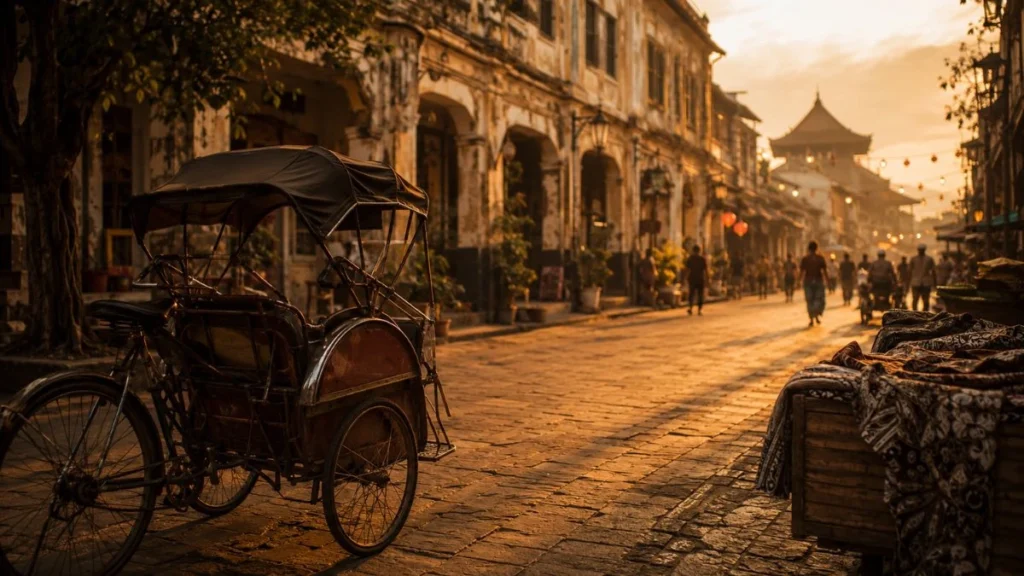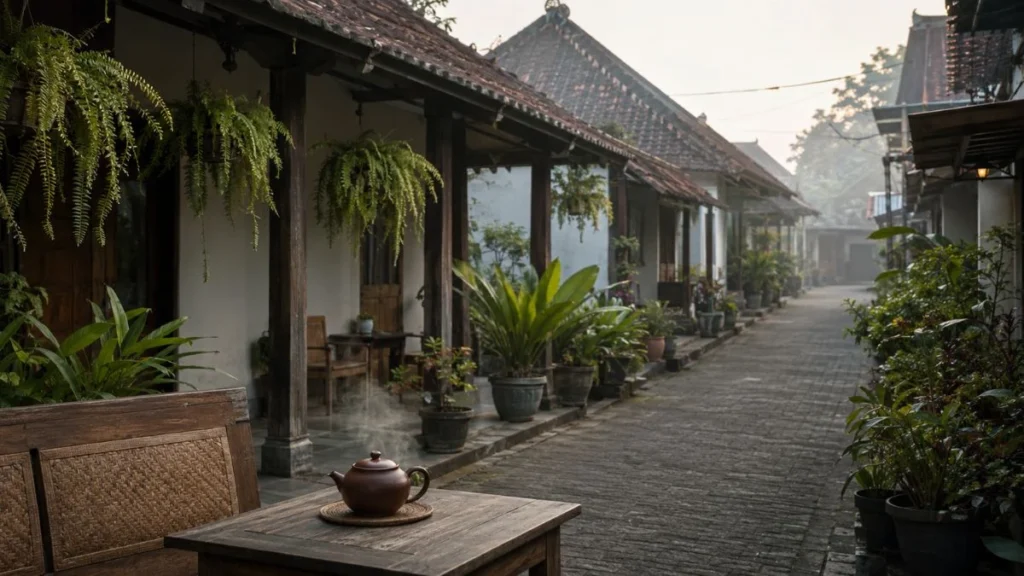
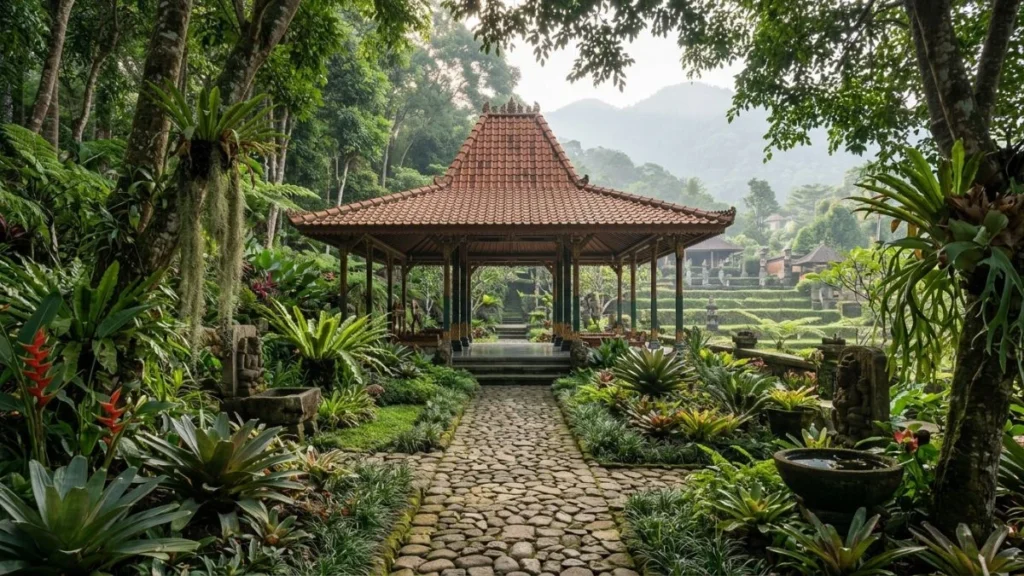
Museum Ullen Sentalu Yogyakarta is the kind of place that serious travelers to the city consistently name as the best thing they did — and that almost nobody plans for in advance. It’s a privately built museum of Javanese royal court culture in the hills north of Kaliurang, small enough to cover in two hours and substantial enough that most visitors leave wishing they’d known about it before spending time at the Kraton.
Museum Ullen Sentalu Yogyakarta sits in the foothills of Merapi, about 25 kilometers north of the city center in the Kaliurang area, which is part of why most visitors miss it — it doesn’t appear on the main tourist trail, requires a deliberate trip rather than a convenient addition to a city-center day, and its name doesn’t immediately signal what it is. What it is, is one of the most thoughtfully curated museums in Java: a private collection covering Javanese royal court culture, batik as art form, royal portraiture, and the lives of the women of the Mataram royal houses — told through objects, photographs, and writing that goes considerably deeper than the Kraton’s own public presentation manages.
What Museum Ullen Sentalu Actually Contains
The museum was established by the Haryono family and opened in 1997, built across a series of connected indoor spaces and outdoor gardens on a hillside site that uses the natural terrain as part of the design. The architecture and landscaping are worth noting before you even get to the collection — the building itself feels deliberate in a way that most Indonesian museum architecture doesn’t, and the combination of interior gallery spaces with outdoor walkways through the hillside greenery gives the visit a different rhythm from a conventional museum walkthrough.
The collection is organized around the Javanese royal courts — primarily Yogyakarta and Surakarta (Solo) — and covers several distinct areas. The batik collection is among the most serious in the region: not batik as souvenir category, but batik as a language of meaning, where specific patterns were worn by specific people on specific occasions, and the differences between a Yogyakarta court pattern and a Solo court pattern carried social and political information. After visiting the batik Yogyakarta guide for the production context, Ullen Sentalu provides the cultural grammar that makes the patterns legible rather than decorative.
The royal portraiture section covers the Mataram royal families across several generations, with photographs and painted portraits that humanize the court history in a way that walking through the Kraton’s pavilions doesn’t quite achieve. The written context accompanying these — much of it in English — is unusually good for an Indonesian museum, which matters for visitors who want to actually understand what they’re looking at rather than read minimal caption text.
The section most commented on by visitors is the collection relating to the women of the royal courts — their daily lives, their roles, their batik, and their poetry — which is both the least covered aspect of Javanese royal history in most tourist contexts and the most vividly presented part of Ullen Sentalu’s collection. It’s the kind of curatorial decision that reveals genuine institutional intent rather than a generic heritage display.
The Guided Tour: Why It’s Mandatory and Why That’s Fine
Ullen Sentalu is a guided-tour-only museum — you don’t wander the collection independently, you move through it with a guide at a pace set by the tour group. For visitors accustomed to self-paced museum visits, this can sound like a limitation, but in practice the guides here are substantially better informed than the average museum guide, and the tour format means you don’t miss the context that makes the objects meaningful.
Tours run in English and are included in the entry fee. Group sizes are kept manageable, and the tour pace allows time for questions rather than moving people through at a fixed speed. Photography restrictions apply inside some sections of the museum, which is worth knowing in advance rather than arriving expecting unrestricted access.
How Ullen Sentalu Fits Into a Yogyakarta Trip
The museum pairs naturally with a Kaliurang Yogyakarta day — it sits in the same highland area, and combining the museum with a Kaliurang lunch and some time in the highland landscape makes for a full day that covers cultural depth and scenic variety without doubling back to the city. The drive north from Yogyakarta through the increasingly rural landscape toward Merapi’s slopes is good in itself, and arriving at a serious museum in a hillside garden setting after that drive makes the combination feel considered rather than cobbled together.
For visitors who’ve already done the Kraton Yogyakarta visit and want to go deeper into the court culture context, Ullen Sentalu is the logical next step — it covers much of the same historical ground with considerably more interpretive depth, and the two visits complement each other in ways that visiting either one alone doesn’t produce.
For the 3-day Yogyakarta itinerary, Ullen Sentalu fits best as a fourth or fifth day addition rather than a core three-day slot — it’s the kind of experience that rewards a trip where you’re not trying to compress everything into the minimum time. That said, for visitors with a specific interest in Javanese royal culture or batik as a serious subject, it’s worth treating as a priority rather than an afterthought.
For the broader picture of how Ullen Sentalu fits within Yogyakarta’s cultural layers, the things to do in Yogyakarta guide covers where it sits alongside the Kraton, Kotagede, and the other Village Life category experiences.
The Honest Trade-Offs
Ullen Sentalu requires a deliberate trip — it’s not something you add to a city-center morning without significant travel time, and the guided-tour format means you need to arrive at a time when a tour is starting rather than dropping in freely. The entry fee is higher than most Yogyakarta cultural sites, which surprises some visitors expecting the standard Rp15,000–25,000 range. The current admission sits at a price point that reflects the private institutional investment behind the collection rather than a government-subsidized heritage site — it’s worth it, but worth knowing before you go.
The highland location also means arriving in the morning before cloud cover builds is a better experience than an afternoon visit, both for the outdoor sections of the museum and for the drive through the Merapi foothills — which is an argument for combining it with the Kaliurang day as a morning priority rather than an afternoon stop.
Frequently Asked Questions
What is Museum Ullen Sentalu known for?
Museum Ullen Sentalu is known for its collection of Javanese royal court culture — particularly batik as a cultural language, royal portraiture from the Yogyakarta and Solo courts, and the lives of the women of the Mataram royal houses. It’s considered one of the most thoughtfully curated museums in Java and is consistently rated among the best cultural experiences in the Yogyakarta region.
Where is Museum Ullen Sentalu located?
Museum Ullen Sentalu is located in the Kaliurang area, roughly 25 kilometers north of central Yogyakarta in the foothills of Mount Merapi — about 45 minutes to an hour by car from the city center.
Do you need to book Museum Ullen Sentalu in advance?
Advance booking is advisable, particularly during peak season (June through August) and on weekends, when tour slots fill up. The museum runs guided tours at set times rather than allowing free entry, so arriving without a confirmed slot during busy periods risks missing the available tours.
How long does a visit to Museum Ullen Sentalu take?
The guided tour runs approximately 1.5 to 2 hours. Combined with travel time from central Yogyakarta, a museum visit takes the better part of a half-day, which is why it pairs well with a Kaliurang day rather than as a standalone city-center addition.