Yogyakarta to Bromo is one of the most traveled legs on a Java itinerary, and also one of the most inconsistently documented. The journey involves a combination of transport modes, overnight timing, and logistical decisions that most guides summarize too quickly. This is the honest version of how to plan it well.
Yogyakarta to Bromo is a journey most Java travelers make at some point in the itinerary — the two destinations are the region’s most compelling anchor points, and the route between them passes through enough of Java’s interior that the journey itself has some value beyond just moving from one place to another. The distance is roughly 300 kilometers, the options range from overnight train to full-day private car, and the right choice depends on a set of variables — timing, budget, and how much you want to see on the way — that most short guides collapse into a single recommendation.
Understanding the Bromo Geography First
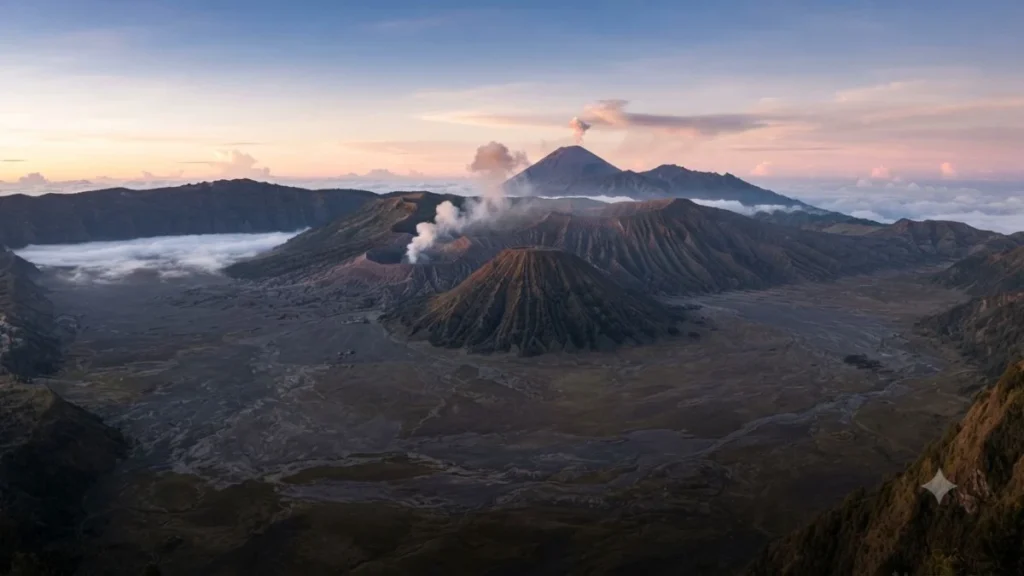
Before getting into transport options, it’s worth clarifying what “Bromo” actually means in a logistics sense, because this is where a lot of confusion starts. Mount Bromo itself is a volcanic crater in the Tengger massif in East Java — the famous sunrise viewpoint most visitors come for is at Penanjakan, a ridge above the Tengger caldera, and the crater rim walk is a separate activity from there. The nearest town used as a base is Cemoro Lawang, which sits on the caldera rim and is where most accommodation for Bromo visits is located.
When planning Yogyakarta to Bromo transport, the destination is effectively Cemoro Lawang or Probolinggo (the larger town at the base of the mountain, from which jeeps and local transport go up to the caldera). Getting to Probolinggo is the main transport challenge; getting from Probolinggo to Cemoro Lawang is a shorter, separate leg.
Option 1: Train to Probolinggo, Then Jeep Up
The most common route for independent travelers is an overnight or daytime train from Yogyakarta (Tugu station) to Probolinggo, followed by a local minibus or jeep from Probolinggo up to Cemoro Lawang. The train journey covers roughly 270 kilometers and takes approximately 5 to 6 hours depending on the service.
Not all trains between Yogyakarta and Surabaya stop at Probolinggo — checking the specific route before booking through KAI Access or Tiket.com is necessary, as the booking platforms listed in the Jakarta to Yogyakarta guide apply equally here. Services that do stop at Probolinggo include several economy and executive class options across different departure times.
From Probolinggo, shared minibuses (angkot) and jeeps run to Cemoro Lawang — roughly a one-hour journey up the mountain road. Public transport options exist but departure frequency varies; private jeeps arranged at the Probolinggo terminal are more reliable if you’re arriving at an off-peak hour. Journey time from Probolinggo to Cemoro Lawang is approximately one hour.
The train-plus-local-transport combination is the most economical option and works well for travelers comfortable with managing a connection at Probolinggo. The connection logistics are manageable but do require some coordination — arriving at Probolinggo and immediately finding transport up to Cemoro Lawang is straightforward during daytime hours and less so late at night.
Option 2: Private Car — Direct, Flexible, Expensive
A private car from Yogyakarta directly to Cemoro Lawang covers the full distance in one vehicle, with no connection to manage. Journey time is approximately 6 to 8 hours depending on traffic and route, making it a long day in a car but one that can include stops along the way — the route through Malang or via the north coast both offer detour possibilities for travelers who want to cover more ground.
The cost of a private car for the full Yogyakarta to Bromo journey is significantly higher than the train option, though split across three or four travelers the per-person figure becomes more competitive. For families or small groups who value the door-to-door convenience and the flexibility to stop en route, it’s worth considering. For solo travelers or pairs, the train is usually the better value unless the specific itinerary demands point-to-point flexibility.
The accommodation arrangements in Yogyakarta that work for day trips — covered in the getting around Yogyakarta guide — apply here as a reference for how to arrange private transport, though the scale of this journey warrants going through a dedicated transport service rather than a standard day-trip driver.
Option 3: Overnight Bus — Budget Option With Trade-Offs
Overnight bus services cover the Yogyakarta to Probolinggo or Surabaya route at a lower price point than the train, with journey times that vary significantly depending on traffic and the number of stops. For travelers on very tight budgets for whom the train price is a real constraint, the overnight bus is a workable option — you lose the sleeping hours either way if taking a night service, and the additional time in transit is the main cost.
The honest caveats: bus journey times are less predictable than train times, the comfort level varies by operator and bus class, and arriving at Probolinggo from an overnight bus at 4am with a Bromo sunrise as the goal requires having the Cemoro Lawang transport leg pre-arranged rather than improvised on arrival.
Timing the Journey Around the Bromo Sunrise
Most visitors to Bromo come specifically for the sunrise from Penanjakan, which means arriving at Cemoro Lawang the evening before and leaving for the viewpoint at around 3am the following morning. This timing requirement shapes the transport decision significantly — getting the Yogyakarta to Probolinggo leg done during the day, arriving at Cemoro Lawang by late afternoon, and having a full evening to settle before the early departure is the most manageable sequence.
An overnight train that arrives in Probolinggo in the early morning and then requires immediate connection to Cemoro Lawang before a same-day sunrise attempt is an ambitious schedule that works better in theory than in practice, particularly if the train runs late. A daytime train with an afternoon arrival at Probolinggo, and an early evening arrival at Cemoro Lawang, gives more buffer.
What Comes After Bromo
For travelers using the Yogyakarta to Bromo leg as part of a longer Java itinerary — continuing to Ijen, to Banyuwangi for the ferry to Bali, or returning west — the onward journey from Bromo involves reversing back through Probolinggo and either continuing east or heading back toward Surabaya for train connections. The Bromo to Bali route via Banyuwangi is a separate planning consideration but one worth mapping out before you leave Yogyakarta, since the onward logistics affect which Bromo accommodation and transport options make the most sense.
For context on the Yogyakarta side of the planning — including how to structure the days before this departure and how to manage accommodation and local transport — the 3-day Yogyakarta itinerary and things to do in Yogyakarta guide cover the Yogyakarta portion in full.
Frequently Asked Questions
How long does it take to get from Yogyakarta to Bromo?
The full journey from central Yogyakarta to Cemoro Lawang (the base village on the Bromo caldera rim) takes approximately 7 to 9 hours by train plus local connection, or 6 to 8 hours by private car. The train to Probolinggo takes 5 to 6 hours; the connection from Probolinggo to Cemoro Lawang adds roughly one hour.
What is the best way to get from Yogyakarta to Bromo?
For most independent travelers, the train to Probolinggo followed by local transport to Cemoro Lawang is the best combination of reliability, cost, and convenience. Private car is worth considering for groups of three or more who value door-to-door flexibility. Overnight bus is viable for budget travelers willing to accept less predictable timing.
Do I need to book Yogyakarta to Bromo transport in advance?
For the train leg, yes — particularly during peak season (June through August and Indonesian public holidays) when popular services sell out. Book through KAI Access or Tiket.com several days ahead. The local transport from Probolinggo to Cemoro Lawang doesn’t require advance booking but benefits from pre-arrangement if arriving at off-peak hours.
Is it possible to visit Bromo as a day trip from Yogyakarta?
Not realistically. The total travel time in each direction makes a genuine day trip — including time at the sunrise viewpoint and the crater — effectively an overnight journey even under the best conditions. Bromo requires at least one night at Cemoro Lawang to experience the sunrise properly, which is the main reason most visitors go.