Gunungkidul beaches are the part of Yogyakarta most visitors don’t plan for and end up wishing they’d known about earlier. The coastline is two hours south of the city, genuinely different in landscape from anything else in the region, and spread across enough variety that the right beach depends entirely on what you’re actually trying to do there.
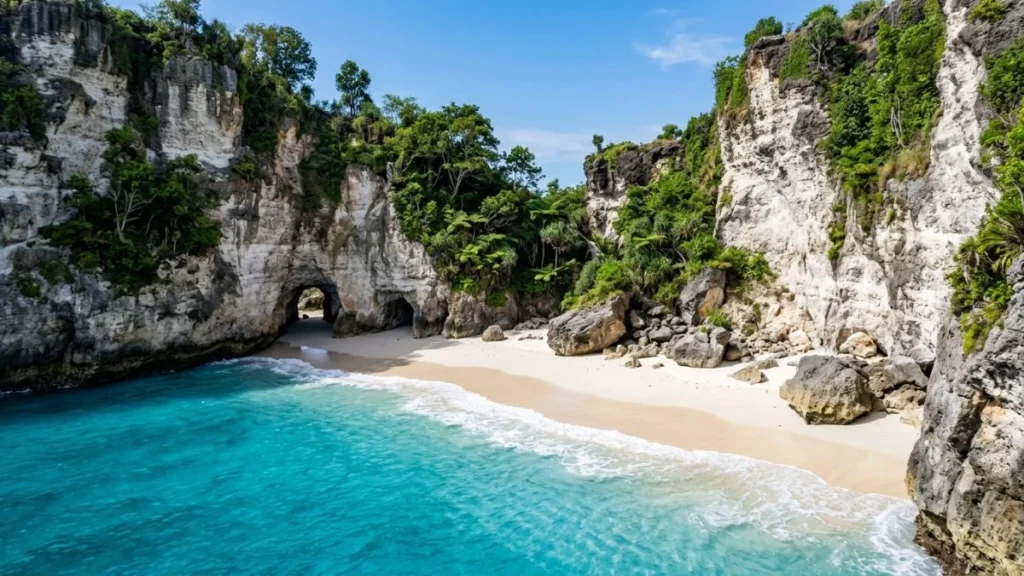
Gunungkidul beaches sit roughly 60 to 70 kilometers south of central Yogyakarta, along a stretch of Indian Ocean coastline defined by dramatic limestone karst cliffs, hidden coves, and a level of development that varies enormously from one bay to the next. This is not Bali’s south coast — there are no beach clubs, no surf schools on every corner, and no single beach that functions as a social hub the way Seminyak or Canggu does. What Gunungkidul has instead is a coastline that rewards some planning and a willingness to drive past the first signposted beach to find the version that suits your trip.
What Makes Gunungkidul Different From Other Java Beaches
The geology here is the starting point for understanding why Gunungkidul looks the way it does. The entire region sits on a limestone karst plateau — the same formation that produces the caves covered in the Jomblang Cave guide — which means the coastline is characterized by high white cliffs, rocky headlands, and a series of relatively small bays rather than a single continuous beach. The water is Indian Ocean: clear, blue, and with a swell that makes some beaches genuinely unsuitable for swimming while making others perfectly calm depending on the bay’s orientation and the season.
This is worth knowing before you go because it affects both which beach you choose and what you do when you get there. Gunungkidul isn’t a destination where you pick the closest beach and assume it’s representative — the difference between a calm swimmable cove and a beach where swimming is actively dangerous can be a ten-minute drive.
The Beaches Worth Knowing About
Indrayanti is the most developed and most visited beach in Gunungkidul, which means it’s the one most likely to appear first in any search result and the one most likely to disappoint travelers expecting the unspoiled version. It’s a legitimate beach — white sand, reasonable swimming in calm conditions, warungs and basic facilities along the back — but it’s also the busiest, most commercialized stretch of the coastline, and the version of Gunungkidul that requires the least effort to reach. Worth knowing about primarily so you can make an informed decision about whether it’s what you’re after.
Timang Beach sits at the far eastern end of the accessible Gunungkidul coastline and is a fundamentally different experience from the swimming beaches further west. The main feature here is a rocky outcrop separated from the mainland by a channel of rough water, reached historically by a basic gondola rope system that has since been supplemented by a more formal tourist version. The swimming isn’t the point — the dramatic cliff and channel scenery is, and Timang is one of the more visually striking spots on the entire Java south coast. The honest caveat: the tourist gondola operation has become increasingly organized and priced accordingly, and the atmosphere is more managed than the dramatic landscape photographs suggest.
Wediombo sits further east than most visitors go and is the beach that most consistently rewards the extra drive time. It’s a wide bay with a freshwater lagoon at one end, calmer water than some of the more exposed beaches, and a level of development that’s light enough that the landscape still dominates. The road in is longer and less signposted than the western beaches, which does the job of filtering visitor volume naturally. A full day here — arriving before midday, swimming, eating from the small warungs at the back of the beach, and leaving before dark — is one of the more straightforward ways to spend a good day on the south coast without feeling like you’re at a managed attraction.
Siung is the beach most worth knowing about for travelers with any interest in rock climbing — the limestone cliffs above the beach have been developed into one of the more significant sport climbing destinations in Java, with routes across a range of grades. As a beach in its own right it’s also good: less visited than Indrayanti, with a long stretch of sand backed by the climbing cliffs and a relatively easy road in compared to some of the more remote eastern bays.
Ngrenehan is a working fishing village beach rather than a tourist destination — small, functional, with boats pulled up on the sand and local fishing operations running alongside the limited number of visitors. It’s the version of the Gunungkidul coast that has the least to do with tourism and the most to do with how the coastal communities here actually live.
Getting to Gunungkidul Beaches From Yogyakarta
Gunungkidul is not reachable by public transport in any practical sense for most of the beaches above — the road network is car and motorbike territory, and the spread of beaches across a long coastline means a vehicle is necessary for covering more than one beach per day.
A rented motorbike from Yogyakarta is the most flexible and most enjoyable way to approach the coastline — the road south through the karst landscape is genuinely good riding, and the ability to stop, turn around, and choose between beaches without arranging transport at each stop matters when you’re navigating a coastline you don’t know yet. The road quality is generally good on the main routes; access roads to more remote beaches can be narrower and rougher.
A private car and driver covers the same ground with more comfort and less weather exposure, at the cost of flexibility on the day. For families or travelers less comfortable on motorbikes, it’s the right call — the driver will typically know the beach access roads and can navigate the less signposted approaches without difficulty.
Journey time from central Yogyakarta to the western Gunungkidul beaches is roughly 1.5 to 2 hours. The eastern beaches like Wediombo and Timang add 30 to 45 minutes from there. A full day works well for covering two or three beaches without rushing; trying to combine Gunungkidul with a Yogyakarta city-center morning leaves the beach portion feeling abbreviated.
For how a Gunungkidul day fits into a broader itinerary, the 3-day Yogyakarta itinerary covers the trade-offs between the various day trip options. The best time to visit Yogyakarta guide covers when the south coast is most accessible — dry season gives more reliable conditions for swimming and cliff-side exploration, while the wet season makes some of the more exposed beaches genuinely hazardous. For getting there, the getting around Yogyakarta guide covers the motorbike rental and private car options in detail.
What Gunungkidul Is Not
Gunungkidul is not a substitute for a Bali beach trip — the infrastructure, the beach culture, and the level of tourist-facing development are all in a different category. It’s also not a destination to visit expecting consistent swimming conditions across all beaches regardless of season. The Indian Ocean swell is real, the rip currents at some beaches are serious, and the local warning flags where they exist are worth taking literally.
What it is: a genuinely distinctive stretch of coastline that most visitors to Yogyakarta don’t reach, with enough variety across its beaches that the right version of it suits almost any preference — dramatic scenery, calm swimming, fishing villages, sport climbing, or simply a day that looks nothing like the temple and palace circuit. For the full picture of how Gunungkidul fits alongside everything else the region offers, the things to do in Yogyakarta guide covers the complete range.
Frequently Asked Questions
Are Gunungkidul beaches safe for swimming?
It depends on the beach and the season. Some bays are calm and consistently swimmable; others face open Indian Ocean swell with strong rip currents that make swimming genuinely dangerous. Wediombo and the calmer western coves are generally safer for swimming than the more exposed eastern beaches. Dry season conditions are more reliable than wet season across the board. Local warning flags where present should be taken seriously.
How far are Gunungkidul beaches from Yogyakarta?
The western Gunungkidul beaches are roughly 60 kilometers south of central Yogyakarta, about 1.5 to 2 hours by car or motorbike. The eastern beaches like Wediombo and Timang add another 30 to 45 minutes from the western cluster.
Which Gunungkidul beach is the best?
It depends on what you’re looking for. Wediombo is the most consistently rewarding for a full beach day with calm water and lower crowds. Timang is the most dramatic scenically. Indrayanti is the most developed and easiest to reach. Siung is the best option for anyone interested in rock climbing alongside the beach.
Can I visit Gunungkidul beaches without a car or motorbike?
Not practically. Public transport doesn’t serve the beach area in any useful way, and the spread of beaches across a long coastline means a vehicle is necessary for anything beyond a single fixed beach. Rented motorbike or private car with driver are the two realistic options from Yogyakarta.