The best time to visit Yogyakarta depends on what you’re actually planning to do there — and the answer is different for someone doing temple day trips versus someone wanting to spend most of their time in the city. Most guides skip that distinction. This one doesn’t.
The best time to visit Yogyakarta is a question that gets a deceptively simple answer in most travel guides: dry season, May to September, full stop. That’s not wrong, but it’s incomplete in ways that matter depending on what your trip actually looks like. Yogyakarta’s city-center sights — the Kraton, Taman Sari, Pasar Beringharjo, Kotagede — are accessible and worth visiting year-round. The question of season becomes more consequential the more your itinerary depends on outdoor day trips, highland routes, or cave visits where weather directly affects access and experience.
Yogyakarta’s Two Seasons: What They Actually Mean on the Ground
Yogyakarta has two seasons, not four: a dry season running roughly from May through September, and a wet season running roughly from October through April — though both labels are imprecise, and neither means what visitors from temperate climates might expect.
Dry season in Yogyakarta doesn’t mean cloudless skies every day. It means significantly less rain, lower humidity, and more predictable weather patterns — which matters for outdoor activities and highland road trips but doesn’t meaningfully affect a Kraton visit or a morning in Pasar Beringharjo. Wet season doesn’t mean constant rain either. Rainfall typically comes in shorter, heavier bursts rather than all-day downpours, and most mornings are clear even in the wettest months. The practical implication: wet season Yogyakarta is more inconvenient than it is impossible, and many travelers find the tradeoffs acceptable given lower crowds and cheaper accommodation.
Month by Month: What to Actually Expect
January and February sit in the heart of wet season — the highest rainfall months of the year. City sights remain fully accessible, but day trips to Gunungkidul, Kaliurang, or Jomblang Cave carry more weather risk, and the Jomblang descent is sometimes suspended during heavy rain periods. Crowds are at their lowest, which makes January and February a reasonable choice for travelers whose itinerary is weighted toward the Kraton, Kotagede, and indoor or city-based experiences.
March and April are transitional months — rainfall starts to ease, humidity remains high, and the landscape is at its greenest. Merapi’s slopes around Kaliurang Yogyakarta look particularly good in this window, and the lower crowds of wet season haven’t yet given way to the peak-season influx. A reasonable compromise month for travelers who want dry-season conditions without peak-season prices and queues.
May is where the shift becomes noticeable — drier air, more reliable weather, and the start of the tourist season’s upward curve. It’s one of the better months to visit if you want dry-season conditions without the July–August peak, and accommodation prices reflect the transition rather than the peak.
June and July are peak season — school holidays in both Australia and Europe drive a significant increase in international visitor numbers, and the Yogyakarta sites most affected by crowd volume (Borobudur, Prambanan, Jomblang Cave’s quota system) are at their busiest. The weather is reliably dry and the conditions for highland road trips are good, but queue times at popular sites are at their longest. Our Jomblang Cave guide covers the quota and queue reality in detail — June and July are where that becomes most relevant.
August continues peak season conditions — dry, busy, and the most expensive month for accommodation. The upside is that August is the most reliable month for clear views of Merapi from the highland routes, and the Ramayana Ballet performances at Prambanan, held outdoors on full-moon nights, are at their most atmospheric during the dry season.
September is where peak season starts to ease — still dry, but crowds begin to thin as European and Australian school holidays end. It’s arguably the best single month to visit Yogyakarta for travelers who want dry-season conditions with slightly less competition for Jomblang Cave slots and Borobudur sunrise spots.
October marks the beginning of the wet season’s return, though the early weeks are often still relatively dry. A good month for budget travelers — accommodation prices drop noticeably and city-based sights remain fully accessible.
November and December see rainfall increasing again, with December being one of the wetter months. The year-end holiday period brings a spike in domestic tourism around Christmas and New Year, which affects accommodation prices and availability more than international visitor numbers. City-based sights remain accessible, but outdoor day trips become more weather-dependent again.
What Season Means for Specific Activities
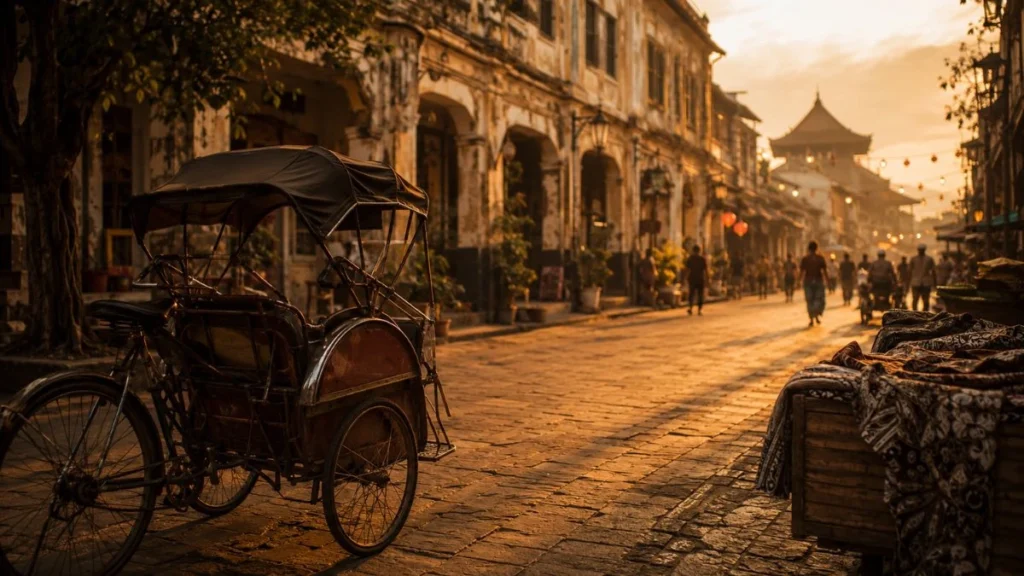
For the Kraton, Taman Sari, Kotagede, and Pasar Beringharjo, season matters very little — these are accessible and worth visiting in any month. We cover all of these in our guide to things to do in Yogyakarta.
For Jomblang Cave, dry season is strongly preferable — the descent is sometimes suspended during heavy rain, and the forest floor at the bottom is more accessible and visually cleaner in dry conditions. June through September is the safest window.
For the Merapi highlands and Kaliurang, dry season gives clearer views of the crater and more reliable road conditions on the highland routes. That said, the landscape around Kaliurang is arguably greener and more photogenic in the transitional months of March–April and October.
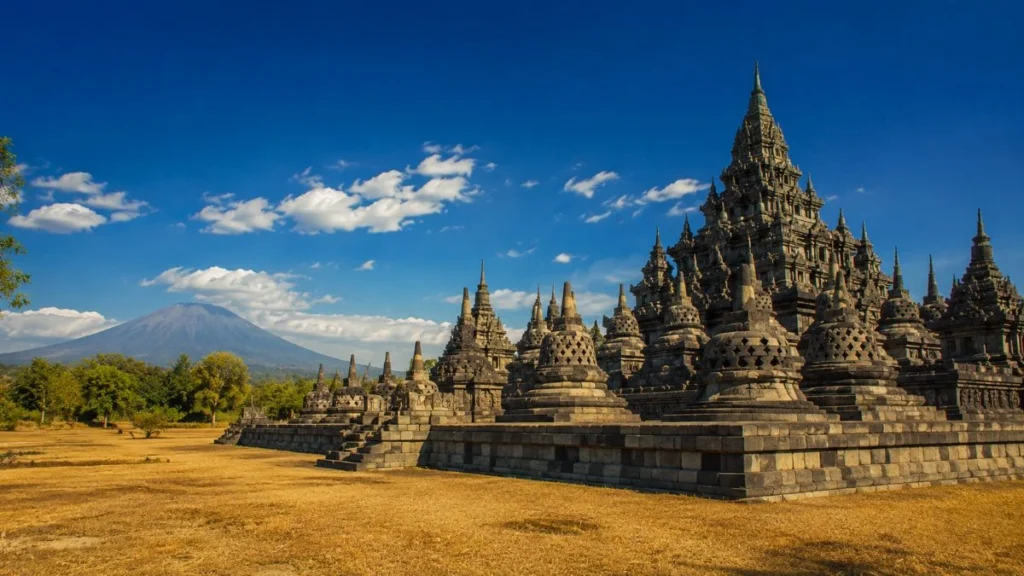
For Borobudur and Prambanan, the temples themselves are accessible year-round. The practical question is crowds — May and September offer the best balance of dry-season conditions with lower visitor numbers than peak July–August.
For the 3-day Yogyakarta itinerary we put together, May and September are the months we’d point to first for travelers with flexibility — dry enough for all the day-trip options, quiet enough that the quota-based sites don’t require booking far in advance.
Frequently Asked Questions
What is the best time to visit Yogyakarta?
May and September offer the best overall balance — dry-season weather conditions without the peak-season crowds and prices of June–August. For travelers whose itinerary is mostly city-based, Yogyakarta is worth visiting year-round.
Is Yogyakarta worth visiting in the rainy season?
Yes, with caveats. City-based sights are fully accessible, crowds are lower, and accommodation is cheaper. The main limitation is outdoor day trips — Jomblang Cave visits and highland routes carry more weather risk between November and March.
How hot is Yogyakarta?
Yogyakarta sits at roughly 113 meters above sea level and has a consistently warm tropical climate year-round, with average temperatures between 24°C and 32°C. Humidity is the more relevant variable than temperature — dry season months are noticeably more comfortable than the wettest months of January and February.
Does it rain every day in Yogyakarta during wet season?
Not typically. Wet season rainfall in Yogyakarta usually comes in shorter, heavier bursts — often in the afternoon or evening — rather than all-day downpours. Most mornings are clear even in the wettest months, which makes morning-heavy itineraries more manageable than the “wet season” label suggests.