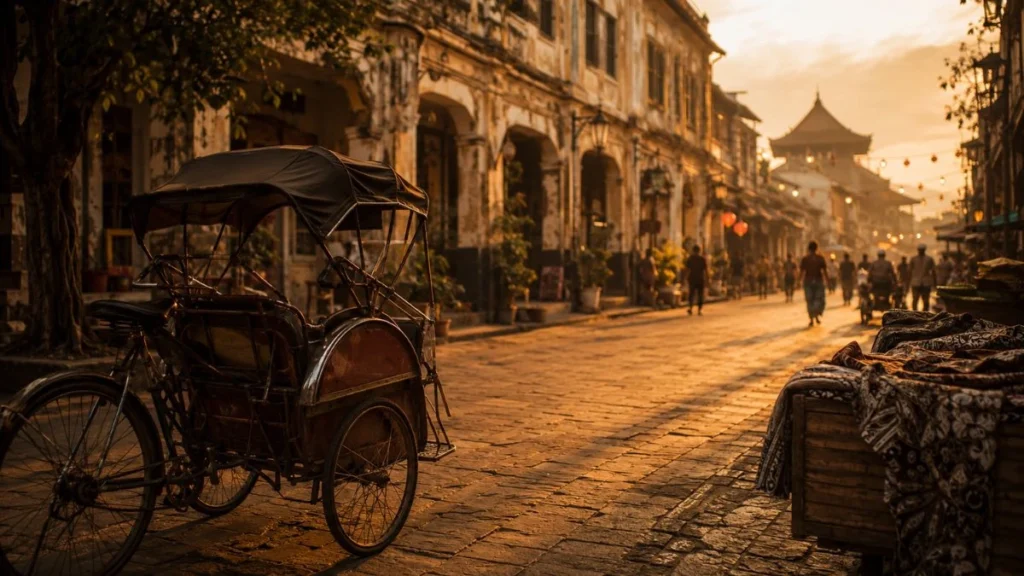
Batik Yogyakarta is sold on every corner near Malioboro, which makes it one of the easiest things to buy in the city and one of the easiest things to buy badly. Understanding the difference between the three production methods — before you shop, not after — changes what you come home with and what you paid for it.
Batik Yogyakarta has UNESCO Intangible Cultural Heritage status, which tells you something about its cultural weight and very little about how to navigate the actual market for it. The word “batik” covers a spectrum from painstakingly hand-drawn cloth that takes weeks to produce to machine-printed fabric that uses batik patterns but involves no traditional technique whatsoever — and both are sold in the same shops, sometimes on the same shelf, without the difference being volunteered unless you ask. This guide covers what the three production methods actually mean, where the most interesting batik in Yogyakarta is found outside the main tourist shopping corridor, and what’s worth spending money on depending on what you’re looking for.
The Three Types of Batik: What Actually Matters
The single most useful thing to understand about batik before shopping in Yogyakarta is that “batik” is not a single product — it’s a category covering three distinct production methods with significantly different processes, time investments, and price points.
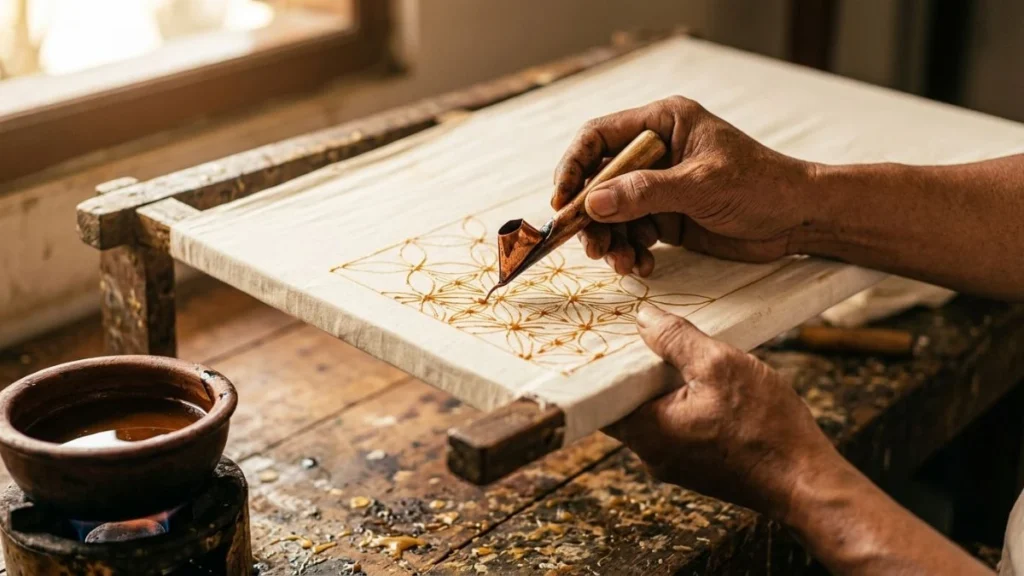
Batik tulis — hand-drawn batik — is made using a small copper pen called a canting, which the artisan fills with hot liquid wax and draws directly onto the fabric to create a resist pattern before dyeing. A single piece of batik tulis can take weeks to produce depending on the complexity of the design and the number of dye layers. This is the most labor-intensive, most expensive, and most culturally significant form — the one that earned the UNESCO recognition. The lines in genuine batik tulis are slightly irregular under close inspection because they’re drawn by hand rather than stamped or printed; this is a feature, not a flaw.
Batik cap — stamp-printed batik — uses a copper stamp (cap) pressed into hot wax and applied to the fabric in a repeating pattern. It’s faster than hand-drawing and produces more consistent repetition, which makes it suitable for larger quantities. The quality range within batik cap is wide — a well-made batik cap piece using quality dyes and careful production is a legitimate craft product, while a poorly made one is not. The pattern in batik cap is precisely repetitive in a way that hand-drawn batik isn’t, which is one way to tell them apart.
Batik printing — machine-printed fabric — uses batik-inspired patterns applied by industrial printing methods that involve no wax resist process at all. It looks like batik from a distance and is sold under the same label in many tourist-facing shops. It is significantly cheaper to produce, shows no variation in pattern repetition, and has no claim to the traditional craft. It’s a textile, not a batik.
Asking which method was used to produce a piece is a reasonable question anywhere you shop in Yogyakarta. Shops that sell genuine hand-drawn or stamp-printed batik are generally comfortable with the question. Shops that deflect or change the subject are telling you something useful.
Where to Find Batik in Yogyakarta Beyond Malioboro
Malioboro is the most convenient place to buy batik in Yogyakarta and not generally where the most interesting batik is found. The shops along the main tourist strip are weighted toward volume retail — a wide selection at negotiable prices, with the production method often unspecified unless you ask, and the higher-end hand-drawn pieces mixed in with machine-printed fabric without clear differentiation.
The more specific batik destinations in Yogyakarta are worth knowing about before you spend serious money on the main strip.
Kampung Batik Laweyan is a batik production and retail neighborhood that has been the center of Yogyakarta’s batik trade since before the colonial period. Unlike Malioboro, which is retail-facing, Laweyan still has active production workshops where the full process — waxing, dyeing, washing — happens on site. Visiting here gives context that shopping on Malioboro doesn’t: you see how the product is made before you buy it, which changes what the price tag means.
Pasar Beringharjo — covered in more depth in the Pasar Beringharjo Yogyakarta guide — is the best place in the city for comparison shopping across a wide range of batik types and price points, with dozens of vendors side by side making it easy to see how prices and quality vary for the same apparent product. The volume and variety here exceeds what any single shop offers, and the vendors are generally more willing to discuss production method than the tourist boutiques.
Batik museum Yogyakarta — the Batik Museum on Jalan Dr. Sutomo — is worth visiting before you shop rather than after, because it provides the production context and historical background that makes the price differences between types legible. Understanding what you’re looking at in a production sense makes the shopping conversation more productive and the final purchase more considered.
Yogyakarta Batik Patterns: What Makes Them Specific
Yogyakarta batik has a distinct visual identity that separates it from the batik traditions of other Indonesian cities — particularly Solo (Surakarta), which has its own court batik tradition developed in parallel with Yogyakarta’s and worth distinguishing between if you’re buying seriously.
The dominant colors in classical Yogyakarta batik are deep brown (sogan), indigo blue, and cream or white — a palette historically derived from natural dye sources and associated with the Yogyakarta court. The patterns themselves follow a set of named traditional designs (motif) with specific cultural meanings: kawung (a geometric pattern of intersecting circles associated with royalty), parang (a diagonal repeating blade motif historically restricted to court use), and sido mukti (a pattern associated with prosperity and wellbeing, used in ceremonial contexts).
Understanding that these patterns carry specific cultural weight — that parang designs of certain scales were historically reserved for the sultan — adds a layer to the shopping conversation that goes beyond color preference. Batik sellers with knowledge of their product will often explain these associations unprompted; those who can’t or won’t may be selling something that looks like traditional batik without being rooted in the tradition.
What to Actually Buy and What to Spend
For travelers buying batik in Yogyakarta primarily as a souvenir or wearable piece, mid-range batik cap from a reputable shop in the Beringharjo market or a Laweyan workshop is a reasonable target — you get a genuine craft product at a price that reflects its production rather than a tourist markup, and you can see or ask about how it was made.
For travelers interested in batik as a cultural artifact or serious textile purchase, batik tulis from an established Laweyan workshop is worth the price difference — the piece has a specific production story, takes measurable time and skill to produce, and is the version of batik that the UNESCO recognition actually refers to.
For travelers who simply want fabric with Javanese patterns and don’t have budget for the above, batik printing from the market is a reasonable purchase as long as you know what it is and aren’t paying hand-drawn prices for machine-printed fabric.
The Kotagede silver guide covers a parallel situation in Yogyakarta’s craft economy — the same principle applies: asking about process before buying is the most useful single habit across all of the city’s craft markets.
For context on how batik shopping fits into a broader Yogyakarta visit, the things to do in Yogyakarta guide covers where batik sits alongside the city’s other cultural layers.
Frequently Asked Questions
What makes Yogyakarta batik different from other Indonesian batik?
Yogyakarta batik uses a distinct color palette — deep brown, indigo, and cream — derived from the city’s royal court tradition, and follows a set of named traditional patterns (motif) with specific cultural meanings. It’s most closely related to Solo batik, which developed from the same Mataram court tradition but with its own variations in color and pattern.
How do I tell real batik from printed fabric in Yogyakarta?
Genuine hand-drawn batik (batik tulis) has slightly irregular lines under close inspection because it’s drawn by hand. Stamp-printed batik (batik cap) shows precise pattern repetition. Machine-printed fabric has completely uniform pattern reproduction and no wax texture on the reverse. Asking the seller which production method was used is the most direct approach.
Where is the best place to buy batik in Yogyakarta?
Pasar Beringharjo for comparison shopping across a wide range, Kampung Batik Laweyan for production context and workshop-direct purchasing, and the Batik Museum for background before you buy. Malioboro is the most convenient but not generally where the most interesting batik is found.
How much should I pay for batik in Yogyakarta?
Prices vary significantly by production method. Machine-printed fabric can cost as little as a few thousand rupiah per meter. Batik cap pieces range from tens of thousands to a few hundred thousand rupiah depending on quality and complexity. Batik tulis — genuine hand-drawn batik — typically starts at several hundred thousand rupiah for a simple piece and rises significantly for complex multi-layer designs.