Last updated: 7 August 2026
One bowl at a time, cooked over an open charcoal flame in a single small pan — Bakmi Jawa is the kind of dish that refuses to be rushed, and Yogyakarta’s most legendary stalls have built decades-long reputations on exactly that stubbornness.
Quick Facts
- What it is: Javanese-style noodles cooked to order over a charcoal brazier (anglo), available fried, boiled, or in soup
- Where it started: Bantul and central Yogyakarta, with some stalls tracing back to the 1940s–1980s
- Price: Roughly Rp 20,000–35,000 per bowl at most legendary stalls
- Wait time: Often 30–60 minutes, since each order is cooked individually
- Known regulars: Local officials, artists, and even a former Indonesian president have eaten at some of these stalls
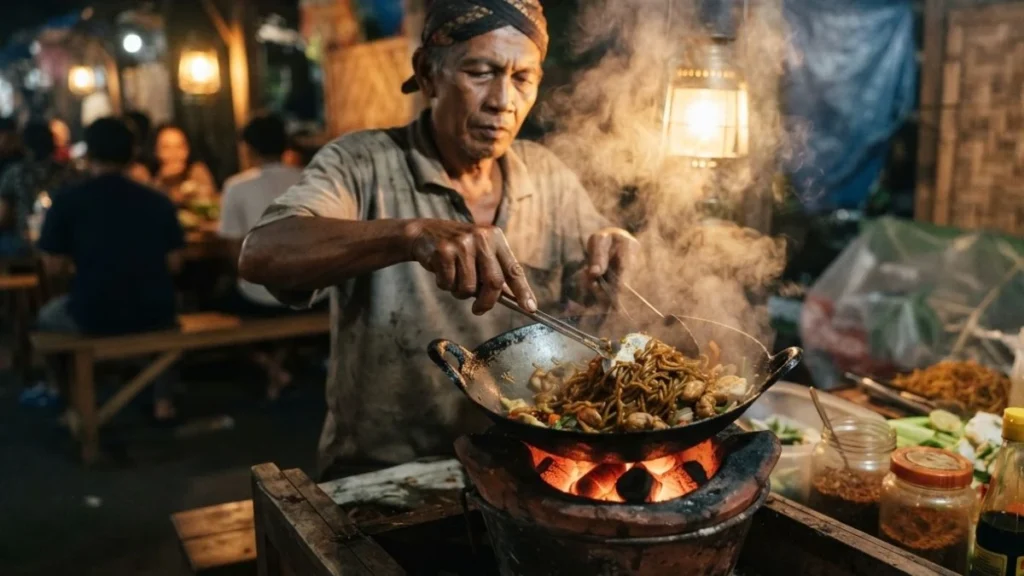
Bakmi Jawa is Yogyakarta’s answer to the question of what happens when you cook noodles the slow way, one portion at a time, over real fire instead of a gas burner. Unlike the fast turnaround of most noodle stalls, Bakmi Jawa is prepared to order in a small pan set directly over charcoal, which means every bowl takes real time — and the wait is treated as part of the experience rather than a flaw in the system.
Cooked the Old-Fashioned Way
According to Yogyakarta’s official tourism portal, the appeal of Javanese Bakmi lies specifically in how it’s cooked the old-fashioned way — using a brazier and charcoal, which gives the dish a distinctive smoky aroma and a deeper flavor in the broth. The clay stove used for this, known as an anglo, sits at the center of nearly every legendary bakmi stall’s kitchen, and most operations still rely on it rather than switching to faster gas equipment, even decades into running the business.
Free-range chicken, duck eggs, and traditional spices like shallots, garlic, pepper, and candlenuts round out what makes the dish distinctive, and the combination of smoky char, rich broth, and duck egg richness is what separates Bakmi Jawa from noodle dishes found elsewhere in Indonesia. Locals will often specifically ask whether a stall still cooks over charcoal before deciding it’s worth the visit, since the technique is considered inseparable from the dish itself.
Fried, Boiled, or Somewhere in Between
Bakmi Jawa isn’t a single fixed preparation — most stalls offer at least three versions of the same noodles: goreng (fried and dry), rebus or godhok (boiled, soupy), and nyemek (a middle ground, moist but not swimming in broth). The choice of version changes the eating experience significantly, and regulars tend to have strong, specific preferences about which one a given stall does best. Toppings and add-ons like extra chicken pieces, wings, or a whole drumstick are common, and duck egg — rather than chicken egg — is the traditional choice mixed into both the noodles and the broth.
Yogyakarta’s Legendary Stalls
A handful of names come up repeatedly whenever the topic of Bakmi Jawa comes up in Yogyakarta. Bakmi Jawa Mbah Mo, running since 1986 out of Code, Trirenggo in Bantul, is known for its savory duck-egg broth and genuine free-range chicken, cooked entirely over charcoal — remote enough to require some effort to reach, but consistently described as worth the trip. Bakmi Pak Pele, established in 1983 near Keputran, has built a reputation for drawing artists and officials and tends to sell out well before closing.
Older still is Bakmi Jawa Pak Geno on Jl. Mangkuyudan, tracing back to 1958 and counted among the pioneers of the Javanese noodle format in the city — a stall reportedly visited by former Indonesian president Soeharto in years past. For a different atmosphere entirely, Bakmi Jawa Mbah Gito in Kotagede offers the dish inside a classic Javanese wooden house-style interior, making it as much a photo stop as a meal.
Where to Fit It Into a Trip
Because most Bakmi Jawa stalls open only in the evening and cook everything to order, it works best as a planned dinner stop rather than something squeezed in between sightseeing. Stalls near Kotagede pair naturally with a stop at kotagede silver workshops earlier in the day, while options closer to central Yogyakarta fit easily into an evening built around malioboro street. If you’re already working through Yogyakarta’s other food specialties, it’s a natural companion to gudeg and sate klathak as part of a broader culinary comparison of the city’s signature dishes.
Practical Tips
- Go early or expect to wait. Popular stalls cook one bowl at a time, and evening rushes can mean waits of 30–60 minutes.
- Decide your style before ordering. Goreng, rebus, and nyemek are genuinely different experiences — ask staff for a recommendation if you’re unsure.
- Ask about duck egg. It’s traditional and adds noticeable richness, but not every stall includes it by default.
- Bring cash and patience. Most of these are long-running family stalls, not fast-casual operations built for quick turnover.
Is It Worth Seeking Out?
Yes — Bakmi Jawa rewards visitors willing to slow down and wait for food cooked the way it’s always been cooked here. It’s an unpretentious, inexpensive dish, but the charcoal technique and decades of consistency at Yogyakarta’s best-known stalls make it a genuinely different experience from noodles anywhere else in Indonesia.
What makes Bakmi Jawa different from other Indonesian noodle dishes?
It’s cooked to order over a charcoal brazier called an anglo rather than a gas stove, which gives the broth and noodles a distinct smoky depth that faster cooking methods can’t replicate.
What are the different types of Bakmi Jawa?
The main styles are goreng (fried, dry), rebus or godhok (boiled, soupy), and nyemek (moist but not fully soupy) — most stalls offer all three.
Why does Bakmi Jawa take so long to order?
Because each bowl is cooked individually in a small pan over charcoal rather than in bulk, meaning even a busy stall can only prepare one or two orders at a time.
Where can I try legendary Bakmi Jawa in Yogyakarta?
Well-known stalls include Bakmi Jawa Mbah Mo in Bantul, Bakmi Pak Pele near Keputran, Bakmi Jawa Pak Geno on Jl. Mangkuyudan, and Bakmi Jawa Mbah Gito in Kotagede.
Does Bakmi Jawa use duck egg or chicken egg?
Traditionally duck egg, which adds a richer flavor to both the noodles and the broth, though not every stall includes it as standard.
Sumber Resmi
- Yogyakarta Tourism Portal — Legendary Javanese Bakmi Stalls in Jogja (diverifikasi aktif via fetch, diakses 7 Agustus 2026) — sumber resmi Dinas Pariwisata DIY untuk daftar warung legendaris dan ciri khas Bakmi Jawa