Wayang kulit Yogyakarta is one of the most significant performing art traditions in the world — UNESCO recognized it as an Intangible Cultural Heritage of Humanity in 2003 — and also one of the most frequently misunderstood by visitors who encounter it as a tourist experience without the context that makes it legible. This guide covers what wayang kulit actually is, where to see it properly in Yogyakarta, and why a full performance is a different experience from a tourist demonstration.
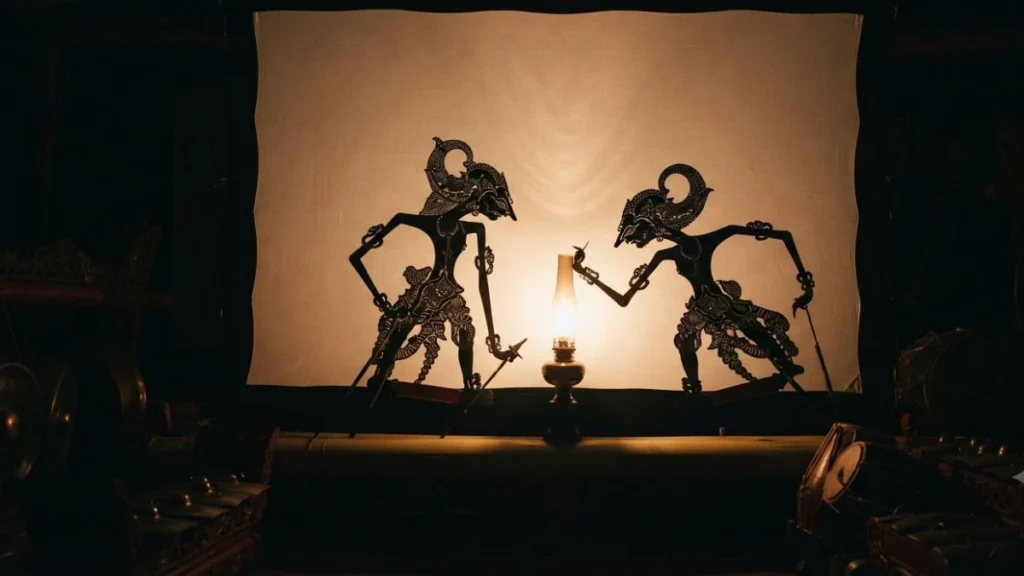
Wayang kulit Yogyakarta sits at the intersection of mythology, philosophy, performance, music, and social commentary in a way that no single-sentence description captures. A full wayang kulit performance runs through the night — from around 9pm until dawn — narrated and voiced by a single dalang (puppet master) who controls all the puppets, delivers all the dialogue, conducts the gamelan orchestra, and maintains a narrative drawn from the Hindu epics of the Ramayana and Mahabharata while weaving in contemporary social commentary that the Javanese audience understands and responds to in real time. The leather puppets are intricately carved and painted, the shadows they cast on the white screen are the primary visual experience for the audience on the screen side, and the dalang’s stamina and skill across an eight to nine hour performance is in itself a form of cultural mastery worth witnessing.
What Wayang Kulit Actually Is
The puppets themselves — wayang, from the Javanese word for shadow — are flat figures carved from buffalo hide, painted in the distinctive Yogyakarta court style with elongated necks, angled limbs, and colors that denote character type (refined characters tend toward lighter tones; coarser or demonic characters toward darker, more elaborate ornamentation). Each puppet is manipulated by the dalang via a central horn handle and two arm rods, and the control required to convey character, emotion, and action through the puppet’s shadow projection is developed over years of training.
The dalang is not simply a puppeteer — the role encompasses narrator, vocalist, orchestra conductor, comedian, moralist, and social commentator simultaneously. The voice differentiation required to portray dozens of characters across a single night, from noble kings to clown servants to demons, requires a specific kind of vocal training that forms a significant part of a dalang’s education. The clown servants — the panakawan, most notably Semar and his sons Gareng, Petruk, and Bagong — are particularly important characters in the Javanese wayang tradition, functioning as comic relief and social conscience simultaneously, often delivering contemporary political and social commentary through jokes that the Javanese audience reads at multiple levels.
The gamelan orchestra that accompanies the performance is not background music — it responds to the dalang’s performance in real time through a system of signals, changing tempo, intensity, and specific pieces based on the action unfolding on screen. The relationship between dalang and gamelan is collaborative and requires the same kind of mutual attentiveness that makes a live jazz performance different from a recorded one.
The Javanese Cosmological Framework Behind the Stories
Understanding even a little of the narrative framework makes wayang kulit significantly more engaging for visitors who don’t speak Javanese.
The stories are drawn primarily from two sources: the Mahabharata (particularly the Bharatayuddha, the great war between the Pandawa and Kurawa clans) and the Ramayana (the same epic depicted in the relief panels at Prambanan, covered in the Prambanan Temple guide and the Ramayana Ballet guide). These stories function in Javanese culture not as entertainment but as moral philosophy — the characters represent archetypes of human behavior, their conflicts represent the eternal struggle between refined (alus) and coarse (kasar) impulses, and the resolution of each story reinforces the Javanese values of balance, harmony, and the cultivation of inner refinement.
The Pandawa five — Yudhistira, Bima, Arjuna, Nakula, and Sadewa — are the central heroes of the Mahabharata cycle and the characters most beloved in Javanese culture. Arjuna in particular, the refined archer warrior whose spiritual refinement matches his martial skill, represents the Javanese ideal of the spiritually and physically accomplished person. Understanding which side the Pandawa are on (the refined side) and that their victory is always ultimately assured (though at great cost) provides enough narrative orientation to follow the story arc of a performance without understanding the Javanese dialogue.
Where to See Wayang Kulit in Yogyakarta
The options for seeing wayang kulit in Yogyakarta range from abbreviated tourist demonstrations to full overnight performances, and the experience differs so substantially between these that they shouldn’t be considered versions of the same thing.
Full overnight performances are the form in which wayang kulit exists as a living tradition — performed at community celebrations, weddings, circumcision ceremonies, and village events throughout the year. These are the performances where the dalang, the gamelan, and the audience are all operating in their natural relationship: the Javanese audience moves in and out through the night, eating, socializing, and watching in the way that a community celebration warrants. Visitors are generally welcome at public celebrations, and asking your accommodation whether any wayang performances are happening in nearby neighborhoods during your stay is worth doing — attending a community performance rather than a staged tourist one produces a completely different kind of experience.
The Sono-Budoyo Museum in Yogyakarta runs regular wayang kulit performances in the evening that are the most accessible formal option for visitors — shorter than a full overnight performance but longer and more substantive than a pure tourist demonstration, with a seated audience format that visitors can follow. The museum itself houses an excellent collection of wayang puppets that is worth seeing before or after a performance, providing visual context that helps when watching the shadow projection.
The Kraton hosts wayang kulit performances as part of its cultural programming, particularly for ceremonial occasions on the court calendar. The connection between the wayang tradition and the royal court is fundamental — the Yogyakarta court has historically been one of the main patrons and preservers of the dalang tradition — and seeing a performance in the Kraton context adds a layer that a museum staging doesn’t replicate. The Kraton Yogyakarta guide covers the performance calendar context.
Tourist demonstration performances are available at various commercial venues and are the shortest and most stripped-down version — typically 30 to 60 minutes covering highlights. These provide a visual introduction to the puppets and the performance style but don’t convey what wayang kulit actually is as a sustained tradition. They’re a starting point, not a substitute for the longer formats.
The Dalang Tradition and Where It’s Taught
The training of a dalang is one of the most demanding artistic educations in Javanese culture — typically beginning in childhood through apprenticeship to a senior dalang, often within a family tradition, and continuing for decades. The curriculum covers puppet manipulation, vocal technique, Javanese literary and philosophical texts, gamelan music, and the specific repertoire of hundreds of possible story episodes and their characteristic musical accompaniments.
The Institut Seni Indonesia (ISI) in Yogyakarta — the national arts institute — has a dedicated dalang training program that offers a more formal educational path, and occasional public student performances at ISI provide an opportunity to see developing dalang work through repertoire in a context that’s different from both community performances and tourist venues. These performances are worth knowing about as an alternative to the more commercial options, particularly for visitors with a genuine interest in the tradition rather than a brief cultural tick.
Wayang in Relation to Other Yogyakarta Cultural Experiences
The relationship between wayang kulit and the other cultural experiences in Yogyakarta is tighter than it might initially appear. The same Ramayana and Mahabharata stories that fill the relief panels at Prambanan are the source material for wayang kulit performances — seeing Prambanan’s carved narrative and then watching a wayang performance covering the same story creates a connection across twelve centuries of Javanese artistic tradition that is one of the more unusual things available to any visitor to the region.
The gamelan music that accompanies wayang kulit is the same tradition practiced in the Kraton’s pendopo, which visitors can hear during morning rehearsals. The batik patterns on the court costumes in Museum Ullen Sentalu use the same visual vocabulary as the costume patterns on wayang puppets. The philosophical framework of alus and kasar that underlies wayang characterization is the same framework covered in the Javanese culture and etiquette guide.
Wayang kulit is not a separate cultural artifact from Yogyakarta’s other layers — it’s the thread that connects them.
Frequently Asked Questions
How long is a wayang kulit performance in Yogyakarta?
A full traditional wayang kulit performance runs from approximately 9pm until dawn — eight to nine hours. Tourist performances at venues like the Sono-Budoyo Museum run shorter — typically one to two hours. Community performances at celebrations are the full overnight format.
Do I need to understand Javanese to enjoy wayang kulit?
Not entirely. The visual language of the puppets — character type, color, movement — communicates across language barriers, and the gamelan music creates an emotional landscape that needs no translation. Understanding the basic story arc (Pandawa versus Kurawa in the Mahabharata, Rama versus Ravana in the Ramayana) and the character archetypes gives enough orientation to follow a performance meaningfully. The political and social commentary in the clown servant scenes requires Javanese language competency to fully access.
Where is the best place to see wayang kulit in Yogyakarta?
For the most accessible formal option, the Sono-Budoyo Museum’s regular evening performances. For the most culturally authentic version, a community celebration performance in a nearby neighborhood — ask your accommodation whether any are happening during your stay. For the historical institutional context, Kraton performances when available.
What is the difference between wayang kulit and the Ramayana Ballet?
Wayang kulit is a shadow puppet performance narrated by a single dalang with gamelan accompaniment, operating across a full night in its traditional form. The Ramayana Ballet is a classical Javanese dance-drama with human performers in elaborate costumes, staged outdoors at Prambanan on full-moon evenings. Both draw from the same Hindu epic source material but are entirely different art forms with different histories, aesthetics, and performance contexts.