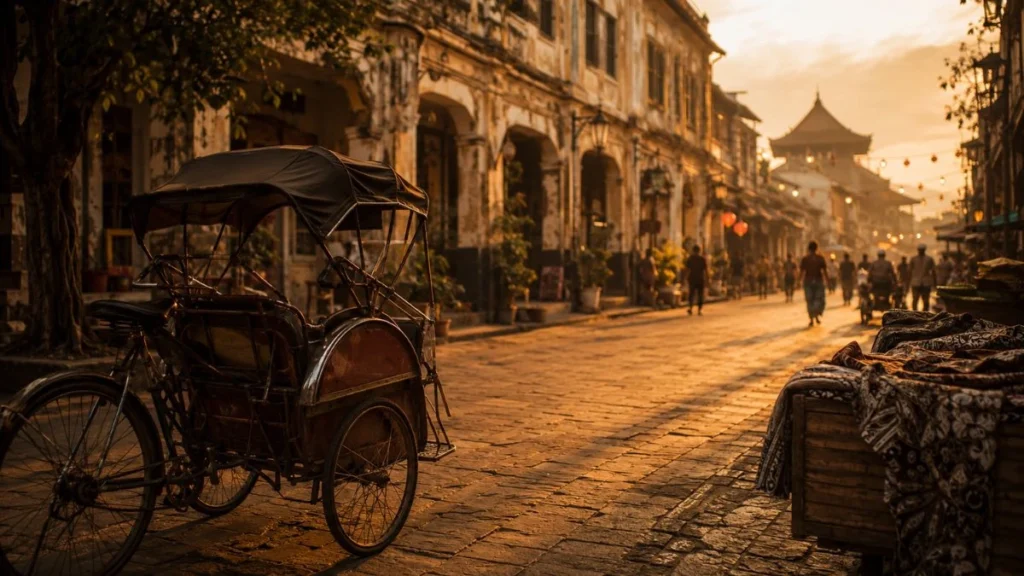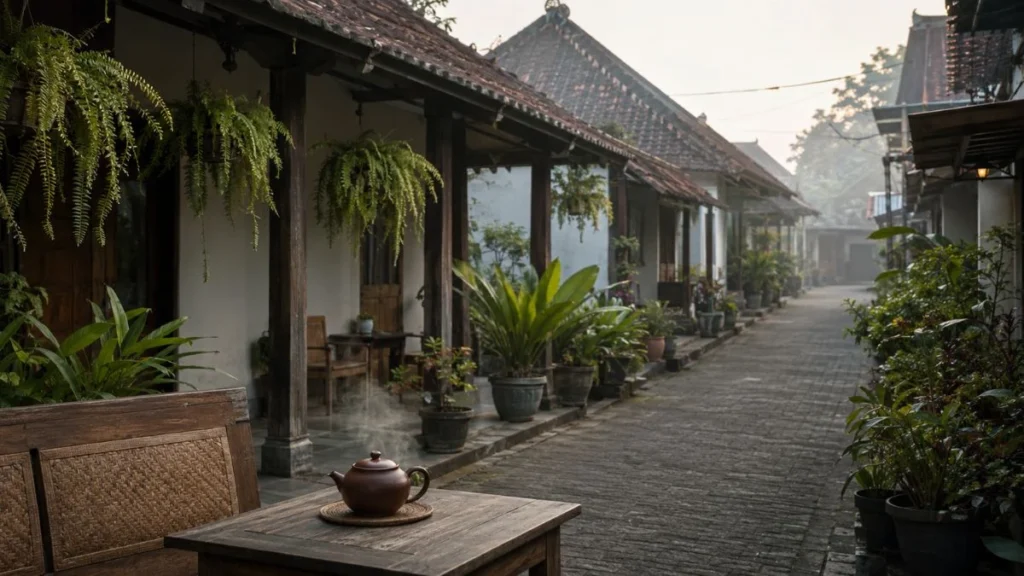
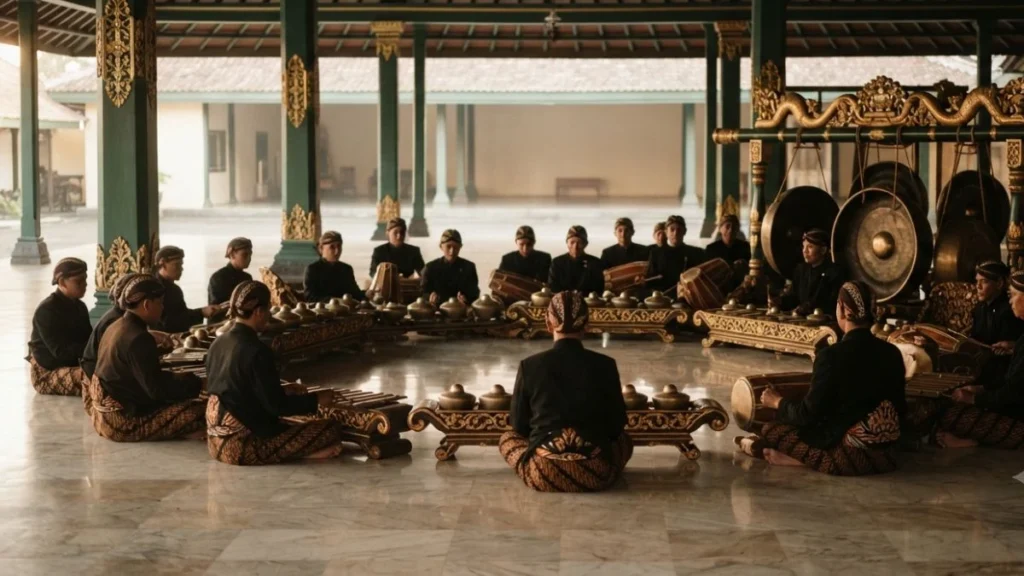
Javanese culture and etiquette in Yogyakarta operates on a set of social principles that most visitors sense without being able to name — the politeness feels different from other parts of Indonesia, the indirectness is real and has specific reasons, and the way the city relates to its royal court history shapes interactions in ways that aren’t obvious until someone explains them. This is that explanation.
Javanese culture and etiquette shapes daily life in Yogyakarta more visibly than in most Indonesian cities, partly because of the city’s role as the center of Javanese court culture and partly because the Yogyakarta sultanate’s continued political and cultural authority means the traditional value system has a living institutional anchor rather than being purely historical. Visitors who understand the basic framework move through the city differently — not because Yogyakartans are unfriendly to visitors who don’t know the rules, but because understanding why interactions work the way they do makes them more legible, and more rewarding, than navigating them blind.
The Core Javanese Social Values: Rukun and Rasa
Two concepts underpin most of what looks like “Javanese politeness” from the outside and is worth understanding rather than just observing.
Rukun — often translated as “harmony” or “social cohesion” — is the governing social value of Javanese community life. It describes a state of communal cooperation and mutual respect in which conflict is avoided or managed indirectly, disagreement is expressed through implication rather than confrontation, and maintaining the social equilibrium of a group takes precedence over individual assertion. This is not a performance of politeness — it’s a genuine organizing principle, and understanding it explains why direct refusals are rare, why Javanese people often say “yes” when they mean “maybe” or “I don’t know,” and why expressions of displeasure tend to be subtle rather than explicit.
Rasa — roughly “feeling” or “inner sense” — is the Javanese concept of emotional and social intuition: the capacity to read a situation, understand what is needed, and respond appropriately without requiring explicit instruction. High rasa is considered a marker of maturity and refinement in the Javanese worldview, and it’s why Javanese social interactions can feel to outsiders like a lot of things are being communicated without being said directly. They are.
These two concepts together produce the social texture most visitors notice in Yogyakarta — the warmth combined with indirectness, the willingness to help combined with reluctance to say “I don’t know” if it might cause awkwardness, the politeness that sometimes makes it hard to get a straight answer. None of this is deception; it’s a different framework for managing social interactions than most Western visitors bring with them.
Hierarchy and the Kraton’s Shadow
Yogyakarta’s social culture is more explicitly hierarchical than most Western visitors are accustomed to, and the hierarchy is encoded in the language itself — Javanese has distinct registers (ngoko, madya, and krama) used with different people based on age, status, and familiarity, and Bahasa Indonesia as used in Yogyakarta carries some of this hierarchy through in ways that aren’t immediately visible.
The practical implications for visitors are less about navigating language registers and more about understanding why age and status are treated with explicit deference in Yogyakarta in ways that might feel unfamiliar. Older people are addressed more formally, people in positions of authority (including, traditionally, the sultan) command genuine deference rather than performed respect, and the general orientation toward respecting hierarchy is deeply ingrained rather than situational.
The Kraton itself is the most visible expression of this — the living court culture we cover in the Kraton Yogyakarta guide exists because enough people in Yogyakarta genuinely regard the sultanate as a legitimate cultural authority, not just a historical artifact. Visiting the Kraton with this in mind produces a different experience from treating it as a theme park of historical Javanese culture.
Temple and Religious Site Etiquette
Yogyakarta’s temple and religious site etiquette follows conventions that are broadly consistent across Java but worth stating clearly for first-time visitors.
At active Hindu temples (Prambanan, smaller temple compounds), covering shoulders and knees is required. A sarong is typically available to borrow or rent at the entrance if needed. Entering temple sanctuaries during active religious ceremonies requires explicit permission rather than assumed access as a visitor.
At the Kraton and its associated sites, the general principle is quieter behavior and more attentive clothing than you’d bring to a beach — not strict dress code in all sections, but an awareness that you’re in a working court compound rather than a museum.
At mosques and Islamic sites: Yogyakarta has a significant Muslim population and several important mosques, including the Grand Mosque (Masjid Gedhe Kauman) adjacent to the Kraton’s northern square. Removing shoes before entering, covering appropriately, and being aware of prayer times (five times daily, with Friday midday prayer the most significant for traffic and access to nearby businesses) are the relevant considerations.
At the active market sites like Pasar Beringharjo, no special etiquette applies — but moving through crowded market spaces with awareness of the vendors and other shoppers as working people rather than backdrop is the difference between a respectful and an oblivious visit.
The Indirect Communication Style: Navigating It Practically
The most practically relevant aspect of Javanese culture for most visitors is the indirect communication style, which produces specific situations that benefit from knowing what’s happening.
“Yes” doesn’t always mean yes. In Javanese social convention, saying “no” directly — particularly to a request or an offer — is face-threatening for both parties. The result is that “yes, maybe” or “yes, later” or “yes, I’ll try” often means “no, but I don’t want to say that directly.” Learning to read the level of enthusiasm in a positive response — rather than taking any positive response at face value — is the adjustment most visitors eventually make.
Asking for directions produces optimistic answers. Javanese people will almost never say “I don’t know” when asked for directions, because not knowing is face-threatening. The social convention is to provide some answer rather than none, which means directions given with confidence are sometimes wrong. Cross-referencing from multiple people, or using a maps application, is more reliable than taking a single confident answer at face value.
Criticism and disagreement are expressed indirectly. If something is wrong with your food, your accommodation, or a service, direct complaint is not the conventional channel for resolution. A polite, indirect mention — “perhaps this could be a little different” rather than “this is wrong” — produces better results than direct confrontation, which tends to cause the shutdown of helpful communication rather than the escalation of helpful resolution.
Photography Etiquette
Photographing people in Yogyakarta requires the same consideration it does anywhere, but with a specific layer around ceremonial contexts. At Kraton ceremonies, Grebeg processions, and other active cultural events, photographing from a respectful distance without pushing into ceremonial space is the baseline; asking before photographing individuals at close range is appropriate regardless of whether you think you’ll be refused.
At craft workshops in Kotagede and the batik workshops in the Laweyan area, asking before photographing the production process is both polite and usually welcomed — most craftspeople are happy to be photographed and to have their work documented, and asking first signals respect for what they’re doing. Photographing without asking in a working workshop can feel intrusive in a way that asking first entirely avoids.
At markets, photographing the goods rather than the vendors is the lower-friction approach. Photographing vendors directly requires eye contact and implicit or explicit permission — a smile and gesture toward your camera is usually sufficient, and a genuine “no” should be accepted without pressure.
Food Culture and Eating Together
Javanese food culture in Yogyakarta has several conventions worth knowing about for visitors eating at warungs and in local homes rather than tourist restaurants.
Eating together is a social act in Javanese culture — meals are shared and portions are distributed rather than individually ordered and individually consumed in many warung contexts. Eating alone is entirely acceptable and common, but if you’re invited to share a meal, accepting rather than declining is the socially warmer response.
The right hand is the eating hand in Javanese convention (and across most of Indonesia) — using your left hand to pass food or touch shared dishes is the kind of thing that registers to observant locals even if nothing is said about it directly.
Praising the food is appreciated and expected — the cook’s effort is genuinely valued and saying so, even briefly, is the social equivalent of saying thank you for a hospitality gesture.
Gift-Giving and Visiting
If you’re visiting a Javanese home or a craft workshop as a guest rather than a customer, arriving with a small gift is appreciated but not obligatory. Food — particularly snacks or sweets — is the most universally appropriate gift category. Gifts are often not opened immediately in front of the giver, which surprises visitors who expect immediate acknowledgment — this is a Javanese convention that avoids any awkwardness if the gift is not exactly right, and is not a sign of indifference.
What This All Means for Your Trip
Understanding Javanese culture and etiquette doesn’t mean performing a set of rules — it means having enough context that the interactions you have in Yogyakarta make sense rather than feeling opaque. The indirectness isn’t evasion, the deference isn’t servility, and the warmth isn’t performance. It’s a coherent social system that rewards the same attention you’d bring to understanding any place you care about being in rather than just moving through.
For the specific cultural sites where this context matters most, the Kraton Yogyakarta guide, the Kotagede silver guide, and the Pasar Beringharjo guide each cover the site-specific layer of what to expect. The Museum Ullen Sentalu guide covers Javanese court culture in more depth than any other site in the region.
Frequently Asked Questions
Is Yogyakarta conservative compared to Bali?
Yes, notably so. Yogyakarta has a stronger Islamic identity and a more active traditional Javanese court culture than Bali, both of which inform a more conservative social environment. Dress more modestly than you would in Bali’s south, particularly outside the main tourist corridors. The city is welcoming to visitors, but the cultural baseline is different and worth calibrating to rather than assuming Bali norms apply.
Do I need to speak Javanese or Indonesian in Yogyakarta?
No, but a few phrases of Bahasa Indonesia go a long way in terms of social warmth — greeting people in Indonesian rather than expecting English is the most effective single adjustment most Western visitors can make. English is widely understood in the tourist-facing parts of the city; less so in markets, local warungs, and craft workshops.
Is it rude to bargain in Yogyakarta markets?
Bargaining is expected at street stalls, market vendors, and informal souvenir sellers — not bargaining at all can actually feel slightly awkward to vendors who expect the negotiation. Fixed-price shops and restaurants don’t bargain. The convention is good-natured negotiation rather than aggressive haggling, and a price you’re both comfortable with is the goal rather than winning the lowest possible number.
What should I wear in Yogyakarta?
Light, modest clothing that covers shoulders and knees is appropriate for most of the city’s cultural and religious sites, and comfortable in most non-beach contexts. The highland areas around Kaliurang are cooler and warrant a light layer, particularly in the morning. The Yogyakarta packing list covers the practical clothing decisions in more detail.