Solo to Yogyakarta is one of the shortest intercity journeys in Java — roughly 65 kilometers, under an hour by the right transport — but it’s also a route where the options vary more than the distance suggests. Here’s what actually makes sense depending on how you’re traveling and what you’re doing on either end.
Solo to Yogyakarta is the kind of journey that looks trivial on a map until you start looking at departure times, station locations, and what the different options actually involve in practice. The two cities are close enough that some travelers treat the route as a day trip in either direction; others use it as a transit between two separate legs of a longer Java itinerary. Both are workable, and the right transport choice depends on which version you’re doing.
Train: The Most Reliable Option for Most Travelers
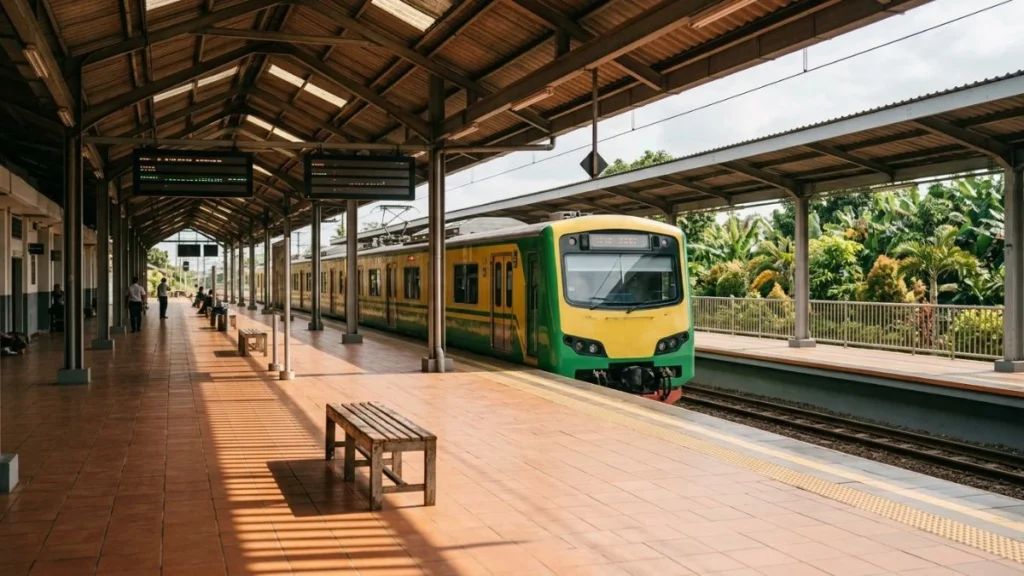
The train between Solo and Yogyakarta is the default recommendation for the same reason the Jakarta to Yogyakarta train earns its reputation — city center to city center, no airport logistics, and a journey time that makes sense for the distance. Trains depart from Solo Balapan station in the north of the city and arrive at Yogyakarta’s Tugu station, which sits in the center of the city within easy reach of Malioboro and most accommodation areas.
Journey time on the faster Prameks commuter service runs roughly 60 to 75 minutes. The intercity trains that also serve this route take a similar amount of time but have fixed seat assignments and are worth booking in advance during peak periods. The Prameks service is more frequent and doesn’t require advance booking in the same way, which makes it the more flexible option for travelers who don’t want to plan around a fixed departure.
Booking intercity trains is done through KAI Access or third-party platforms like Tiket.com, as covered in more detail in the Jakarta to Yogyakarta guide. The Prameks commuter service is a separate ticketing system, purchased at the station, and requires a commuter rail card (kartu multi trip) for the tap-in system — a small complication worth knowing about before you arrive at the station expecting a standard paper ticket.
Bus and Minibus: Slower, Cheaper, More Complicated
The bus and minibus options between Solo and Yogyakarta are significantly cheaper than the train but add complexity that the short journey doesn’t necessarily warrant. The main intercity bus terminal in Solo is Tirtonadi, outside the city center, which means getting to the terminal from Solo’s center adds time and a ride-hailing trip to the start of the journey. Buses then travel the main road between the two cities, which passes through several towns and is subject to traffic — journey times of 1.5 to 2.5 hours are typical depending on conditions.
For travelers with very tight budgets or those already located near Tirtonadi, the bus is a legitimate option. For most independent travelers staying near the center of either city, the additional logistics make the price saving difficult to justify against a train ticket that gets you city-center-to-city-center in under 75 minutes.
Private Car or Taxi: The Most Flexible, Least Efficient
A private car or taxi between Solo and Yogyakarta covers the distance in roughly 1.5 to 2 hours depending on traffic on the main connecting road. It’s more expensive than the train for a single traveler, though the per-person cost becomes more reasonable for two or three people sharing. The main advantage is door-to-door flexibility — you leave from wherever you’re staying and arrive at your accommodation, without the station transfer on either end.
For travelers combining the Solo to Yogyakarta leg with a stop at a site along the way — Prambanan sits between the two cities and is passed en route — a private car makes the stopover easier to manage than trying to do it by train.
Ride-hailing apps (Gojek and Grab) technically cover intercity trips, though driver willingness to take a Solo to Yogyakarta booking varies, and the coordination is less reliable than a pre-arranged private vehicle. Arranging through your accommodation the evening before is more dependable for an early morning departure.
Doing It as a Day Trip
Solo to Yogyakarta and back in a single day is a realistic option that some travelers use to cover both cities without changing accommodation base. From Yogyakarta, a morning train to Solo leaves enough time to spend four to five hours in the city before returning — workable for covering Solo’s main areas (the Mangkunegaran Palace, the batik district of Laweyan from the Yogyakarta side, the Pasar Klewer textile market) without feeling entirely rushed.
The reverse — basing in Solo and day-tripping to Yogyakarta — is less efficient given that Yogyakarta has considerably more depth than a single day covers well. The things to do in Yogyakarta guide covers why a single day in Yogyakarta tends to produce a highlight reel rather than any genuine engagement with the city.
Solo as Part of a Wider Java Itinerary
The Solo to Yogyakarta leg most commonly appears as part of a longer Java itinerary rather than as an isolated journey — travelers moving from Jakarta by train, stopping in Yogyakarta for several days, then continuing to Solo before heading onward to Surabaya or Bromo. In that context, the journey is a short connector rather than a destination in itself, and the train is almost always the right call for simplicity and reliability.
For travelers building a multi-city Java itinerary with Yogyakarta as the anchor, the 3-day Yogyakarta itinerary covers how to structure the Yogyakarta portion before connecting onward. The getting around Yogyakarta guide covers the city transport options that apply on arrival, including from Tugu station.
Frequently Asked Questions
How long does it take to get from Solo to Yogyakarta by train?
The Prameks commuter service takes roughly 60 to 75 minutes between Solo Balapan station and Yogyakarta’s Tugu station. Intercity trains on the same route take a similar time with the advantage of advance booking and seat assignments.
Is there a direct train from Solo to Yogyakarta?
Yes — the Prameks commuter rail service runs frequently between the two cities without requiring advance booking. Intercity trains also serve the route with assigned seating and require booking through KAI Access or third-party platforms.
Can I do a day trip from Yogyakarta to Solo?
Yes — a morning train gives you four to five hours in Solo before returning, which is enough to cover the city’s main areas without feeling entirely rushed. The reverse day trip (Solo to Yogyakarta) is less efficient given how much depth Yogyakarta has for a single day.
Is the bus or train better for Solo to Yogyakarta?
For most independent travelers staying near the city center of either city, the train is the better option — city-center-to-city-center in under 75 minutes, more reliable timing, and the price difference rarely justifies the additional logistics of reaching the bus terminal and managing variable journey times.