Last updated: 7 August 2026
Komodo dragons on one side of the Gajahwong River, orangutans on an island in the middle, and a boat ride across an artificial lake in between — Gembira Loka has been Yogyakarta’s go-to family outing since long before “family-friendly attraction” was a marketing category.
Quick Facts
- What it is: A zoological garden and botanical park with roughly 470 animals across 5 zones
- Where it is: Jl. Kebun Raya No. 2, Kotagede, Yogyakarta — southeast of the city center
- Entry: Around Rp 60,000 on weekdays, Rp 75,000 on weekends/holidays; children under 80cm free
- Hours: Roughly 8–8:30 AM to 4 PM daily except Friday
- Extras: Boat rides, bumper boats, and animal feeding sessions cost separately
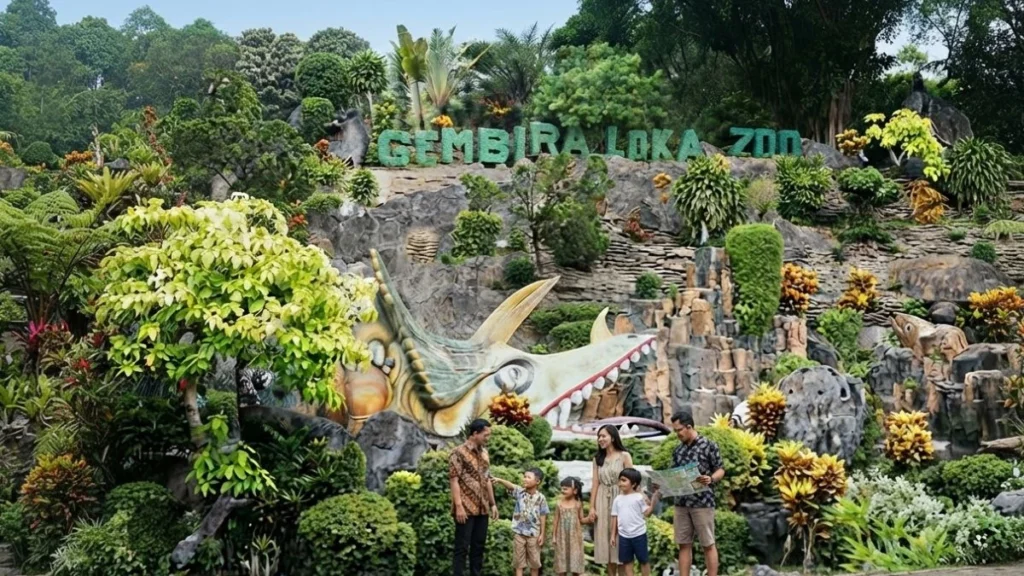
Gembira Loka Zoo sits southeast of central Yogyakarta in Kotagede, spread across a 54-acre site that combines a zoo, a botanical garden, an orchid nursery, and an artificial lake threaded with bridges over the Gajahwong River. It’s one of the oldest zoos in Indonesia and remains one of Yogyakarta’s most consistently recommended stops for families, holding a long-standing reputation as the city’s default answer to “what do we do with the kids today.”
A Royal Origin Story
The zoo opened in 1956, tracing back to an era when Yogyakarta’s sultanate was actively shaping the young city’s public institutions. Multiple sources credit Sri Sultan Hamengkubuwono IX as the driving figure behind its creation, envisioning a space where residents could connect directly with wildlife and nature rather than only reading about it. The name “Gembira Loka” translates loosely to “happy place” or “place of joy” — a fitting description for what has functioned as Yogyakarta’s primary family recreation ground for close to seven decades.
Since then, the zoo has steadily expanded its collection and facilities rather than staying frozen as a mid-century attraction. A notable addition came in 2019 with the opening of Zona Cakar (“Claw Zone”), a section focused on carnivorous mammals — particularly big cats — reflecting the zoo’s ongoing effort to modernize its exhibits rather than rely purely on nostalgia.
What’s Inside
The zoo houses roughly 470 animals spread across more than five thematic zones, ranging from primates and reptiles to birds and carnivorans, with a dedicated aquarium and a petting zoo section as well. Expect a genuine mix of Indonesian native species — Sumatran elephants, Bornean orangutans, Komodo dragons, and saltwater crocodiles among them — alongside international animals like African lions, dromedary camels, and common hippos, which is part of what sets it apart from more narrowly focused Indonesian wildlife parks.
The orangutans and chimpanzees live on a small island surrounded by a wet moat rather than behind conventional bars, and visitors can interact with and feed the resident Sumatran elephants under supervision. Beyond the animal enclosures, the artificial lake area adds a theme-park layer to the visit — pedal boats, bumper boats, and a larger catamaran-style boat all operate here for an additional small fee on top of the main entry ticket.
Planning Your Visit
Entry costs roughly Rp 60,000 per person on weekdays and Rp 75,000 on weekends and public holidays, with children under 80cm in height typically admitted free. The zoo generally opens around 8–8:30 AM and closes by 4 PM, staying open daily except for a weekly closure — worth confirming ahead of a visit since exact days can shift. Most visitors set aside two to three hours to cover the main zones comfortably, though families moving slower with young kids often stay longer, especially if they add on the boat rides.
Because Gembira Loka sits in Kotagede, it pairs naturally with a stop at kotagede silver workshops on the same side of the city, making it easy to combine a morning at the zoo with an afternoon watching silversmiths at work. It’s also a practical addition to a broader yogyakarta for families itinerary if you’re planning several days around kid-friendly stops.
Practical Tips
- Arrive early. Mornings are cooler, less crowded, and line up with feeding times for several animal zones.
- Bring extra small cash. Boat rides, bumper boats, and some feeding experiences are priced separately from the entry ticket.
- Avoid peak school holiday periods if possible. Weekends and the June–July school break bring noticeably larger crowds.
- Wear comfortable shoes. The site is large and involves a fair amount of walking between zones and across the lake bridges.
Is It Worth Visiting?
Yes, particularly for families or anyone traveling with kids — Gembira Loka remains one of the most reliable half-day stops in Yogyakarta precisely because it doesn’t require deep cultural context to enjoy. It won’t compete with Bali’s more elaborate wildlife parks in scale, but as a well-established, centrally located city zoo with genuine historical roots, it earns its place on most Yogyakarta itineraries that include children.
How much does it cost to enter Gembira Loka Zoo?
Entry runs around Rp 60,000 per person on weekdays and Rp 75,000 on weekends and public holidays, with children under 80cm typically admitted free.
When was Gembira Loka Zoo founded?
The zoo opened to the public in 1956, generally credited to Sri Sultan Hamengkubuwono IX’s vision for a public wildlife and nature space in Yogyakarta.
What animals can I see at Gembira Loka Zoo?
Around 470 animals across more than five zones, including Komodo dragons, orangutans, Sumatran elephants, saltwater crocodiles, and African species like lions, camels, and hippos.
How long should I plan for a visit?
Most visitors spend two to three hours covering the main zones, though families with young children or those adding boat rides often stay longer.
Is Gembira Loka Zoo good for young kids?
Yes — it’s widely considered Yogyakarta’s default family attraction, with a petting zoo, boat rides, and animal feeding sessions aimed specifically at younger visitors.
Sumber Resmi
- Wikipedia — Gembira Loka Zoo (diverifikasi aktif via fetch, diakses 7 Agustus 2026) — referensi untuk tahun pembukaan, jumlah koleksi satwa, dan luas area zoo