Last updated: 4 August 2026
Museum Affandi is easy to miss if you’re rushing between the airport and the city center — which is exactly the kind of place most visitors regret skipping once they hear what’s inside.
Quick Facts
- Entrance fee: Around IDR 50,000 (adults), roughly half for students
- Hours: Typically 9:00 AM–4:00 PM
- Built: Completed 1962, opened 1973
- Galleries: 3, plus garden and Café Loteng
- Location: On the main route between the city and the airport
Museum Affandi sits on the road connecting Yogyakarta to Solo, on the banks of the Gajahwong River, a spot most travelers pass without stopping en route from malioboro street yogyakarta toward the airport. It’s not a large institutional museum like museum ullen sentalu yogyakarta — it’s the former home and studio of Affandi, one of Indonesia’s most celebrated painters, converted into a museum that still carries the personal, lived-in feeling of the man who designed and built it himself.
Who Affandi Was
Affandi is widely regarded as a pioneer of Indonesian expressionism, known for a distinctive technique of applying paint directly from the tube rather than using a brush. His reputation grew through decades of exhibitions across Indonesia and more than a dozen other countries starting in the 1940s, cementing his place as one of the country’s most significant artists of the 20th century.
The Building Itself
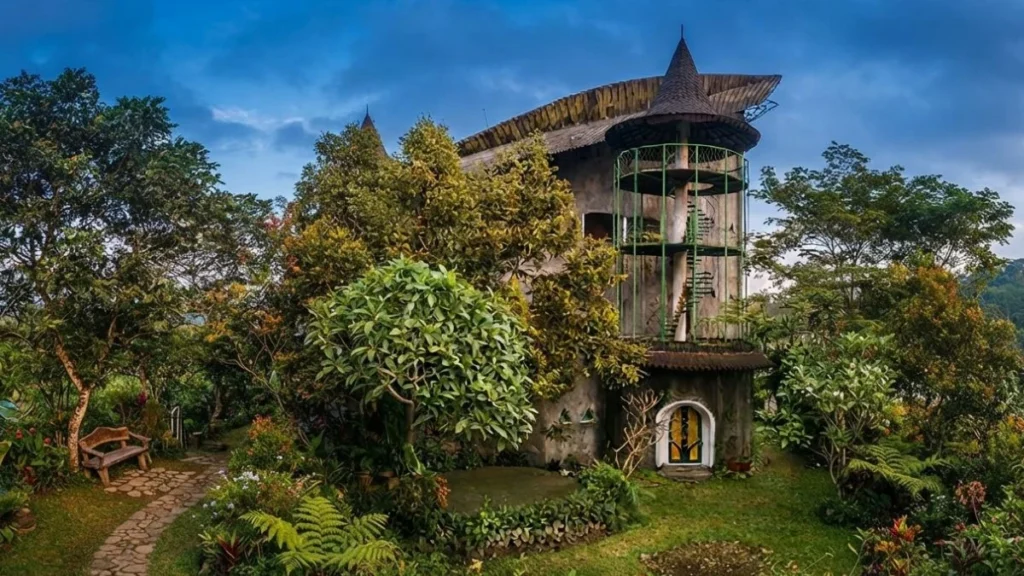
According to the Museum Affandi website, the complex was completed in 1962 and officially opened in 1973. Affandi designed it himself, and the roof — shaped to resemble a banana leaf — is one of its most distinctive architectural features. The building’s curving, organic lines feel more like an extension of the surrounding garden than a conventional gallery space.
What’s Inside
The museum is organized into three main galleries:
- Gallery 1 — Affandi’s own paintings, sculptures, sketches, and personal belongings, spanning from his early realist portraits to the bold, abstract expressionist style he became known for.
- Gallery 2 — Landscape sketches and archival material tracing his artistic development over time.
- Gallery 3 — A rotating exhibition space featuring work from Affandi’s family and visiting artists, both Indonesian and international.
Beyond the three galleries, the site includes a garden with shaded seating, Affandi’s preserved bedroom in the attic-level stilt house, and Café Loteng, where entrance tickets can be exchanged for a drink — a small but pleasant detail that turns a museum visit into a slower, more relaxed stop.
Practical Details
- Location: Jl. Laksda Adisucipto No. 167, on the main route between Yogyakarta and its airport area.
- Hours: Typically 9:00 AM–4:00 PM, though it’s worth confirming ahead since museum hours can shift.
- Entrance fee: Around IDR 50,000 for adults, roughly half that for students, with small extra charges for cameras.
- Getting there: Trans Jogja buses run along the route, or a short ride-hailing trip works well if combining the visit with an airport transfer.
Is It Worth the Stop?
For anyone with even a passing interest in art, yes — it offers a more intimate experience than a standard museum, closer to visiting an artist’s actual home than walking through a formal collection. Because it sits directly on the route between the city and yogyakarta international airport, it also works well as a stop on the way in or out, rather than requiring a separate trip.
How long does a visit to Museum Affandi take?
Most visitors spend around an hour to ninety minutes moving through the three galleries and garden at a relaxed pace.
Is Museum Affandi good for visitors with no art background?
Yes — the personal, house-museum format and garden setting make it approachable even without prior knowledge of Affandi’s work.
Can I combine this with an airport transfer?
Yes, its location on the main Yogyakarta–airport road makes it a convenient stop on the way to or from a flight, especially with time to spare before departure.
Are photos allowed inside the museum?
Generally yes, with a small additional camera fee for non-smartphone equipment; smartphone photography fees are typically lower.
Who was Affandi?
A pioneer of Indonesian expressionism known for applying paint directly from the tube, widely regarded as one of the country’s most significant 20th-century artists.
Sumber Resmi
- Museum Affandi — Official Website (diverifikasi aktif via fetch, diakses 4 Agustus 2026) — sumber resmi museum untuk sejarah bangunan dan latar belakang Affandi