Candi Ijo Yogyakarta is the highest temple in the region — literally, at 450 meters on Gumuk Ijo hill — and the one most worth visiting among the cluster of smaller temples that sit east of Prambanan and Ratu Boko. Most visitors to the eastern temple corridor stop at Prambanan and Ratu Boko and never know Candi Ijo exists. Here’s why that’s a genuine loss, and how the surrounding sites fit together into a day that covers more of the region’s temple history than the standard itinerary.
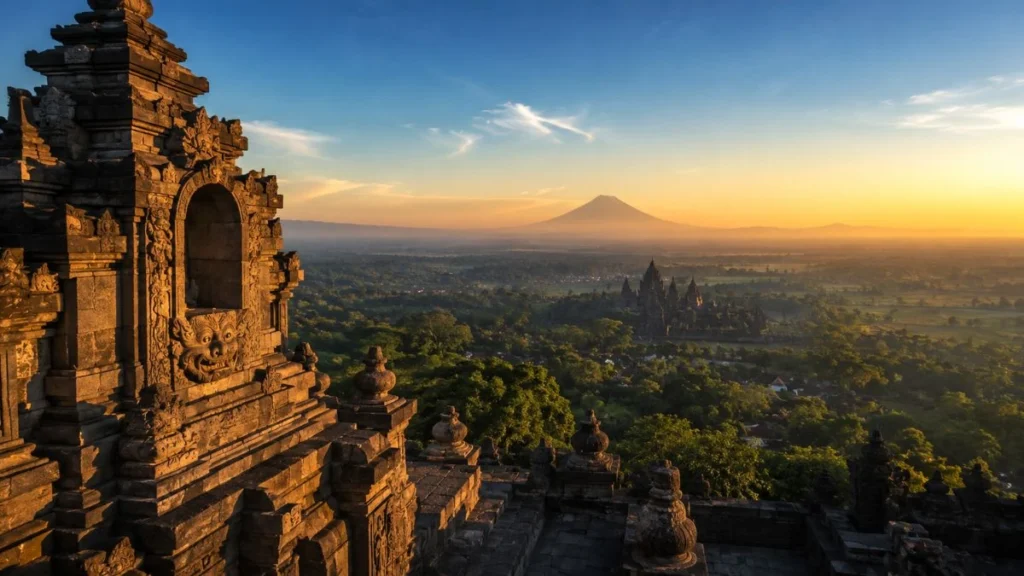
Candi Ijo Yogyakarta sits approximately 18 kilometers east of the city center, 4 kilometers from Ratu Boko and around 18 kilometers east from Yogyakarta. Its position on the highest hill in the Prambanan area gives it something that neither Prambanan nor Ratu Boko has — an unobstructed view west across the entire Prambanan plain, with the main temple compound visible in the middle distance and Yogyakarta’s skyline and Merapi’s cone beyond it. At sunset, with the warm light hitting the stone and the panorama opening to the west, Candi Ijo produces one of the most photographically rewarding and least crowded temple views in the region.
What Candi Ijo Yogyakarta Actually Is
Ijo Temple is a Hindu temple built between the 10th to 11th century CE during the Mataram Kingdom period. The name translates simply as “Green Temple” — a reference to the lush vegetation covering the hillside rather than the temple itself, which is built from the same grey volcanic andesite as the surrounding temple complexes.
Candi Ijo was discovered by H.E. Dorrepaal in 1886. The temple complex comprises 11 terraces, with the main temple on the 11th terrace. The name is mentioned in the Poh inscription from 906 AD in Old Javanese. The inscription reference places the site firmly in the mid-Mataram Kingdom period, making it a contemporary of Prambanan rather than a later addition. The 11 terraces cascading down the western face of Gumuk Ijo follow the natural contours of the hill — the main temple complex occupies the highest eastern terrace, while lower terraces hold subsidiary shrine structures in various states of excavation and restoration.
The main complex on the upper terrace includes one restored main temple dedicated to Shiva, flanking temples, and perwara (subsidiary) temples. Unlike the vertical ambition of Prambanan’s towers, Candi Ijo reads horizontally — the setting and the views are as much the architectural statement as the structures themselves. There are also various Buddhist ornaments seen in this temple, showing that there was a kind of acculturation between religions at the time this temple was built. The coexistence of Hindu and Buddhist elements is the same phenomenon visible at Borobudur and Prambanan built within a short period in the same region — a reminder that the religious landscape of 9th and 10th-century Java was more fluid than the later categorization of the temples into “Hindu” and “Buddhist” suggests.
The Candi Barong Complement: 800 Meters From Ratu Boko
While Candi Ijo is the main draw for most visitors to the eastern hill cluster, Candi Barong deserves at least a mention as a pairing site — and a genuinely unusual one. Barong temple is a 9th-century Hindu temple located approximately 800 meters east-southeast from Ratu Boko compound.
Candi Barong is dedicated to Vishnu and the Goddess of Rice, Dewi Sri. What makes it structurally distinct from almost every other temple in the Prambanan area is its form: unlike most other Hindu or Buddhist temples in the area, Barong temple took shape as stepped terraces locally known as punden berundak, which was an ancient design of pre-Hindu megalithic sacred structure in Java. This temple consists of three-level terraces.
The punden berundak form — a pre-Hindu megalithic sacred structure type — overlaid with Hindu iconography makes Candi Barong an architectural hybrid that reflects the same transitional period as Candi Ijo. It is, in a very literal sense, older in form than it is in religion. The temple faces west — unusual for a Hindu temple — and does not receive many visitors, making it a perfect place for viewing the sunset in relative peace and solitude.
The name Barong comes from the kala (demon-face) carvings above the temple niches, which bear a resemblance to the Barong figure of Balinese mythology — though the connection is more visual than historical, as the Barong tradition is more specifically Balinese while these reliefs belong to the broader Central Javanese kala-makara decorative tradition.
The Eastern Temple Corridor: How It All Fits Together
The most efficient way to see this cluster of sites is to treat the eastern temple corridor as a single half-day or full day, moving east from Prambanan through the smaller sites rather than treating each as a separate destination. The natural sequence:
Prambanan (17 km from Yogyakarta) → Ratu Boko (4 km south of Prambanan) → Candi Barong (800 m from Ratu Boko) → Candi Ijo (4 km from Ratu Boko, via Tebing Breksi at 1 km).
The Prambanan Temple guide and Ratu Boko guide cover those two sites in detail. Candi Ijo and Candi Barong extend the day for travelers who want more of the eastern hill landscape without the crowds of the main sites.
Tebing Breksi — a former limestone quarry turned geological attraction, 1 kilometer from Candi Ijo — has become a popular addition to this route, particularly for visitors interested in the carved cliff-face installations that local artists have added to the quarry walls. It’s a genuinely unusual and slightly surreal stop between Candi Ijo and the return to Yogyakarta, worth knowing about even if the carved reliefs themselves are more folkloric than ancient.
Timing and Practical Details
Candi Ijo opening hours: 08:00 – 17:00 WIB. Entrance fee: IDR 15,000 per person.
The sunset case for Candi Ijo: Arriving at Candi Ijo an hour before sunset — typically around 4:00–4:30pm depending on season — places you on the highest terrace during the best light window, when the sun drops low enough to cast warm directional light across the stonework and the western panorama opens up. The site is rarely crowded at this hour even on weekends, because most visitors don’t know it exists and those who do usually visit during midday.
For Candi Barong: No formal visitor infrastructure in the conventional sense — the site is free to visit, has minimal facilities, and is genuinely quiet. Arriving with a rented motorbike rather than depending on arranged transport gives the flexibility to find the site (road access requires navigating smaller roads off the main Ratu Boko approach) without being on a fixed schedule.
Getting there: Both sites are in the Prambanan area and are most practically reached by rented motorbike — the road conditions and access routes for both Candi Ijo and Candi Barong make motorbike access significantly more practical than car access for the final approach. Ratu Boko Palace is 4 km away while the Breksi Cliff is only 1 km away from Ijo Temple. The road to the temple is relatively good, but requires care because of hilly conditions.
For the broader context of how Candi Ijo fits alongside the rest of the day trip options from the city, the Yogyakarta day trips guide covers the eastern corridor and how to combine it with Prambanan and Ratu Boko without rushing.
Frequently Asked Questions
What is Candi Ijo and why is it worth visiting?
Candi Ijo is a 10th–11th-century Hindu temple complex on the highest hill in the Prambanan area, 18 kilometers east of Yogyakarta. It’s worth visiting for the panoramic view west across the Prambanan plain — one of the best in the region — and for the less crowded alternative it offers to the larger temple sites nearby, particularly at sunset.
How do I get to Candi Ijo from Yogyakarta?
Candi Ijo is approximately 18 kilometers east of central Yogyakarta, in the Prambanan area. A rented motorbike is the most practical option for the final approach — the road is paved but hilly and narrow in places. From Yogyakarta, take the main road east toward Prambanan, then follow signs toward Sambirejo and the Candi Ijo access road.
Can I visit Candi Ijo and Candi Barong on the same day as Prambanan and Ratu Boko?
Yes — all four sites are within a few kilometers of each other in the eastern temple corridor. A full day starting at Prambanan in the morning, Ratu Boko in the afternoon, Candi Barong (800m from Ratu Boko) in the late afternoon, and finishing at Candi Ijo for sunset covers the full corridor without feeling rushed.
What makes Candi Barong different from other temples in Yogyakarta?
Candi Barong is unusual in two ways: it faces west (rare for Hindu temples in Java), and its form follows the punden berundak — a pre-Hindu megalithic stepped-terrace structure type — rather than the towered candi form typical of most Hindu temples in the Prambanan area. It is also dedicated to Vishnu and Dewi Sri (the rice goddess) rather than Shiva, which sets it apart from most temples in the region.
What are the opening hours and entrance fee for Candi Ijo?
Candi Ijo is open daily from 08:00 to 17:00. The entrance fee is IDR 15,000 per person. Candi Barong has no formal entrance fee and is freely accessible.