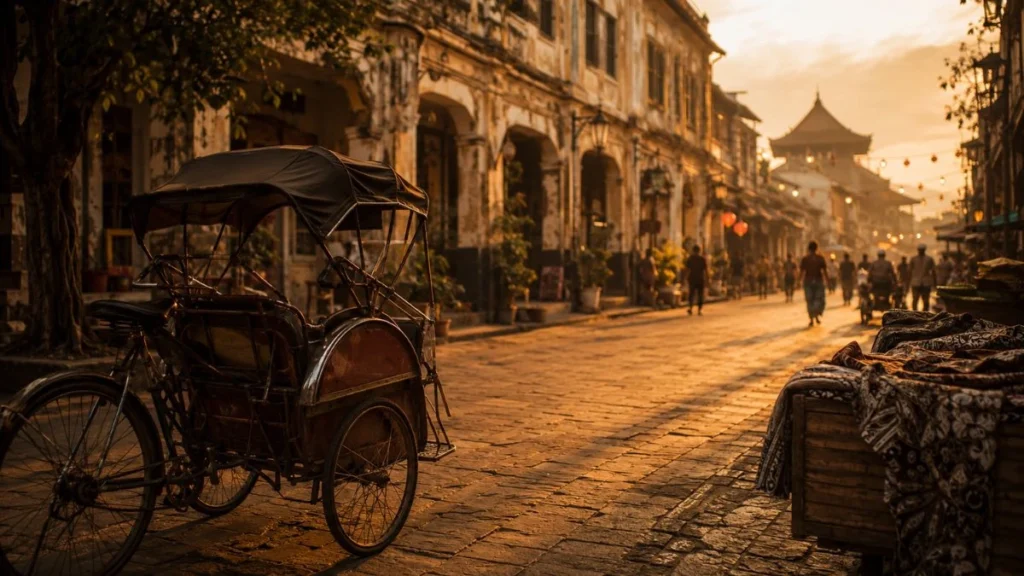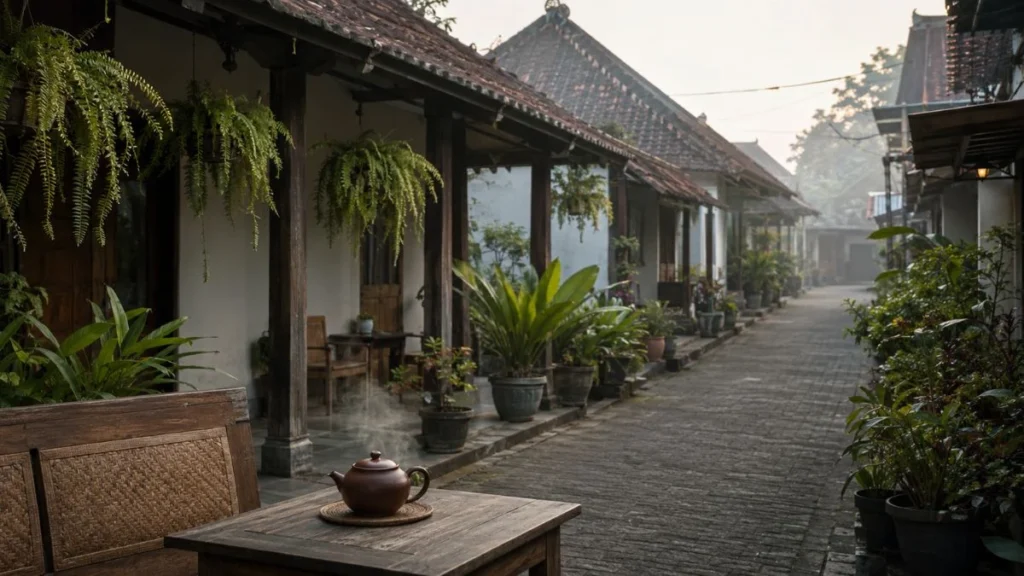
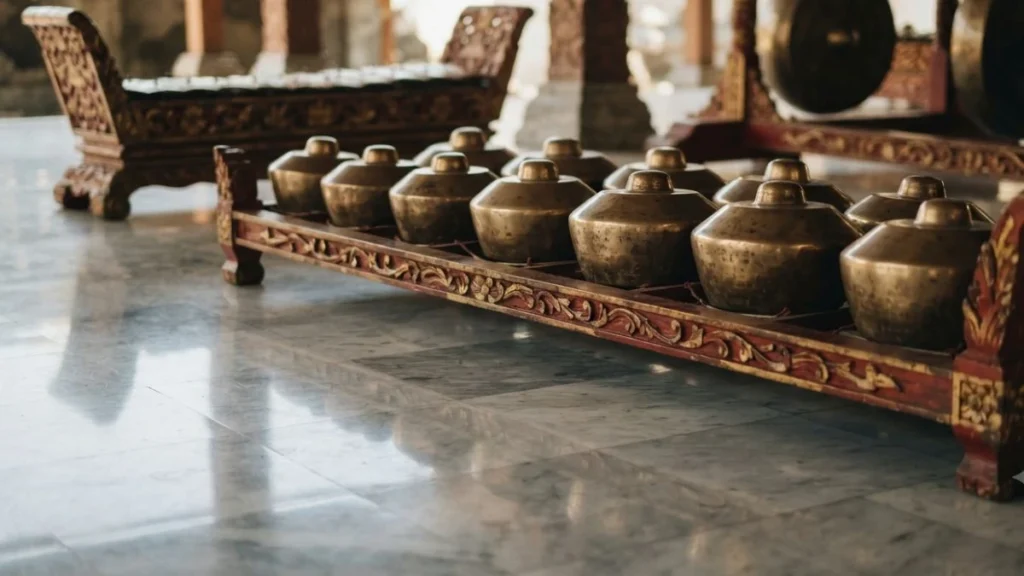
Gamelan music Yogyakarta is the sonic backdrop to almost everything culturally significant in the city — the Kraton morning rehearsals, the wayang kulit all-night performances, the Ramayana Ballet at Prambanan, the ceremonial processions. Most visitors hear it without understanding it, which is a genuine loss given that the tradition running through all of these contexts is one of the most sophisticated ensemble music systems in the world.
Gamelan music Yogyakarta is the sound you keep encountering throughout a visit to the city without necessarily connecting the dots between its different appearances. The bronze gongs in the Kraton pendopo during a morning rehearsal, the orchestral underpinning of the wayang kulit performance at Sono-Budoyo Museum, the musical accompaniment to the Ramayana Ballet at Prambanan — these are all expressions of the same tradition, performed by different ensembles in different contexts, but drawing from the same musical system that has been central to Javanese court and community life for centuries.
What Gamelan Actually Is
Gamelan is not a single instrument but an ensemble — a collection of instruments that functions as a unit rather than as individual voices. A standard central Javanese gamelan includes bronze percussion instruments in various sizes (gongs, bonang, saron, gender, and others), a two-stringed fiddle (rebab), a bamboo flute (suling), a wooden xylophone-like instrument (gambang), hand drums (kendang), and sometimes a singer (pesinden). The instruments are built and tuned together as a set rather than individually — moving a single instrument from one gamelan to another produces tuning inconsistency, which is why gamelan sets are treated as complete, indivisible units.
The tuning system itself is one of the features that distinguishes gamelan from Western ensemble music. Javanese gamelan operates in two tuning systems — slendro (a five-tone scale with roughly equal intervals) and pelog (a seven-tone scale with unequal intervals) — neither of which maps precisely onto the Western equal-temperament tuning system. This is why gamelan sounds distinctly itself rather than like orchestral music performed on unusual instruments — the pitch relationships and intervallic logic are genuinely different, not merely exotic-sounding versions of familiar harmonic structures.
The kendang (drum) acts as the conductor of a gamelan performance — the drummer communicates tempo changes, transitions, and endings to the rest of the ensemble through specific drum patterns, making the kendang player the central organizing force of the music despite being neither the loudest nor the most visually prominent instrument in the ensemble.
The Two Yogyakarta Gamelan Styles
Central Javanese gamelan divides into two regional styles associated with the two royal court traditions of the region — the Yogyakarta style and the Surakarta (Solo) style — and the difference between them is audible once you know to listen for it.
Yogyakarta gamelan has a reputation for being more robust, louder, and slightly more assertive in character compared to Surakarta’s more refined, introspective style. This characterization reflects the different historical and political circumstances of the two courts — Yogyakarta’s court music developed in a context that included military tradition and a stronger emphasis on ceremonial public display, while Surakarta’s style reflects a court culture that was more politically constrained and turned inward toward aesthetic refinement.
For most visitors, the difference between the two styles is less important than the fact that the Yogyakarta style you encounter in the Kraton context has its own specific character — recognizably itself, not generic “Javanese music.”
Where to Hear Gamelan in Yogyakarta
The Kraton morning rehearsal is the most accessible and most authentic opportunity to hear gamelan in Yogyakarta — court musicians practicing the traditional repertoire in the main pendopo pavilion, most mornings of the week, as part of the court’s ongoing musical tradition rather than as a tourist performance. The rehearsal happens whether visitors are present or not, which is exactly what makes it worth attending. Arriving at the Kraton early enough to catch the rehearsal rather than simply touring the site afterward produces a completely different quality of experience. The Kraton Yogyakarta guide covers the visit logistics.
The Sono-Budoyo Museum wayang kulit performances include live gamelan accompaniment — the orchestra performing in real time alongside the dalang rather than to a recorded soundtrack. This is the context in which gamelan’s relationship with wayang becomes most tangible: the orchestra responds to the puppet master’s performance signals, changing mood, tempo, and specific pieces based on what’s happening on screen in a way that reveals the gamelan as a flexible, responsive ensemble rather than a fixed-program band. The wayang kulit Yogyakarta guide covers the performance context.
The Ramayana Ballet at Prambanan uses a large gamelan orchestra to accompany the dance-drama — the outdoor setting amplifies the instrument’s natural resonance in a way that an indoor venue doesn’t, and the combination of bronze percussion with the stone temple backdrop at night is one of the more memorable acoustic experiences available in the Yogyakarta region. The Ramayana Ballet guide covers the scheduling and access.
ISI Yogyakarta (Institut Seni Indonesia) — the national arts institute — has gamelan ensembles and student performances that are occasionally open to visitors. Student recitals and end-of-semester performances provide an opportunity to hear gamelan in an educational rather than ceremonial context, and the campus setting includes practice rooms where the sound of multiple ensemble rehearsals in progress simultaneously is an experience in itself.
Community gamelan practice happens throughout Yogyakarta’s neighborhoods at various times — kampung-level gamelan groups practice for ceremonial occasions, and the sound of a neighborhood rehearsal drifting through open windows or gates is one of those Yogyakarta-specific ambient experiences that you encounter by being in the right neighborhood at the right time rather than by planning for it.
Learning Gamelan in Yogyakarta
Yogyakarta has more opportunities for hands-on gamelan learning than most cities in the world — a consequence of both the court tradition and the ISI campus — and for visitors with a week or more in the city, attending a workshop or lesson is worth considering.
Several established cultural organizations and independent teachers offer gamelan introduction workshops specifically designed for visitors — typically a two to three hour session covering the basic instrument families, the tuning system, and the practice of playing simple pieces on the saron and bonang (the most accessible entry instruments for beginners). These workshops are simultaneously a musical education and a contextual deepening of everything else about Yogyakarta that involves gamelan — the Kraton rehearsal, the wayang performance, the Ramayana Ballet all sound different after you’ve sat at a saron and played through the structure of a gending (gamelan composition) yourself.
Longer courses are available for visitors planning extended stays — ISI Yogyakarta accepts foreign students in its gamelan programs, and private instruction with established teachers is accessible for visitors with the language and logistics to arrange it.
The Philosophical Dimension of Gamelan
The Javanese culture and etiquette guide covers the core Javanese values of rukun (harmony) and rasa (inner feeling) — gamelan is arguably the most direct sonic expression of both. The gamelan ensemble functions precisely through mutual listening and adjustment rather than through individual assertion — no single instrument dominates, the kendang’s guidance is responded to rather than merely followed, and the quality of the performance is a function of the ensemble’s collective sensitivity rather than any individual’s virtuosity.
This is the same social logic that governs Javanese interpersonal behavior — the group’s harmony takes precedence over individual expression, responsiveness to context is valued over fixed assertion — rendered in sound. Understanding gamelan as the musical expression of Javanese social values rather than simply as the background music of Javanese cultural life gives it a dimension that most visitor encounters with it miss.
The philosopher and musician Mantle Hood described gamelan as a model of Indonesian democracy in sound — a metaphor that reveals more about the ensemble’s organizing logic than about its politics, but that captures something real about how it works. Every instrument matters. Every instrument listens. No instrument leads at the expense of the whole.
Frequently Asked Questions
What is gamelan music and where does it come from?
Gamelan is a bronze percussion ensemble tradition originating in Java and Bali, with roots in court and religious ceremonial contexts dating back at least to the 9th century based on temple reliefs at Borobudur and Prambanan. The Yogyakarta style is one of the two main central Javanese gamelan traditions, associated with the Yogyakarta Sultanate’s court music.
Can visitors learn to play gamelan in Yogyakarta?
Yes — several cultural organizations and independent teachers offer gamelan workshops for visitors, typically two to three hour introductions to the main instrument families and basic repertoire. ISI Yogyakarta offers longer courses for visitors planning extended stays.
What is the difference between gamelan and the music heard at the Ramayana Ballet?
The Ramayana Ballet uses a large central Javanese gamelan orchestra as accompaniment — so what you hear is gamelan in a specific performance context. The core instruments, tuning system, and musical logic are the same as a standalone gamelan concert or the Kraton morning rehearsal; the scale and ceremonial context are different.
Where is the best place to hear gamelan in Yogyakarta for free?
The Kraton morning rehearsal is the most accessible free option — court musicians practicing in the main pendopo during morning visiting hours, as part of the court’s ongoing cultural calendar. Community neighborhood rehearsals are also free but require being in the right place at the right time rather than planning for them.