Kraton Yogyakarta isn’t a museum dressed up as a palace — it’s an active royal residence with a sultan who still holds court, a household staff that still serves it, and ceremonies that still happen on a calendar, not for visitors. Most guides treat it as a forty-minute ticket stop. That’s the part worth reconsidering before you go.
Of everything covered in our guide to things to do in Yogyakarta, the Kraton is the one most consistently undersold. Visitors buy a ticket, walk through a handful of pavilions, glance at some royal heirlooms in glass cases, and leave within the hour — which is a reasonable way to see a museum, but the Kraton isn’t quite that. It’s the residence of Yogyakarta’s tenth sultan, a functioning court with its own staff and customs, and one of the only places in Indonesia where a precolonial royal institution has continued operating, largely uninterrupted, into the present day.
What the Kraton Actually Is
The Kraton Ngayogyakarta Hadiningrat was built in the 1750s, shortly after the Mataram Sultanate split and Sultan Hamengkubuwono I established Yogyakarta as a separate seat of power. Unlike many former royal palaces across Indonesia that exist now purely as heritage sites, the Yogyakarta sultanate retains real political and cultural standing — the current sultan also serves as governor of the Special Region of Yogyakarta, a constitutional arrangement unique to this province.
That distinction matters for how you should think about visiting. The pavilions open to the public — the main audience hall, the museum sections, the ceremonial courtyards — are genuinely historic, but they’re also still part of a working complex. Parts of the Kraton remain off-limits to visitors entirely, because people actually live and work there.
What’s Worth Slowing Down For
Most of the public areas can be walked through in under an hour, which is exactly why most visitors do. A few things are easy to miss at that pace.
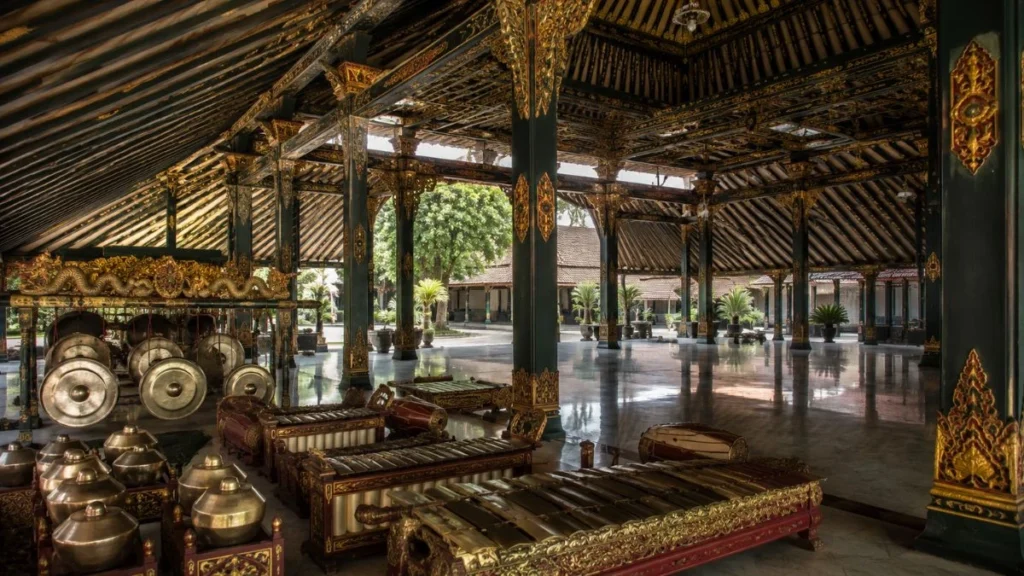
The morning gamelan rehearsals, held in the main pavilion most days of the week, aren’t a tourist performance — they’re part of the court’s ongoing musical tradition, practiced regardless of whether visitors happen to be watching. Timing a visit around this (typically mid-morning, though schedules shift) turns a static walkthrough into something closer to watching an institution actually function.
The museum sections housing royal heirlooms and historical photographs are also worth more time than most visitors give them — particularly the older photographs documenting court life across different sultans, which offer a more grounded sense of continuity than the architecture alone communicates.
Ceremonies Worth Knowing About
The Kraton’s ceremonial calendar follows the Javanese lunar system, which means the dates shift year to year relative to the standard calendar. The most significant is Grebeg, held three times annually around major Islamic holidays, when ceremonial mountains of rice and produce (gunungan) are paraded from the palace to nearby mosques — a tradition with roots predating Islam’s arrival in Java, layered onto later religious observance.
Timing a Yogyakarta trip around one of these isn’t necessary for a good visit, but travelers specifically interested in the cultural side of the city, more than the temples or the craft villages, may want to check the Kraton’s ceremonial calendar before booking dates.
A Practical Note on Visiting
The Kraton sits a short walk from Taman Sari, and the two pair naturally into a single, unhurried morning rather than two rushed stops. We cover what Taman Sari actually is, beyond the photo spot, separately, since it deserves its own explanation.
Opening hours are generally limited to mornings and early afternoon, with some sections closing earlier on certain days for ceremonial or private use — worth checking ahead rather than assuming the Kraton operates on standard museum hours every day of the week.
Frequently Asked Questions
Is the Kraton in Yogyakarta still used by the sultan?
Yes. The current sultan, Hamengkubuwono X, resides at the Kraton and also serves as governor of the Special Region of Yogyakarta. Parts of the complex remain private residence and are not open to visitors.
How much time should I spend at the Kraton Yogyakarta?
A basic walkthrough takes about an hour, but closer to two hours allows time to catch a gamelan rehearsal and spend more time in the museum sections, which most visitors otherwise rush past.
What’s the difference between the Kraton and Taman Sari?
The Kraton is the main royal residence and seat of governance; Taman Sari was a separate royal bathing, meditation, and defensive complex built nearby. They’re connected historically and within easy walking distance of each other, but serve different functions.
Are there ceremonies visitors can watch at the Kraton?
Yes, most notably Grebeg, held three times a year around major Islamic holidays, when ceremonial processions move from the palace to nearby mosques. Dates follow the Javanese lunar calendar and shift annually.