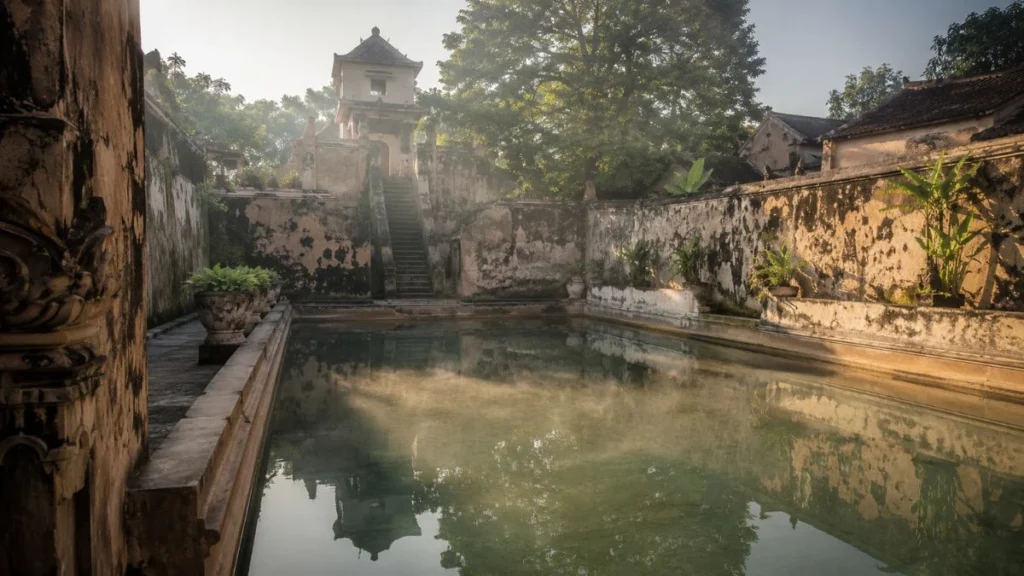
Taman Sari Water Castle shows up in almost every Yogyakarta photo dump, usually captioned with some version of “hidden gem.” It isn’t hidden — it’s a five-minute walk from the Kraton and gets a steady stream of visitors daily. What most captions skip is what the place actually was, and why that matters more than the photo.
Taman Sari gets reduced to its most photogenic feature so often that most visitors leave without understanding what they actually walked through. The pools are real, and they do photograph beautifully. But Taman Sari was never built as a swimming spot for show — it was a working royal complex with at least three distinct functions, and knowing what those were changes how the site reads once you’re standing in it.
What Taman Sari Actually Was
Taman Sari was constructed in the mid-1700s under Sultan Hamengkubuwono I, not long after the Yogyakarta Sultanate itself was established. The name translates roughly to “fragrant garden,” and the complex originally extended far beyond what’s open to visitors today — what remains now is a fraction of a much larger royal pleasure garden and defensive compound that once included artificial lakes, underground tunnels, and a small island palace, most of which has since been built over by the surrounding kampung.
The site served three overlapping purposes. First, it was a royal bathing complex, with separate pools for the sultan, his consorts, and other members of the court — this is the part that ends up in most photos. Second, it functioned as a meditation and retreat space, with a partially submerged structure designed for quiet contemplation away from court life. Third, and least discussed, it had a defensive function: tunnels and elevated lookout points connected to the Kraton, built with genuine military consideration in mind, not just aesthetics.
The Part Most Visitors Miss
Most people see the main bathing pool complex, take photos from the lookout tower above it, and leave within thirty minutes. That’s a reasonable amount of time if photos are the only goal, but it skips the underground passage system and the smaller, quieter sections of the complex that survived outside the main pool area — these require asking a local guide or simply wandering past the obvious stopping point, since signage inside is limited.
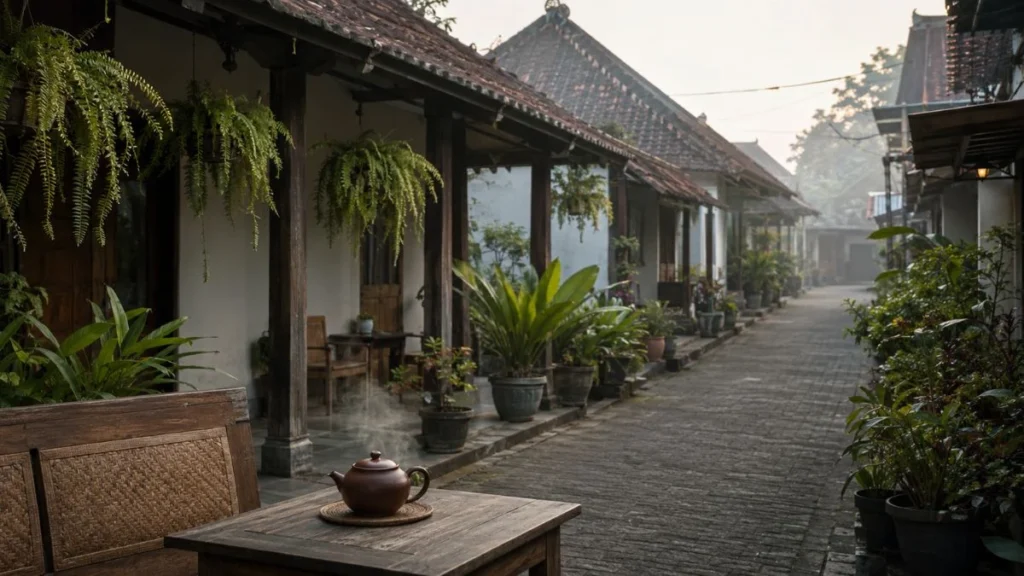
The honest trade-off worth knowing: Taman Sari sits inside a living kampung now, not a sealed-off museum site. Some of the original complex has been absorbed into people’s homes and small batik workshops over the centuries, which means the boundary between “historical site” and “neighborhood” is blurry in a way that surprises visitors expecting a clearly fenced monument. That’s not a flaw — it’s arguably the more interesting part, since it shows how the city grew around its own history rather than preserving it behind glass.
Visiting Taman Sari Without Rushing It
Taman Sari is small enough to see in under an hour, but worth giving closer to ninety minutes if you want to actually take in the underground tunnel section and the quieter back areas, not just the main pools. Early morning, shortly after opening, is the easiest time to photograph the pools without crowds — by mid-morning, tour groups start arriving in larger numbers.
Because it sits a short walk from the Kraton, the two pair naturally into one slower morning rather than two separate trips. We cover how Taman Sari fits alongside the Kraton and the rest of the city in our broader guide to things to do in Yogyakarta.
Worth Pairing With: Ratu Boko
If Taman Sari’s combination of history and atmosphere appeals to you, Ratu Boko — a hilltop palace ruin near Prambanan — offers a similar but less crowded experience, particularly in late afternoon light. It’s a different period and a different kind of site, but it rewards the same kind of unhurried visit rather than a checklist stop.
Frequently Asked Questions
Is Taman Sari Water Castle worth visiting?
Yes, particularly if you take the time to understand its original function rather than treating it purely as a photo stop. The combination of bathing pools, meditation space, and defensive tunnels makes it more layered than its Instagram reputation suggests.
How much time do you need at Taman Sari?
Thirty minutes is enough to see the main pool area, but ninety minutes lets you also explore the underground tunnel section and quieter parts of the complex without rushing.
Is Taman Sari close to the Kraton?
Yes, it’s roughly a five-minute walk from the Kraton, making the two easy to combine into a single morning visit.
What’s the best time to visit Taman Sari Water Castle?
Shortly after opening in the early morning is best for fewer crowds and softer light for photos. By mid-to-late morning, tour groups typically arrive in larger numbers.