Last updated: 4 August 2026
Visiting Yogyakarta during Ramadan means a different rhythm to the city — quieter days, packed evenings, and a handful of experiences that only exist during the fasting month.
Quick Facts
- Daytime: Many local warungs close or reduce hours; tourist restaurants generally stay open
- Evening markets: Kampung Ramadan Jogokariyan, Pasar Ramadan Kauman
- Best arrival for markets: An hour before sunset
- Etiquette: Avoid eating/drinking openly in public during the day
- Watch out for: Heavy travel congestion around Eid al-Fitr (mudik season)
Ramadan, the Islamic fasting month, reshapes daily life across Java, and Yogyakarta is no exception. If your trip happens to land during this period, knowing what shifts — meal times, mosque activity, evening markets — makes the difference between feeling caught off guard and getting to experience a side of the city most visitors never see.
What Changes During the Day
From dawn to sunset, practicing Muslims in Yogyakarta abstain from eating, drinking, and smoking. Not every restaurant closes, but many warungs and smaller eateries reduce their daytime hours or shut entirely until iftar (the breaking of the fast) at sunset. Tourist-oriented restaurants and cafes, especially around Malioboro and hotel districts, generally stay open, though it’s worth checking ahead rather than assuming.
Out of respect, it’s considered good etiquette for visitors — even non-Muslims who aren’t fasting — to avoid eating, drinking, or smoking openly in public spaces during the day, particularly outside clearly tourist-facing areas.
Where the City Comes Alive: Evening Markets
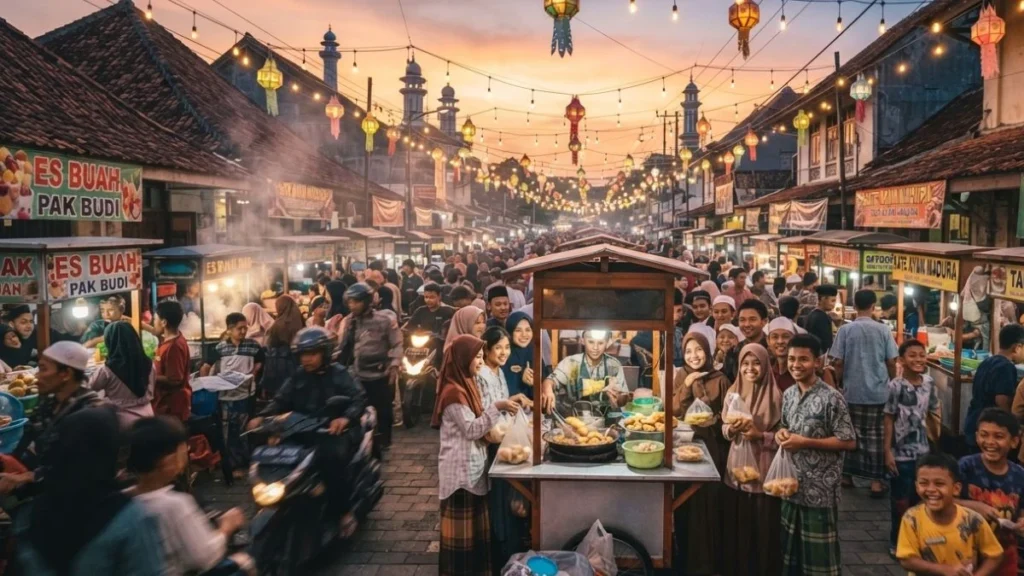
As sunset approaches, Yogyakarta’s Ramadan markets (pasar Ramadan or takjil markets) fill with vendors selling everything from fried snacks to fresh juices and traditional sweets, all timed for the evening fast-break. Kampung Ramadan Jogokariyan, centered around the Jogokariyan Mosque, is one of the most well-known versions of this in Yogyakarta — a sprawling evening market that draws visitors well beyond the immediate neighborhood. Pasar Ramadan Kauman, near the historic Kauman mosque area, is another popular option for trying authentic Javanese Ramadan fare.
Arriving an hour or so before sunset gives you time to browse before the crowds peak right around iftar itself.
Religious and Historical Sites Worth Visiting
Ramadan adds context to several sites that carry religious significance in Yogyakarta:
- Masjid Gedhe Kauman — a historic mosque tied to the Yogyakarta Sultanate’s role in spreading Islam across Java.
- The Kraton — visiting during Ramadan offers a window into how the palace’s traditions intersect with Islamic practice, tying into the broader customs covered in kraton yogyakarta.
- Sonobudoyo Museum — home to artifacts connected to Java’s religious and cultural history, worth pairing with sonobudoyo museum yogyakarta for a fuller picture.
- Alun-Alun — in the late afternoon, locals gather here before iftar, giving visitors a low-key way to observe the community rhythm of the fasting month firsthand, alongside the tradition covered in alun-alun kidul.
Practical Adjustments to Make
- Book restaurants ahead for evening meals. Around iftar time, popular halal restaurants fill up fast, and some ask for orders in advance.
- Expect an energy dip in the late afternoon. Locals fasting since dawn tend to move more slowly as the day wears on — worth factoring into how you schedule guided tours or physically demanding activities.
- Plan around Eid travel if your trip overlaps with it. The days immediately around Eid al-Fitr (Lebaran) bring Indonesia’s largest annual travel surge (mudik), with trains, buses, and flights booking out well in advance and roads seeing heavy traffic.
- Dress modestly near mosques. Cover shoulders and knees, and bring a headscarf if you’re a woman planning to enter a mosque courtyard or prayer hall.
Is Ramadan a Good Time to Visit?
For travelers interested in a more reflective, culturally immersive side of Yogyakarta, Ramadan offers something a standard visit doesn’t — quieter days, atmospheric evening markets, and a city visibly organized around a shared spiritual rhythm. It requires a bit more planning around meals and timing, but for many visitors, that trade-off is part of what makes the experience worthwhile.
Do tourists have to fast during Ramadan in Yogyakarta?
No, fasting isn’t required for non-Muslim visitors, but eating or drinking openly in public during the day is generally considered disrespectful outside clearly tourist-oriented areas.
Are hotels and tourist restaurants open during the day in Ramadan?
Most tourist-facing restaurants and hotel dining stay open, though smaller local warungs often reduce hours or close until iftar — checking ahead is worth the effort.
What is Kampung Ramadan Jogokariyan?
It’s a large evening market centered around Jogokariyan Mosque, known for its wide variety of local food vendors selling dishes for breaking the fast, drawing visitors from across the city.
Should I avoid visiting Yogyakarta right around Eid al-Fitr?
Not necessarily, but expect heavy travel congestion and fully booked transport around that period due to Indonesia’s mass homecoming travel season — booking well ahead is essential if your trip overlaps with it.
Do restaurants serve alcohol during Ramadan in Yogyakarta?
Some tourist-oriented venues continue as normal, but many local establishments limit or pause alcohol service out of respect for the fasting month — checking with individual venues is the safest approach.