The Dutch built Fort Vredeburg 400 meters from the Kraton’s main gate — close enough to monitor the Sultan, far enough to claim they weren’t a threat. That tension between colonial authority and Javanese royal power is the thread that runs through everything the museum inside now contains. It’s not the most polished museum in Yogyakarta, but it’s one of the more honest ones about what this city actually went through.
Last updated: 31 July 2026
Fort Vredeburg Yogyakarta sits at the city’s Zero Kilometer Point, directly opposite the Presidential Palace and a short walk from both Malioboro Street and the Kraton’s northern gate. Originally built in 1760 as “Fort Rustenburg” — “resting fort” in Dutch — on land granted by Sultan Hamengkubuwono I, it was renamed “Vredeburg” (peace fortress) in 1867. The irony of that name is something the museum doesn’t shy away from: a fort built to surveil a royal court, renamed “peace fortress” during a period of active colonial suppression, is now a museum dedicated to the resistance that eventually ended that suppression.
What Fort Vredeburg Yogyakarta Actually Contains
The fort has served multiple military functions across its history: as a Dutch stronghold during the Java War (1825–1830), a Japanese military headquarters and prison during World War II, and later a base for the Indonesian army post-independence. It was only in 1980, through an agreement between the Minister of Education and Culture and Sultan Hamengkubuwono IX, that the site was designated a museum. After significant renovations, Fort Vredeburg Museum officially opened to the public on 23 November 1992.
The collection is organized around Indonesia’s independence struggle rather than the Dutch colonial period per se — the dioramas that fill the main exhibition halls depict the key moments of the nationalist movement, the Japanese occupation, and the revolutionary period from 1945 to 1949. Very good diorama, historical objects and multimedia content, all inside a well-preserved historical building complex.
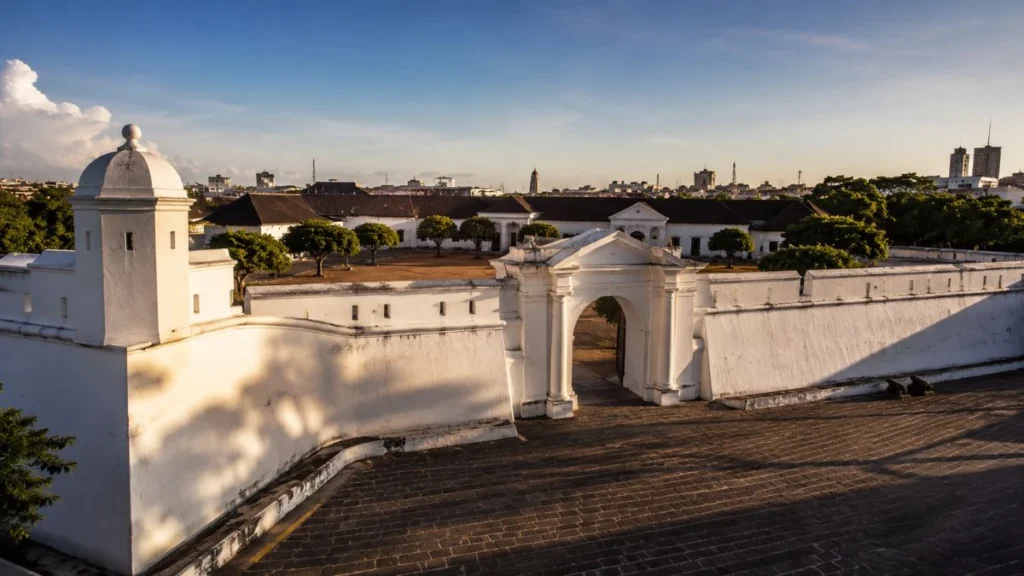
The physical fort structure itself is worth more attention than most visitors give it. The four corner bastions, the moat outline, the parade ground, and the thick-walled barracks buildings are among the best-preserved examples of Dutch East Indies military architecture accessible to visitors in Java. Walking the perimeter before entering the museum exhibitions gives the building’s strategic logic — its sight lines to the Kraton, its relationship to the Zero Kilometer road system — a clarity that the interior-focused museum visit doesn’t provide.
Since late May 2024, the museum has added digital installations including Water Fountain and Video Mapping spectacle, Magic Wall, Moving Comic, Digital Relief, and Historical Dioramas, which sit alongside the existing collection. These additions are aimed primarily at domestic visitors and school groups, and they do change the atmosphere from a conventional historical museum to something more hybrid.
The Java War Context: Why This Museum Has Specific Weight in Yogyakarta
The Java War of 1825–1830 — the largest and costliest war the Dutch fought in the colonial period, led by Prince Diponegoro of the Yogyakarta royal house — is the event that gives Fort Vredeburg its most specific historical significance. The fort functioned as the Dutch military command center during that conflict, which killed an estimated 200,000 Javanese and came close to driving the Dutch from Java entirely.
Prince Diponegoro himself was eventually captured through an act of treachery — invited to negotiations under a flag of truce and then arrested — and subsequently exiled. He is one of Indonesia’s designated National Heroes, and his image appears throughout Yogyakarta, including on the Rp10,000 banknote. The fort that served as the colonial headquarters during his war against Dutch rule is now a museum to Indonesian independence — a historical reversal with genuine symbolic weight that the best diorama in the collection captures more effectively than the explanation text around it does.
For the cultural and ceremonial context of the Yogyakarta sultanate that this colonial history was imposed on, the Kraton Yogyakarta guide covers the royal institution’s history and its current functioning. The Javanese culture and etiquette guide covers the underlying values and social frameworks that shaped Javanese resistance to colonial rule.
Honest Assessment: Where the Museum Works and Where It Doesn’t
The honest version, drawn from recent visitor accounts: the dioramas illustrate the history of Yogyakarta’s independence movement, but appear to have been made primarily for Indonesian audiences, with no English explanations for the exhibits. This is the consistent gap at Fort Vredeburg — the content is substantive, the building is historically significant, but visitors without Bahasa Indonesia will find the interpretive layer thin.
The fort architecture compensates for what the labeling lacks — the building tells its own story through its spatial organization, and spending time on the grounds before and after the exhibition halls produces a more complete visit than rushing through the dioramas. The museum opens daily from 8:00 AM to 8:00 PM on weekdays and until 10:00 PM on weekends, with entry fees ranging from Rp 15,000 for locals to Rp 50,000 for international visitors.
Fort Vredeburg pairs naturally with Sonobudoyo Museum — both are within easy walking distance of the Zero Kilometer Point and together cover different dimensions of Yogyakarta’s history: Sonobudoyo the pre-colonial cultural archive, Fort Vredeburg the colonial and independence-era political history. The Sonobudoyo Museum guide covers what that collection contains and why the two visits complement each other without feeling redundant.
Practical Visiting Details
Location: Jalan Margo Mulyo No.6, Gondomanan — at the Zero Kilometer Point, directly across from the Presidential Palace, 400 meters from the Kraton’s northern gate, walkable from Malioboro.
Opening hours: 8:00 AM to 8:00 PM on weekdays, 8:00 AM to 10:00 PM on weekends.
Entry fee: Rp 15,000 for local visitors, Rp 50,000 for international visitors.
Time needed: 1 to 1.5 hours for the exhibition halls and fort grounds. Budget additional time if visiting during the Water Fountain or Video Mapping shows.
Best pairing: Sonobudoyo Museum (5-minute walk north), Malioboro Street (5-minute walk north), Kraton (10-minute walk south). The central location makes Fort Vredeburg the easiest museum addition to any Yogyakarta city-center day.
The Bottom Line
Fort Vredeburg Yogyakarta is worth visiting if you have any interest in the history of how Yogyakarta came to be the city it is — the colonial surveillance that shaped its street layout, the resistance that defined its identity, and the specific historical moment (the Java War, the Japanese occupation, the 1945 declaration) that the dioramas depict. It is not the most polished or most English-friendly museum in the city, but it occupies a historically significant building in a historically significant location, and the visit takes no more than 90 minutes. For visitors spending multiple days in Yogyakarta, it belongs on the list — ideally paired with Sonobudoyo Museum next door to cover both the pre-colonial cultural depth and the colonial political history in a single afternoon.
Frequently Asked Questions
What is Fort Vredeburg Museum known for in Yogyakarta?
Fort Vredeburg is known as the best-preserved Dutch colonial fort in Yogyakarta, now operating as a museum focused on Indonesia’s independence struggle. It contains dioramas depicting key moments from the colonial period, Japanese occupation, and the 1945–1949 revolutionary period. The fort itself — its bastions, moat outline, and parade ground — is as historically significant as the museum contents inside.
When was Fort Vredeburg built and why?
Fort Vredeburg was built in 1760 by the Dutch East India Company on land granted by Sultan Hamengkubuwono I. Strategically located approximately 400 meters from the Sultan’s Palace, its primary function was to monitor and control the royal court. It was originally named Fort Rustenburg and renamed Vredeburg in 1867.
What are Fort Vredeburg’s opening hours and entrance fee?
The museum opens daily from 8:00 AM to 8:00 PM on weekdays and until 10:00 PM on weekends. Entry fees are Rp 15,000 for local visitors and Rp 50,000 for international visitors.
Is Fort Vredeburg Museum good for visitors who don’t speak Indonesian?
Partially. The fort architecture and overall site communicate their historical significance visually without language. The exhibition dioramas are detailed and worth seeing, but English-language interpretation is limited — a known gap that English-speaking visitors consistently note. Supplementing with background reading before visiting significantly improves the experience.
Can I visit Fort Vredeburg and Sonobudoyo Museum on the same day?
Yes — they are within a 5-minute walk of each other near the Zero Kilometer Point. Together they cover about 3 to 3.5 hours and complement each other well: Sonobudoyo for the cultural and artistic heritage of the pre-colonial period, Fort Vredeburg for the colonial and independence-era political history.