Parangtritis Beach Yogyakarta is the most famous beach in the region and the one most likely to produce a mixed reaction from visitors who arrive expecting a swimming beach. The black volcanic sand, the raging Indian Ocean surf, the connection to Javanese royal mythology, and the ceremony that takes place here annually make it a genuinely interesting place — just not in the way that a beach holiday destination usually is.
Parangtritis Beach Yogyakarta sits approximately 27 to 30 kilometers from the center of Yogyakarta on the south coast, and the drive takes about 45 minutes to an hour depending on traffic. It is the most accessible beach from the city and, as a consequence, the busiest — but the reason Parangtritis has cultural weight that most Indonesian beaches don’t comes from its place in Javanese royal mythology and its connection to the sultanate, not from its beach infrastructure or its swimming conditions.
What Parangtritis Actually Looks Like
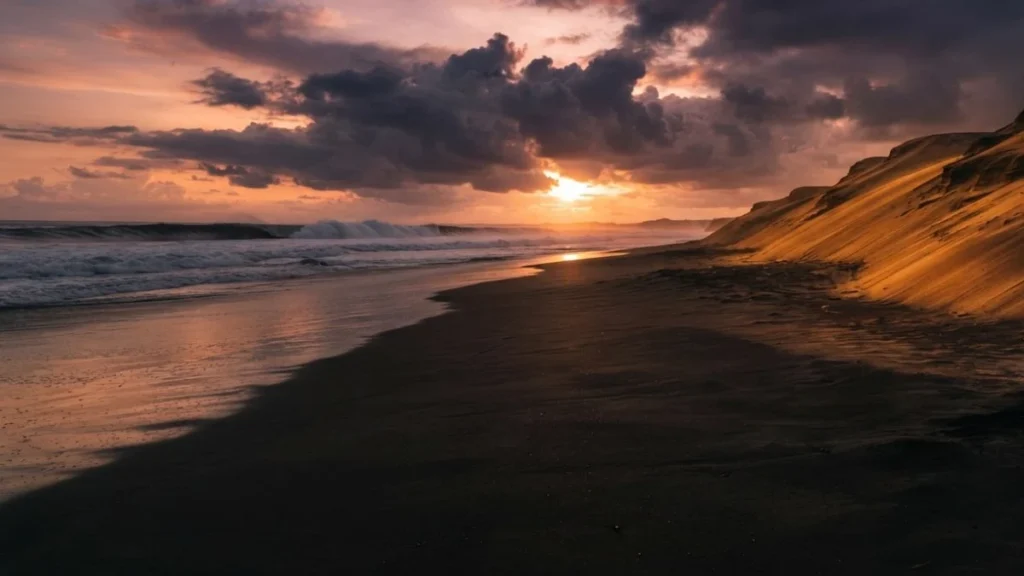
Parangtritis is renowned for its stunning landscape, with miles of dark volcanic sand and rolling dunes juxtaposed against the powerful waves of the Indian Ocean. The black sand comes from volcanic sediment carried south by rivers from Merapi — not from the beach itself but from the geological system that connects the volcano to the north with the sea to the south. This gives Parangtritis a specific visual character that white-sand beach visitors find arresting: dramatic, dark, and unlike anything in the Bali beach circuit.
The dunes behind the main beach are one of the more unexpected features — significant sand formations that extend inland and create a landscape quite different from the flat beach experience most visitors imagine. ATV rides across the dunes are the most heavily marketed activity at Parangtritis; horse carts along the beach are the more atmospheric (and considerably cheaper) version of the same impulse.
The Queen of the Southern Sea: Why This Beach Is Sacred
The cultural layer that makes Parangtritis different from any other beach in the Yogyakarta region is its relationship to Nyai Roro Kidul — the Queen of the Southern Sea, the supernatural ruler of the Indian Ocean south of Java in Javanese and Sundanese mythology.
According to legend, Parangtritis is the domain of Kanjeng Ratu Kidul, Queen of the Southern Ocean. Each year at Parangkusumo, one kilometer west of Parangtritis, the Sultan of Yogyakarta makes ceremonial offerings to the Queen, believed to be the Sultan’s mystical consort. This is not purely historical — the ceremony continues to the present day, as part of the same living court tradition covered in the Kraton ceremonies guide. The relationship between the Yogyakarta sultanate and the Queen of the Southern Sea is the same cosmological axis that places Merapi to the north, the Kraton at the center, and the Indian Ocean to the south — explained in the Javanese culture and etiquette guide.
According to Javanese tradition, the founder of the Mataram kingdom, Panembahan Senopati, once meditated on the southern beach seeking spiritual power. His meditation disturbed the supernatural realm of the ocean, causing the Queen herself to appear. The relationship between the Mataram royal line and Nyai Roro Kidul has been part of Javanese court narrative ever since.
The Green Clothing Convention: Myth and Practical Reality
One of the most discussed aspects of Parangtritis is the traditional warning against wearing green clothing at the beach. There is a local belief that wearing a green garment in this area will anger Nyai Roro Kidul, as green is her sacred color.
The practical dimension behind the cultural convention is worth knowing: some observers offer a more rational explanation — the waters along the southern coast often appear greenish, making rescue teams struggle to locate drowning victims who wear similar colors. Whether the convention’s origin is supernatural or pragmatic, the practical safety reasoning is real enough that treating it as simply a superstition to be dismissed misses the point. Not wearing green at Parangtritis is a way of respecting the cultural context, and the rip current danger that makes it a non-swimming beach gives the warning a practical dimension regardless of the mythology around it.
Swimming at Parangtritis: The Honest Safety Assessment
The roaring ocean currents here are very rough and strong so swimming is very dangerous and not recommended. This is not cautious overcaution — Parangtritis’s position on the southern Java coast means it faces open Indian Ocean swell with strong rip currents and unpredictable wave patterns that have claimed lives repeatedly. The beach is not really a good swimming beach.
The honest version for visitors: Parangtritis is a beach for watching, walking, riding horses along the shoreline, and experiencing the atmosphere — not for entering the water. This distinguishes it from the Gunungkidul beaches covered in the Gunungkidul beaches guide, where calmer bays like Wediombo offer genuinely swimmable water. If swimming is the primary goal, Parangtritis is the wrong beach for a Yogyakarta trip. If atmosphere, landscape, and cultural context are the goals, it’s one of the most distinctive beaches in Java.
Parangkusumo: The Ceremonial Site One Kilometer West
Parangkusumo, one kilometer west of Parangtritis along the same stretch of coast, is where the Labuhan ceremony from the Kraton is held — the Sultan’s annual offering to the Southern Sea. It’s also considered the most spiritually significant point along this coastline, and the atmosphere here is quieter and more obviously ceremonial than the more heavily touristed Parangtritis main beach.
For visitors specifically interested in the Nyai Roro Kidul mythology and the sultanate’s relationship with the southern sea, spending time at Parangkusumo rather than staying solely at Parangtritis proper gives a different and more contemplative dimension to the same visit.
Sunset: The Main Draw for Most Visitors
The sunset at Parangtritis is truly magical and romantic — a must-see for any visitor. This is the primary reason most visitors plan around Parangtritis — the combination of black sand, dramatic surf, and unobstructed western horizon produces sunset conditions that are genuinely good. Arriving 45 minutes before sunset and finding a position on the higher dune ground rather than the main beach gives a wider view than the crowded main beach access point.
Weekday evenings are noticeably less crowded than weekend visits — the domestic tourism volume at Parangtritis on weekends is significant, and the sunset crowd on Saturday or Sunday can reduce the atmosphere that the landscape itself promises.
Combining Parangtritis With Other Southern Sites
Parangtritis pairs naturally with Imogiri Royal Cemetery to the east — both are in the southern corridor from Yogyakarta, and a Monday or Sunday morning at Imogiri (when the cemetery is open) followed by an afternoon and sunset at Parangtritis uses the southern road logically without backtracking. The full logistics of Imogiri are in the Imogiri Royal Cemetery guide.
For a broader view of how Parangtritis fits into the full day trip landscape from Yogyakarta, the Yogyakarta day trips guide covers all the southern corridor options with distances and time estimates.
Getting There From Yogyakarta
Buses to Parangtritis leave from Giwangan bus terminal in south Yogyakarta regularly between 06:00 and 16:00. Public transport is available and makes the trip accessible for budget travelers, though the return trip timing requires awareness — buses back to Yogyakarta stop running in the early evening, which is before the best sunset viewing time. A rented motorbike or private car gives more flexibility for staying through sunset and returning on your own schedule.
The road south from Yogyakarta via Jalan Parangtritis is well-paved and clearly signposted — the 27 to 30 kilometer drive is straightforward by motorbike or car. Ride-hailing apps can cover the route from Yogyakarta but return trip availability in the evening is less reliable, making pre-arranged transport or a rented motorbike the better option for a sunset visit specifically.
Frequently Asked Questions
Is Parangtritis Beach safe to swim at?
No — the Indian Ocean currents at Parangtritis are consistently dangerous, with strong rip currents that have claimed lives repeatedly. The beach is not recommended for swimming. Visit for the landscape, the sunset, the dunes, and the cultural significance rather than for the water.
Why can’t you wear green at Parangtritis Beach?
The convention against wearing green at Parangtritis is rooted in the legend of Nyai Roro Kidul, the Queen of the Southern Sea, for whom green is considered a sacred color. The practical dimension is that green clothing is difficult to spot in the sea’s greenish water during a rescue, which gives the cultural warning a safety logic that operates regardless of the supernatural belief. Respecting the convention is appropriate regardless of your position on the mythology.
How far is Parangtritis from Yogyakarta?
Parangtritis Beach is located about 27 to 30 kilometers from the center of Yogyakarta. The drive takes approximately 45 minutes to an hour by car or motorbike depending on traffic.
What is the best time to visit Parangtritis Beach?
Late afternoon for the sunset is the most rewarding time — the combination of the black sand, dunes, and unobstructed western horizon makes sunset conditions genuinely spectacular. Weekday visits are significantly less crowded than weekends. Arrive at least 45 minutes before sunset to find a good position.